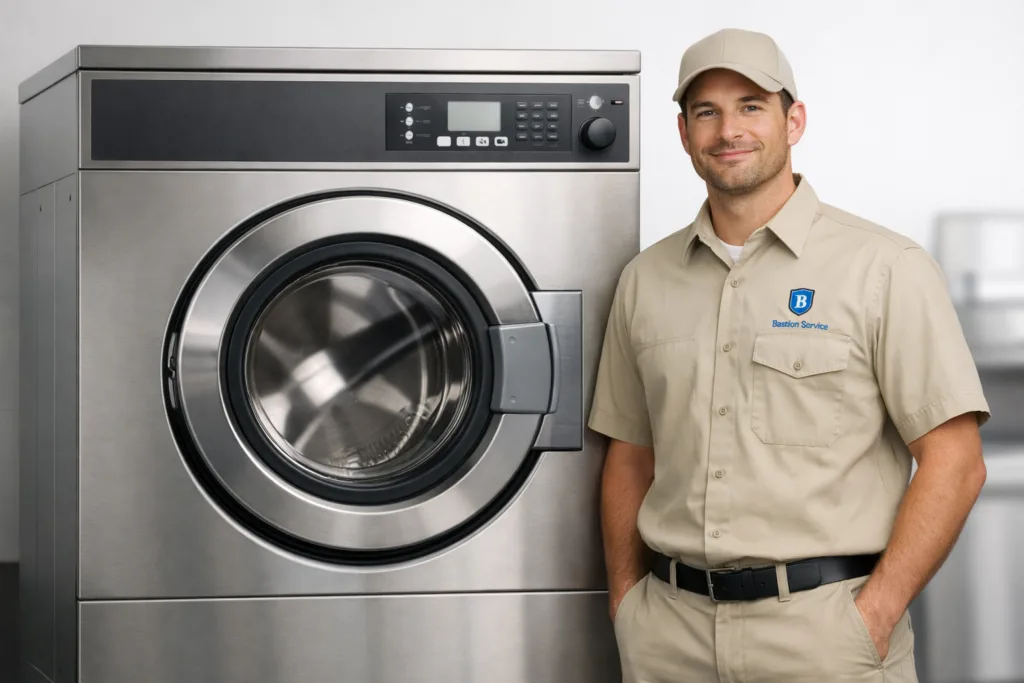




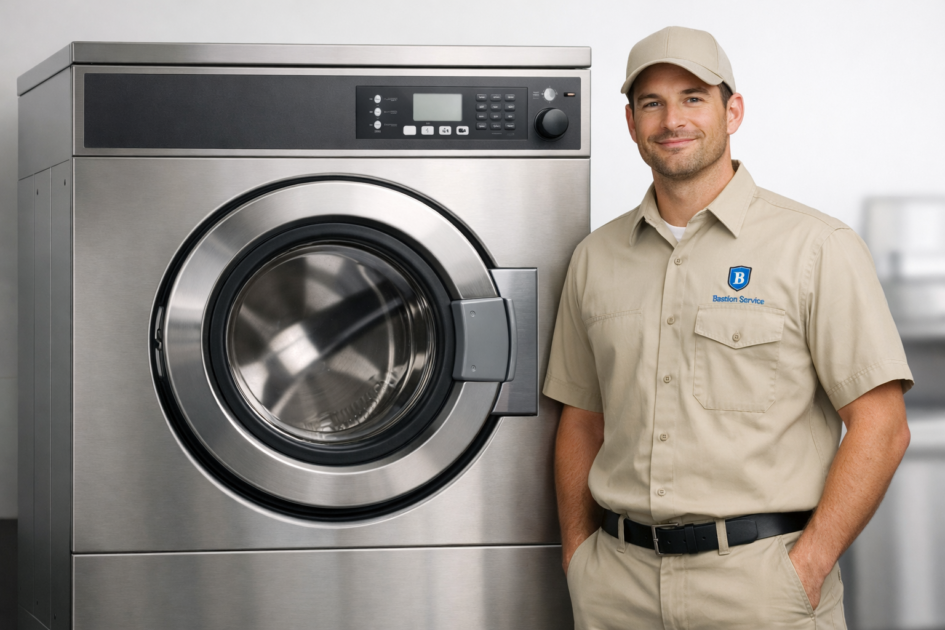
Wascomat washer and dryer problems can disrupt laundry rooms, housing operations, hospitality turnover, and other daily workflows that depend on steady equipment performance. The most useful response is to match the symptom to the likely failure pattern, decide whether the machine should stay offline, and schedule service before one faulty unit starts creating wider delays. Bastion Service provides repair support for businesses in Rancho Park that need fast answers on Wascomat laundry equipment.
For specific equipment paths in Rancho Park, review Wascomat Washer Repair in Rancho Park, Wascomat Dryer Repair in Rancho Park, and Commercial Appliance Repair in Rancho Park.
Wascomat Laundry Equipment Problems That Often Need Repair
Business-use laundry equipment rarely fails without warning. More often, performance changes first: cycle times get longer, loads come out wetter, heating becomes inconsistent, vibration increases, or the machine begins stopping mid-cycle. These symptoms matter because they affect throughput, machine availability, and staff time even before a full breakdown happens.
Common issues that lead to service calls include:
- Washers that will not fill, drain, lock, spin, or complete the cycle
- Dryers with no heat, weak heat, overheating, or long dry times
- Leaks, standing water, or repeated drainage problems
- Excessive shaking, banging, rattling, squealing, or grinding sounds
- Error codes, unresponsive controls, or intermittent shutdowns
- Equipment that works inconsistently depending on load size or cycle selection
Because one symptom can point to more than one underlying cause, repair decisions are stronger when they are based on observed machine behavior instead of guesswork.
Washer Symptoms and What They Usually Mean
Not Filling or Filling Incorrectly
If a washer is slow to fill, does not fill at all, or overfills, the problem may involve inlet valves, water supply issues, level sensing, or control faults. In a busy setting, this can create immediate delays because a machine may appear available while never actually starting a productive cycle.
Won’t Drain or Leaves Water in the Drum
Drain failures are among the most disruptive washer problems. Water left in the drum can point to a blocked drain path, pump failure, control issues, or a sensor-related problem. When wet loads are trapped inside, the machine is effectively out of service and can quickly create a backlog.
Stops Before Spin or Leaves Loads Too Wet
When a washer reaches the end of the cycle with overly wet items, the issue may involve the drain system, spin function, drive components, imbalance detection, or door lock performance. This matters because the problem often spills over to the dryer side, where longer dry times reduce total output across the room.
Excessive Vibration, Walking, or Banging
Strong vibration during spin should not be ignored. It can come from load balance issues, worn suspension-related parts, mounting concerns, or mechanical wear. Continued use under these conditions can increase stress on other components and may turn a manageable repair into a larger one.
Door Lock or Cycle Interruption Problems
If the machine will not start, unlock, or proceed normally through the cycle, the cause may involve the latch system, control board communication, or safety-related sensing. These failures often look random to staff because the machine may occasionally operate and then fail again under the next load.
Dryer Symptoms and Likely Service Needs
No Heat or Weak Heat
A dryer that tumbles without producing enough heat can have problems with heating components, controls, temperature regulation, sensors, or airflow. From an operations standpoint, this is not just a comfort issue; it reduces turnaround speed and ties up equipment longer than expected.
Long Dry Times
When dry times suddenly stretch, the fault may be related to restricted airflow, weak heat output, moisture sensing issues, or a combination of smaller performance losses. Longer cycles reduce the number of loads the machine can process and often lead operators to think the washer is underperforming when the real issue is on the drying side.
Overheating or Burning Odor
Overheating should be treated as a stop-use condition until the machine is checked. This can point to thermostat issues, airflow restrictions, sensor failure, or other heat-management problems. The same is true for burning smells, which can indicate component stress or material buildup inside the unit.
Drum Not Turning or Shutting Off Early
If the dryer powers on but the drum will not rotate, or if it starts and then stops before finishing, the issue may involve the motor, drive components, controls, or safety circuits. These failures can appear intermittent at first, especially when the machine behaves differently under an empty drum versus a loaded one.
Rattling, Squealing, or Grinding
Unusual dryer noise often signals wear in drum support parts, belts, bearings, or the motor system. Noise may begin as a minor nuisance but usually points to a mechanical condition that worsens with continued use.
Why Symptom Patterns Matter Before Parts Are Replaced
Two machines can show the same outward symptom for different reasons. A washer that stops could have a drain issue, a lock problem, a control fault, or a drive-related failure. A dryer with poor drying results could be dealing with airflow loss, weak heat, sensor problems, or overheating protection. That is why symptom-based diagnosis matters before repair planning starts.
Helpful details include whether the problem happens every cycle or only sometimes, whether it appears under full loads, whether one unit or several are affected, and whether the failure started suddenly or gradually. Those details help narrow the issue and reduce wasted time on unnecessary parts replacement.
When the Machine Should Be Taken Out of Service
Some problems can be scheduled around. Others should be treated as reasons to stop operation immediately. In most cases, it is safer to keep the machine offline when you notice:
- Water leaking from the washer
- Failure to drain with loads trapped inside
- Hard banging during spin
- Repeated power trips or shutdowns
- No drum rotation on a dryer
- Overheating, scorching, or burning odor
- Severe metal-on-metal or grinding noise
Continuing to run equipment with these symptoms can increase damage, affect nearby machines, and create more downtime than an earlier repair visit would have.
Repair Decisions for Rancho Park Businesses
For businesses in Rancho Park, the main question is usually not just whether the machine can be fixed, but whether it can be restored within a reasonable scope and timeline. That decision depends on the exact failure, overall equipment condition, repeat service history, and how much daily demand the machine is expected to handle.
A unit with one isolated issue may be a straightforward repair. A unit showing repeated control problems, ongoing spin issues, or multiple signs of wear may call for a broader discussion about cost, downtime, and the likelihood of future interruptions. The goal is to make a repair decision that supports stable operations rather than just getting the machine running for a short period.
How to Prepare for a Service Visit
Good pre-visit information helps speed up diagnosis and makes scheduling easier. Before service, it helps to note:
- The model and machine type
- Whether the issue affects a washer or dryer
- Any error message or code shown on the display
- What point in the cycle the problem occurs
- Whether the symptom happens on every load or only some loads
- Whether the machine is still operating in limited use or fully down
These details can help clarify urgency, likely failure areas, and whether the equipment should remain offline until a technician arrives.
Wascomat Repair Service in Rancho Park
When Wascomat laundry equipment starts slowing production, interrupting turnover, or creating repeated service issues, the next step is to schedule a repair visit based on the actual symptoms the machine is showing. For washer and dryer problems in Rancho Park, targeted diagnosis, repair planning, and timely scheduling help reduce downtime and restore more predictable equipment performance.