
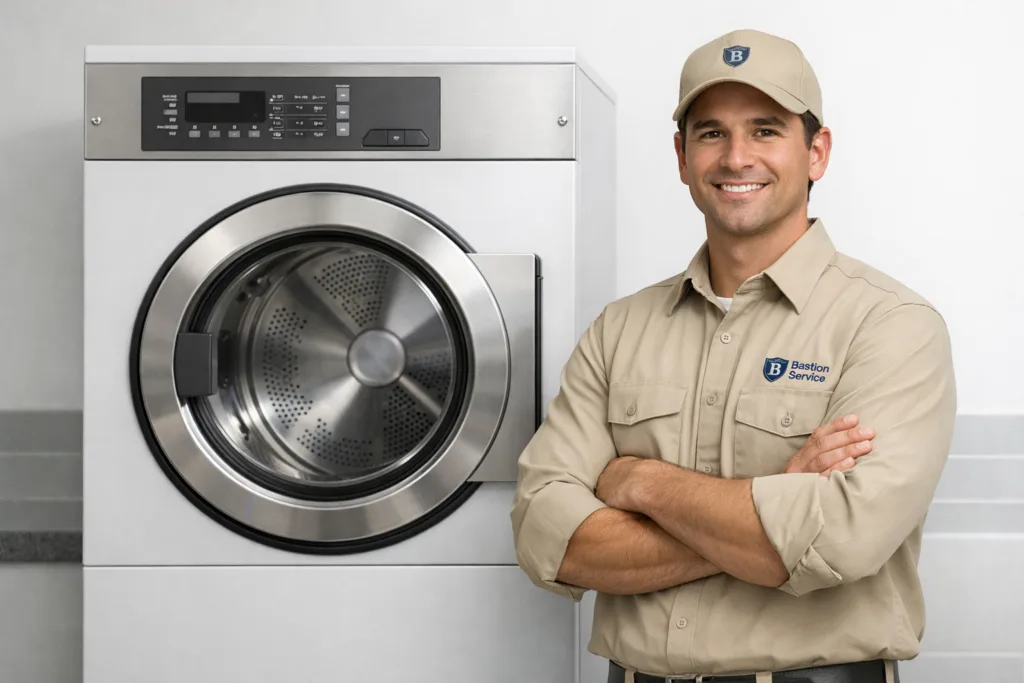




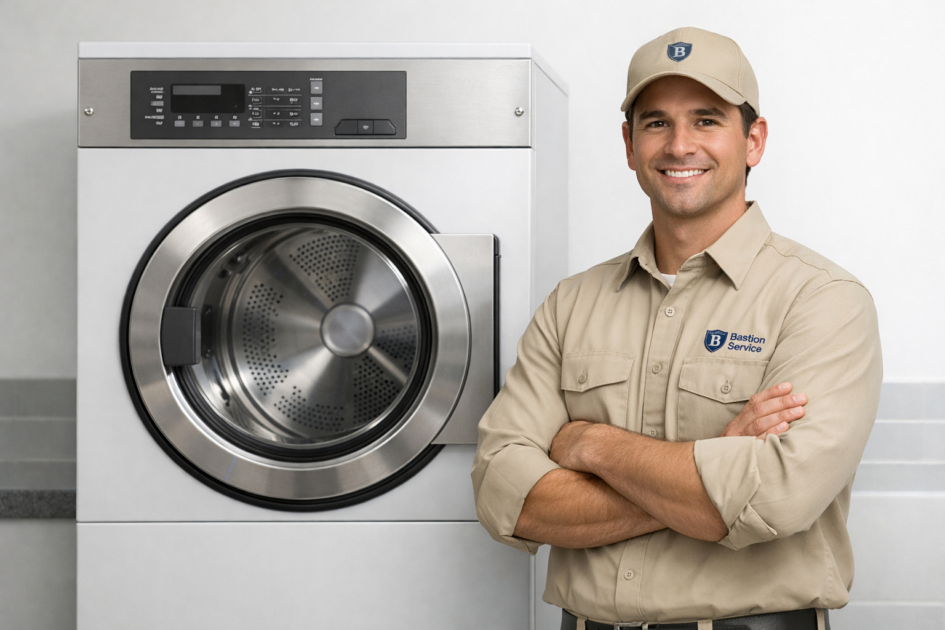
Dryer problems can slow an entire laundry workflow, especially when loads start backing up, linens need to be re-run, or staff are forced to monitor a machine that should be finishing cycles on its own. For businesses in Mar Vista, service is most effective when the repair starts with the exact operating symptom, how often it happens, and whether the issue affects heat, airflow, drum movement, controls, or safe shutdown. Bastion Service schedules Wascomat dryer repair with that service-first approach so the visit is focused on restoring usable uptime rather than guessing at parts.
Related commercial service paths in Mar Vista include Wascomat Commercial Repair in Mar Vista, Commercial Dryer Repair in Mar Vista, and Wascomat Washer Repair in Mar Vista.
What common Wascomat dryer symptoms usually point to
No heat or very weak heat
If the dryer tumbles but clothing or linens come out damp, the problem may involve the heating system, temperature controls, airflow restrictions, or a safety component that has opened due to overheating conditions. In daily operations, no heat does more than delay one load. It changes cycle expectations, creates re-dry work, and reduces how much laundry can be processed during a shift.
Weak heat can be just as disruptive because the unit appears to run normally while performance steadily drops. That often leads to longer run times, uneven drying, and unnecessary strain on the machine.
Long dry times
Extended dry times are often tied to poor airflow, lint buildup, vent restrictions, moisture-sensing issues, or heat output that is present but not strong enough to finish the load efficiently. This is one of the most expensive symptom patterns to ignore because the dryer may still seem usable while productivity declines in the background.
- Loads need a second cycle to finish
- Heavier items stay damp while lighter items overdry
- Cycle times become less predictable
- Utility use rises without better results
When the machine still runs but results have clearly changed, that is usually the right time to schedule repair before the issue spreads into a larger workflow problem.
Stops mid-cycle or shuts down intermittently
A Wascomat dryer that starts and then stops may be reacting to overheating, motor strain, control faults, sensor problems, or an internal electrical issue. Intermittent shutdowns are important because they often become more frequent as the dryer heats up under repeated use.
If staff have to restart the dryer to complete a load, the fault is no longer minor. Repeated resets usually mean the machine is operating outside normal conditions and needs to be checked before more wear develops.
Drum will not turn or turns unevenly
When the drum does not rotate correctly, likely causes include belt failure, drive wear, motor trouble, or seized support components. A dryer that heats without proper tumbling can create hot spots, poor drying results, and added stress on internal parts.
This symptom should not be pushed through a busy day. Loss of drum movement can turn a contained repair into broader damage if the machine continues trying to run under load.
Noise, vibration, or burning smell
Squealing, grinding, thumping, or heavy vibration can point to worn rollers, bearings, supports, or drive parts. A burning smell can indicate friction, overheating lint accumulation, motor stress, or an electrical component beginning to fail.
These symptoms are especially important in shared laundry environments because they can signal both mechanical wear and safety concerns. If the sound or odor is new, stopping use and arranging service is usually the better decision.
Why a symptom-based diagnosis matters
Dryer complaints often overlap. A machine that is “not drying” may actually have an airflow problem, a heat problem, a sensor problem, or several smaller issues happening at the same time. Replacing one part based only on the most visible symptom can leave the real fault untouched.
A proper repair visit should verify how the dryer is heating, whether airflow is moving as it should, how the controls respond during a cycle, and whether any mechanical drag or shutdown condition is affecting performance. That process helps determine whether the issue is isolated or part of a larger wear pattern.
Signs the problem is already affecting operations
Some dryers fail all at once, but many give warnings first. Scheduling service during that warning phase can reduce downtime and help avoid secondary damage.
- Loads are taking noticeably longer to finish
- Drying results vary from one cycle to the next
- The cabinet feels hotter than usual
- The dryer pauses, resets, or stops unexpectedly
- Staff hear new sounds during startup or tumbling
- The unit produces heat but cannot finish normal loads
For businesses in Mar Vista, these changes usually mean the dryer is no longer operating at the level needed for reliable daily use, even if it has not completely failed yet.
When to stop using the dryer and call for repair
Some symptoms leave little room for delay. Immediate service is the safer choice when the dryer has no heat at all, will not tumble, gives off a burning odor, overheats, trips out repeatedly, or makes sharp mechanical noise. Continuing to run the unit in those conditions can increase repair cost and create a longer outage.
If the machine is still technically operating but is no longer finishing loads, that also deserves prompt attention. Waiting for a total shutdown often means more disruption than addressing the problem while the symptom pattern is still contained.
Repair or replacement: how businesses usually decide
The best decision is not based only on whether the dryer can be repaired. It depends on whether the repair is likely to restore stable performance without ongoing interruption. A single failed component on an otherwise solid machine often makes repair the practical path. A unit with repeated failures, heavy wear in multiple systems, or declining performance after recent work may need a closer cost comparison.
That is why diagnosis matters before making a larger equipment decision. It helps clarify whether the issue is limited to one system or whether the machine is showing broader signs of age, heat stress, airflow problems, and drive wear together.
How to prepare for a Wascomat dryer service visit
A little preparation can make the appointment more productive and shorten the path to a repair decision.
- Note whether the problem happens on every cycle or only sometimes
- Write down any error code or shutdown pattern
- Identify if the dryer has no heat, low heat, slow drying, or no drum movement
- Let the technician know about new noise, odor, or overheating
- Be ready to explain when the issue started and whether it has been getting worse
Those details help narrow down likely causes faster and make it easier to determine whether the repair is straightforward or whether multiple conditions need attention.
Wascomat dryer repair focused on restoring workflow
Dryer service should support real operating conditions, not just produce a temporary restart. For laundromats, hotels, housing facilities, and other businesses in Mar Vista, the goal is to restore steady heat, proper airflow, consistent cycle completion, and dependable drum performance so laundry can move through the day without unnecessary interruption. If your Wascomat dryer is no longer heating properly, running too long, shutting down, or showing signs of mechanical wear, the next step is to schedule service before the issue creates wider downtime across your operation.


