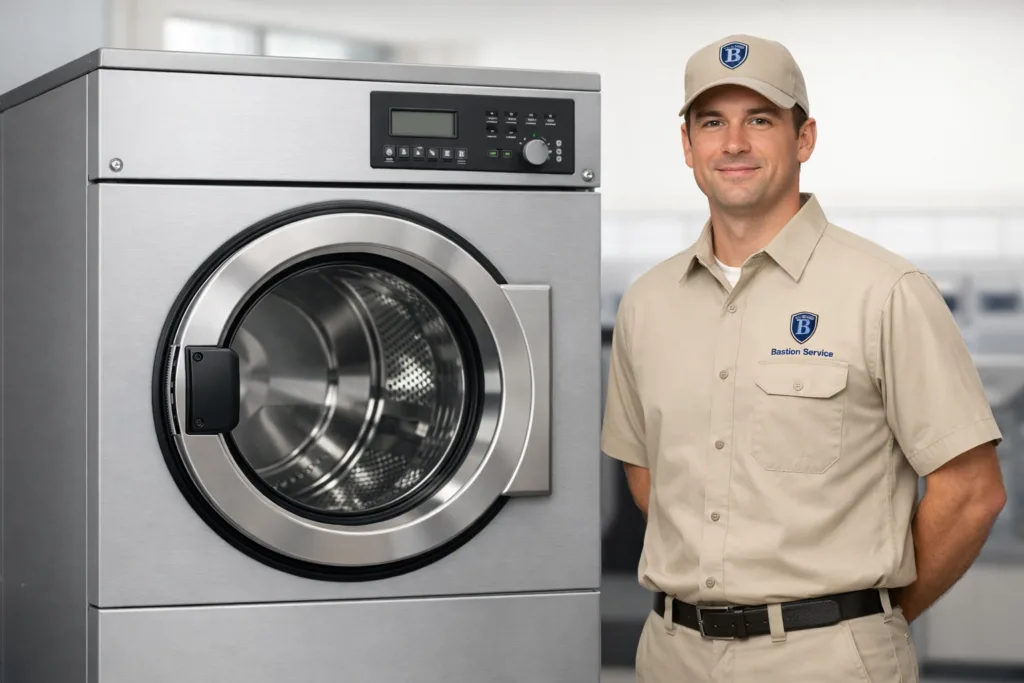




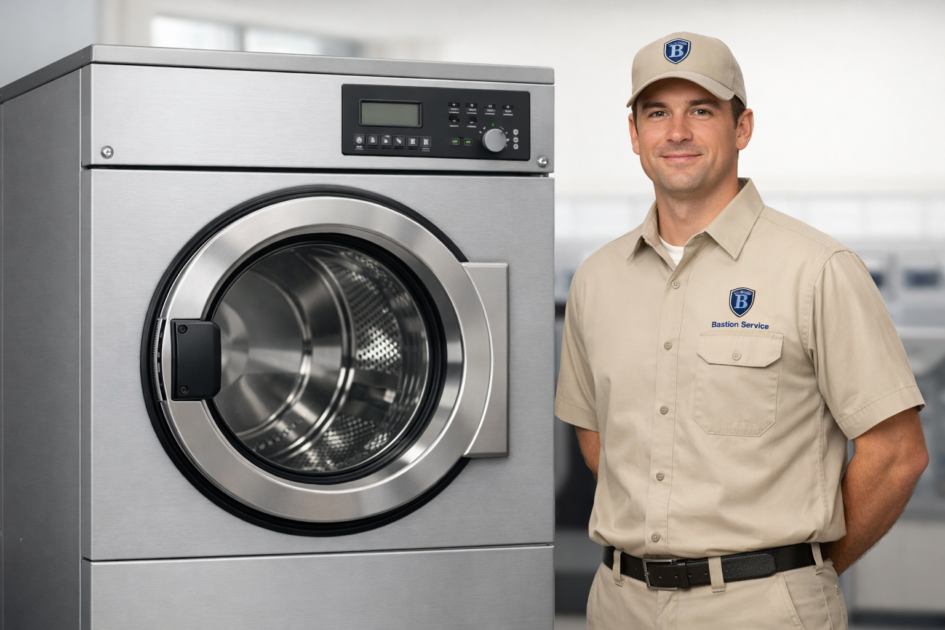
Dryer trouble can disrupt load scheduling, labor planning, and customer turnaround quickly, especially when one Wascomat unit starts slowing the rest of the laundry room. For businesses in Century City, service is most useful when the visit is centered on the exact symptom pattern, how the machine behaves under load, and whether continued operation is creating added risk. Bastion Service works with businesses in Century City to identify the fault, explain what is actually failing, and schedule repair based on operational urgency.
Related commercial service paths in Century City include Wascomat Commercial Repair in Century City, Commercial Dryer Repair in Century City, and Wascomat Washer Repair in Century City.
Common Wascomat dryer problems and what they often mean
Many dryer symptoms look similar at first, but the underlying cause can be very different. A unit that tumbles without drying may have a heating issue, an airflow restriction, a temperature-sensing problem, or a control fault interrupting normal operation. A machine that shuts down mid-cycle may be reacting to overheating, motor stress, safety-device trips, or unstable controls. The goal is not just to name the symptom, but to determine which system is causing it.
No heat or poor heat output
If the drum turns but the load stays damp, the problem may involve the heating circuit, temperature controls, high-limit protection, airflow restriction, or power-related issues. Weak heat is often just as disruptive as total heat loss because staff may keep extending cycle times without realizing the machine is operating outside normal conditions. Over time, that can reduce throughput and put extra demand on other dryers.
Long dry times
Long cycles usually point to an efficiency problem rather than a complete breakdown. Restricted venting, reduced airflow, weak heating performance, moisture-sensing issues, or poor temperature regulation can all produce extended dry times. In a busy laundry setting, this symptom often shows up first as repeated re-runs, backed-up carts, and inconsistent completion times.
Will not start
A no-start complaint can come from door-switch faults, control problems, power supply issues, failed start components, or safety lockouts. Some dryers fail completely, while others start intermittently and then stop responding later in the day. That distinction matters because intermittent starting issues often point to heat-related electrical faults or controls that become unstable during repeated use.
Drum noise, drag, or no tumble
Squealing, scraping, thumping, or a slow-turning drum can indicate worn support parts, belt problems, motor strain, or bearing-related wear. These problems tend to worsen with continued use. What begins as noise can turn into poor drum rotation, incomplete drying, overheating, or a no-run condition if the drive system starts binding under load.
Overheating or shutting down mid-cycle
When a Wascomat dryer runs for a period and then stops, overheating should be taken seriously. Airflow restrictions, failing sensors, tripped protective devices, motor overheating, and control faults can all cause shutdowns. If staff are repeatedly resetting the machine just to finish loads, that usually means the root problem is still active and may be affecting additional components.
Why symptom-based diagnosis matters
Dryers are interconnected systems. Heat, airflow, drum movement, sensors, and controls all influence one another. A machine that appears to have a heater problem may actually be running hot because of restricted airflow. A dryer that seems to have a motor issue may be dragging because of worn support parts. A unit that leaves loads damp may be cycling incorrectly because of sensing or temperature-control faults rather than a complete heating failure.
That is why repair decisions should follow testing, not assumptions. Businesses in Century City usually need more than a general explanation of the symptom. They need to know whether the issue is isolated, whether continued use is likely to make damage worse, and whether the machine can be returned to reliable service without unnecessary parts replacement.
Signs your Wascomat dryer needs prompt service
- Loads remain damp after a normal cycle
- Dry times are getting longer week after week
- The dryer starts only sometimes or fails after warming up
- The drum squeals, scrapes, thumps, or turns unevenly
- The machine shuts down before the cycle is complete
- Staff notice overheating or unusually hot cabinet surfaces
- Error conditions return after reset attempts
- Burning odors or lint-related heat smells appear during use
Any of these signs can affect uptime, but repeated operation after the symptom appears often causes the bigger problem. What might have been a focused repair can become a broader parts failure if the machine is kept in service without identifying why it is behaving abnormally.
When continued use can increase damage
Some dryer issues are more than an inconvenience. Restricted airflow can raise internal temperatures and stress safety components. Dragging drum parts can increase motor load. Heat regulation problems can affect wiring, sensors, and controls. Intermittent shutdowns can leave staff guessing whether a load will finish, while the machine continues operating in unstable conditions.
If the dryer is overheating, making pronounced mechanical noise, stopping mid-cycle, or taking far too long to dry, limiting use until it is inspected is often the better equipment decision. That helps protect the machine, avoids unnecessary strain on nearby units, and gives management a clearer basis for scheduling the repair.
Repair decisions for business operations in Century City
The right next step depends on how the dryer is failing and how important that unit is to daily output. In some cases, the issue is confined to one serviceable system and repair makes good operational sense. In other situations, repeated breakdowns, multiple worn components, or severe heat-related stress may change the cost-benefit picture.
For businesses in Century City, the most useful service visit is one that answers practical questions:
- What is causing the symptom?
- Is the dryer safe to keep using before repair?
- Is the problem likely isolated or affecting other systems?
- Will repair restore dependable performance, or is the machine showing broader wear?
- What should staff do differently until service is completed?
What to note before scheduling dryer repair
A few details can make the appointment more productive. It helps to note whether the dryer fails on every cycle or only under heavy loads, whether the drum still turns normally, whether the problem began suddenly or worsened gradually, and whether any unusual smell, sound, or shutdown pattern is present. If staff have noticed that cycles run longer at certain times of day or that the machine performs differently after several consecutive loads, that information can also help narrow the failure.
Good symptom history does not replace testing, but it can speed up diagnosis and help identify whether the fault is tied to heat, airflow, controls, or mechanical wear.
Focused Wascomat dryer service for Century City businesses
When a Wascomat dryer is affecting output, the priority is to isolate the problem, protect the rest of the workflow, and move toward a repair plan that fits business operations. Whether the issue involves no heat, long dry times, drum problems, shutdowns, or inconsistent cycle completion, scheduling service early usually leads to better repair decisions and less disruption for Century City businesses.