
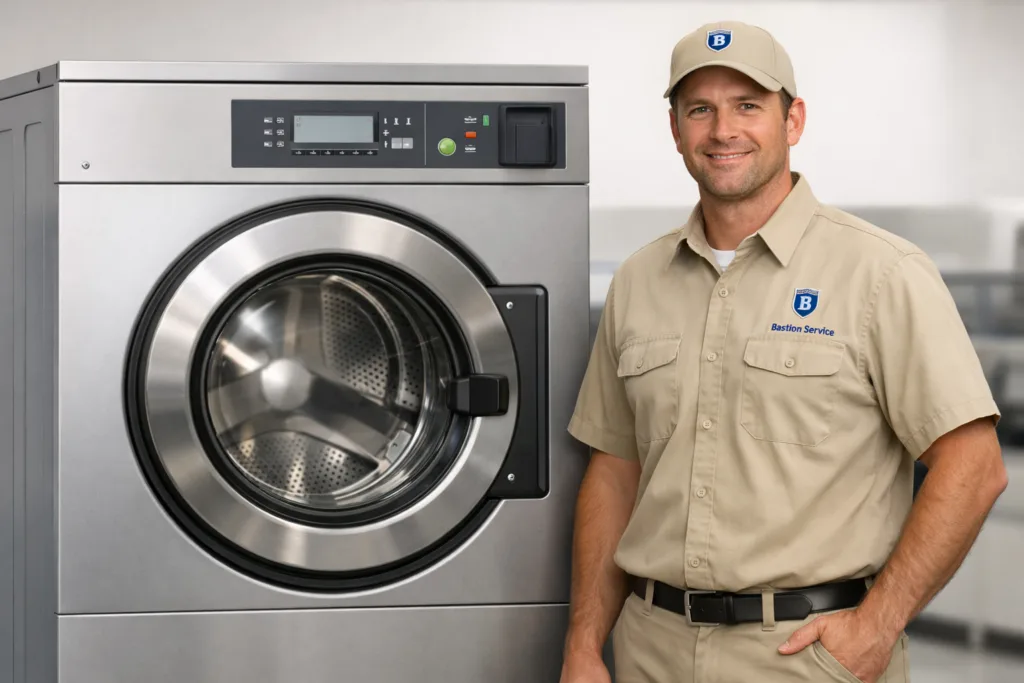




Washer and dryer issues rarely stay isolated for long when laundry equipment is part of daily operations. A unit that leaks, stops mid-cycle, fails to heat, or runs with heavy vibration can slow room turnover, create staff workarounds, and reduce usable capacity. In Century City, service is often most effective when the symptom pattern is reviewed first, the machine condition is verified on site, and repair scheduling is planned around business hours and equipment demand.
For specific equipment paths in Century City, review Wascomat Washer Repair in Century City, Wascomat Dryer Repair in Century City, and Commercial Appliance Repair in Century City.
Bastion Service works with local businesses using Wascomat laundry equipment to identify faults, confirm whether a unit should remain in service, and outline the next repair step based on actual operating symptoms. That approach helps managers avoid guesswork when deciding whether the problem is limited to one failed component or points to broader wear affecting washer or dryer reliability.
Wascomat washer symptoms that usually call for service
Washer will not start, unlock, or complete a cycle
If a washer does not respond at cycle start, stops before extraction, or leaves a load unfinished, the problem may involve the door lock system, controls, wiring, power supply, or a sensor fault that interrupts normal sequence operation. For laundromats, hotels, and shared laundry rooms, this type of failure usually creates immediate scheduling issues because the machine looks available but cannot reliably finish a load. Repeated resets or intermittent starts are strong signs that the problem needs inspection rather than continued trial use.
Slow fill, poor draining, or water left in the drum
Wascomat washers that take too long to fill, drain slowly, or leave standing water often point to inlet valve trouble, pump wear, drain restrictions, pressure sensing issues, or control-related faults. These symptoms can lead to extended cycle times, damp loads moving downstream, and machines staying occupied longer than expected. If the washer sometimes drains and sometimes does not, that inconsistency usually means the fault is developing and can become a full outage without much warning.
Leaks, overflow signs, or water where it should not be
Water around the base of the machine, drip patterns during fill or drain, or signs of overflow should be checked promptly. The source may be a hose issue, drain path problem, door seal wear, valve failure, or an internal component allowing water to escape during operation. Even a small leak can become disruptive when it affects adjacent equipment, flooring, or staff safety. In business settings, leak-related repairs are often time-sensitive because operators need to know whether the machine can stay online between loads.
Excessive shaking, banging, or loud spin noise
Strong vibration during extraction, repeated off-balance events, or grinding and banging sounds often suggest wear in the suspension, bearings, mounting, or drive components. This is not just a comfort issue. Continued operation can increase stress on surrounding parts and may turn a repairable problem into wider mechanical damage. When a washer begins moving more than normal or producing new noise under load, it is usually worth scheduling service before the next busy cycle.
Wascomat dryer symptoms that affect throughput
No heat, weak heat, or long dry times
A dryer that tumbles normally but does not dry efficiently may have a heater problem, airflow restriction, thermostat issue, sensor fault, or control failure. In a working laundry environment, long dry times are one of the most disruptive problems because they reduce machine availability and create backups even when the dryer appears to be running. If loads suddenly need extra time or come out unevenly dried, the issue is already affecting output and should be addressed before it starts driving repeat cycles.
Dryer will not start or shuts down before the load is done
When a Wascomat dryer will not begin a cycle, pauses unexpectedly, or shuts off before items are dry, likely causes include door switch faults, motor problems, overheating protection, electrical issues, or control board failure. Intermittent shutdowns are especially frustrating because staff may reload or restart the machine several times before the pattern becomes obvious. If this symptom is showing up regularly, the safer and more efficient choice is to inspect the unit rather than hoping the issue clears on its own.
Burning smell, scraping noise, or poor airflow
Dryers that produce hot or unusual odors, scraping or thumping sounds, or noticeably weak airflow should be taken seriously. These symptoms can point to roller wear, belt problems, lint buildup within the air path, motor strain, or overheating conditions that reduce both performance and equipment safety. A dryer that sounds rough or smells abnormal during operation is usually giving advance warning that a larger failure may be developing.
How washer and dryer problems impact business operations
Laundry equipment problems often create secondary issues beyond the affected machine. Slower cycle completion can push work into later shifts, unfinished loads can increase labor handling, and unreliable equipment can make it harder to predict turnaround times for guests, tenants, or customers. Even one washer or dryer running below normal performance can reduce the usefulness of the rest of the room when loads start waiting in sequence.
For operators in Century City, repair decisions are usually tied to uptime, staffing, and whether the symptom is stable enough to schedule around or severe enough to remove the unit from use. That is why inspection matters: it helps separate minor but disruptive faults from conditions that may worsen quickly under continued operation.
What to note before scheduling Wascomat equipment repair
Before service is scheduled, it helps to note a few details about how the machine is behaving. Useful observations include:
- Whether the problem happens every cycle or only intermittently
- If the issue appears during fill, wash, drain, spin, heat, or cool-down
- Any visible leak, unusual noise, odor, or vibration change
- Whether loads are left too wet or take longer than normal to dry
- If the unit displays errors, trips power, or stops at the same point each time
These details can help narrow the likely fault path and make repair planning more efficient, especially when the goal is to reduce downtime and avoid unnecessary parts replacement.
Signs a unit should be taken out of service until inspected
Some symptoms suggest the equipment should not keep running between now and the repair visit. That includes major leaking, severe vibration, overheating, persistent burning odor, repeated breaker trips, failure to drain, or loud mechanical noise that is worsening. In those cases, continued use can increase repair scope or create avoidable damage to nearby components and surfaces.
If the machine still runs but performance is inconsistent, the decision usually comes down to risk. A unit that occasionally fails may still be usable for a short period, but once the symptom becomes repeatable, planning a service call is generally less disruptive than waiting for a complete stoppage during peak use.
Repair or replacement depends on condition, not just one symptom
When a Wascomat washer or dryer develops problems, the right choice is not always obvious from the first complaint. A no-heat dryer may need a targeted repair and return to normal operation quickly, while a washer with drainage trouble plus heavy vibration and recurring control issues may be showing broader wear. The decision usually depends on machine age, overall condition, recent repair history, and whether the current problem is isolated or part of a larger decline.
An inspection helps determine whether the equipment is a strong repair candidate or whether repeated failures are starting to make future downtime harder to justify. For many business operators, that information matters as much as the repair itself because they need to plan around budgets, staffing, and room availability.
Scheduling Wascomat laundry equipment repair in Century City
When washers or dryers begin affecting production, the most useful next step is to schedule service based on the symptom that is disrupting operations now, then confirm whether related issues are present at the same time. For Century City businesses, that means getting a repair path built around machine condition, expected downtime, and the urgency of restoring normal laundry flow. If your Wascomat equipment is leaking, failing to drain, stopping mid-cycle, overheating, running without heat, or drying too slowly, the best next move is to have the unit evaluated and move forward with repairs that match the way your operation actually uses the equipment.


