
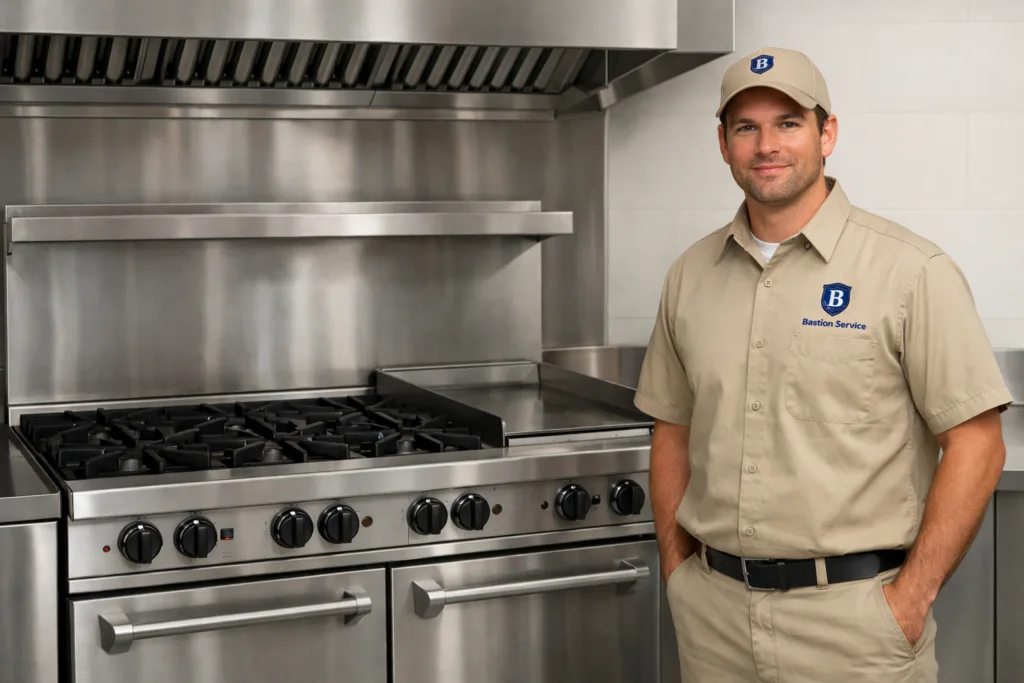




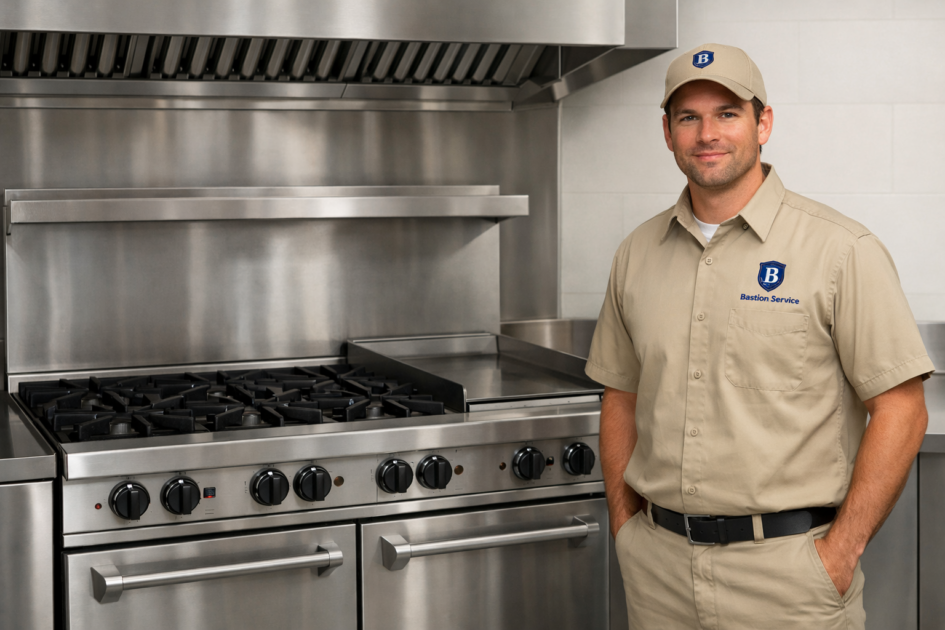
Equipment trouble in a busy kitchen rarely stays isolated to one station. When a Vulcan oven, range, or fryer starts missing temperature, lighting inconsistently, or dropping out during service, the result is slower production, uneven food quality, and harder shift management. For businesses in Sawtelle, timely repair is often the best way to contain downtime before a performance issue becomes a complete shutdown.
For specific equipment paths in Sawtelle, review Vulcan Oven Repair in Sawtelle, Vulcan Range Repair in Sawtelle, and Vulcan Fryer Repair in Sawtelle.
Bastion Service works with Sawtelle businesses that need symptom-based diagnosis, repair scheduling, and a realistic view of what the equipment is doing now versus what it should be doing under normal load. That matters because the same complaint from staff can come from very different causes, and the repair path should match the actual failure rather than a guess based on one visible symptom.
What Vulcan cooking equipment problems do technicians troubleshoot?
Vulcan cooking equipment issues often show up first as gradual performance loss. A unit may still turn on, but not heat correctly, recover slowly, or maintain stable operation through a full shift. On ovens, ranges, and fryers, the most common repair calls involve:
- Units not heating or not reaching normal operating temperature
- Ignition failures, delayed lighting, or repeated clicking
- Burners with weak, uneven, or inconsistent output
- Temperature drift, overshoot, or poor control accuracy
- Slow recovery between batches or during heavy use
- Unexpected shutdowns, resets, or intermittent operation
- Control faults, sensor issues, and unresponsive settings
- Performance problems that create ticket delays or product inconsistency
These symptoms are important because they affect more than the individual unit. One weak fryer can slow a whole line. One oven that runs off-temperature can create waste and rework. One unstable range can disrupt prep and service timing across the kitchen.
Heating problems that reduce output
Unit will not reach set temperature
When a Vulcan unit heats slowly or stalls below the expected temperature, staff often compensate by increasing settings or extending cook times. That workaround may keep production moving for a short time, but it usually masks the real issue. Low-heat complaints can involve burners, igniters, gas flow, sensors, thermostatic controls, safety devices, wiring, or other components affecting heat generation and regulation.
In a business setting, this kind of problem should be evaluated quickly because the unit can appear usable while still causing lower output and inconsistent results. If the equipment cannot carry its normal workload, repair should move up the schedule.
Temperature swings and uneven results
An oven that drifts hot and cold, a fryer that overshoots, or a range that behaves differently throughout the day can create quality problems before anyone sees a hard failure. These complaints are often linked to control issues, sensor drift, calibration problems, unstable burner performance, or heat-management faults that worsen as the equipment stays in use.
Pattern matters here. A unit that misbehaves only at startup may point technicians in one direction, while a unit that fails after several hours of use may indicate heat-related component failure or a control issue under load. That is why symptom details from the kitchen are useful during scheduling.
Ignition and burner issues that interrupt service
Burners not lighting reliably
Reliable ignition is essential for kitchens that depend on fast startup and steady output. If a Vulcan range, oven, or fryer fails to light on the first attempt, lights inconsistently, or needs repeated resets, the issue may involve worn ignition components, flame-sensing faults, clogged burner paths, wiring problems, valve concerns, or broader control trouble.
Intermittent ignition tends to get worse instead of better. A unit may work during prep and then fail during peak demand, which is why repeated light-off issues usually justify service before the next busy shift.
Delayed ignition or unusual startup behavior
Changed startup behavior is often one of the clearest early warning signs. Repeated clicking, delayed flame establishment, or a burner that does not respond the way it used to should not be ignored. Even when the equipment eventually starts, that change in behavior can signal contamination, alignment problems, failing ignition parts, or a control problem that is no longer responding consistently.
For businesses in Sawtelle, the practical concern is not just whether the unit starts, but whether it starts predictably enough to support daily operations. If staff have started building extra time into startup because they do not trust the equipment, repair has usually become necessary.
Slow recovery and under-load performance problems
Some of the most disruptive calls involve equipment that seems functional until it is asked to do real work. Fryers may recover too slowly between batches, ovens may fall behind during continuous cooking, and ranges may lose stable heat under normal production volume. These symptoms often point to weakened heating performance, control inaccuracy, burner faults, or supply-related issues that are not obvious during a quick idle check.
Recovery problems deserve attention because they directly affect sales capacity and labor efficiency. Staff may start staggering orders, reducing batch size, or shifting work to other equipment to compensate. That workaround can keep service moving temporarily, but it also confirms that the unit is no longer supporting the kitchen the way it should.
Control faults, shutdowns, and intermittent operation
Unexpected shutdowns are among the hardest equipment issues to manage because they create uncertainty. A unit may run normally for part of the day and then stop responding, trip out, or fail without warning. In many cases, intermittent behavior points to electrical faults, loose connections, overheating components, failing controls, safety-limit trips, or wiring issues that only show up under certain conditions.
When equipment cuts out mid-shift, the repair decision is usually less about convenience and more about risk to production. If staff cannot trust the unit to stay running, managers are often better served by limiting use and scheduling diagnosis instead of waiting for a full outage.
How symptom patterns help determine the repair path
Not every heating or ignition complaint means the same repair. A temperature problem may involve a sensor, thermostat, control, burner condition, or airflow-related issue. A burner complaint may actually begin with ignition failure or unstable fuel delivery. A shutdown issue may be caused by heat stress in a control circuit rather than the visible cooking component staff first suspect.
That is why symptom-based service is useful for Vulcan cooking equipment. Helpful details include:
- Whether the problem happens at startup, during idle time, or only during heavy use
- Whether the issue affects one section or the entire unit
- Whether temperatures are low, unstable, or overshooting
- Whether the unit recovers slowly or shuts down completely
- Whether resets, relighting, or setting changes are now part of normal operation
The better the pattern is understood, the easier it is to focus service on the real fault and avoid unnecessary delays.
When continued use may create a larger outage
Some equipment can stay in limited use while waiting for repair, but some symptoms suggest that continued operation may make the problem worse. Repeated ignition failures, unstable burner performance, major temperature inconsistency, frequent resets, and shutdowns during production are all signs that the equipment may be stressing other components while in use.
A useful rule for managers is simple: if staff are changing normal cooking procedures to work around the machine, the issue is already affecting operations enough to justify service. Waiting longer may increase product loss, labor strain, and the chance that a repairable problem spreads into a broader failure.
Repair or replace?
For many kitchens in Sawtelle, the decision is not just whether the unit can be fixed, but whether fixing it is the right investment. That answer depends on the age and overall condition of the equipment, the severity of the current fault, repeat breakdown history, the parts involved, and how much downtime the business can absorb.
A single failed component in an otherwise stable unit often supports repair. A machine with repeated control issues, multiple worn systems, or a longer history of service interruptions may require a broader evaluation. Diagnosis helps separate a straightforward fix from a pattern of decline that could continue to disrupt operations.
Scheduling service for Vulcan equipment in Sawtelle
If a Vulcan oven, range, or fryer is causing delays, uneven results, startup trouble, or shutdowns, the most practical next step is to schedule service based on the symptom pattern the kitchen is seeing. A focused visit can determine what is failing, whether the equipment should stay in use, and what repair steps make the most sense for restoring normal workflow. For businesses in Sawtelle, acting before a minor performance issue turns into lost production is usually the most efficient path forward.


