
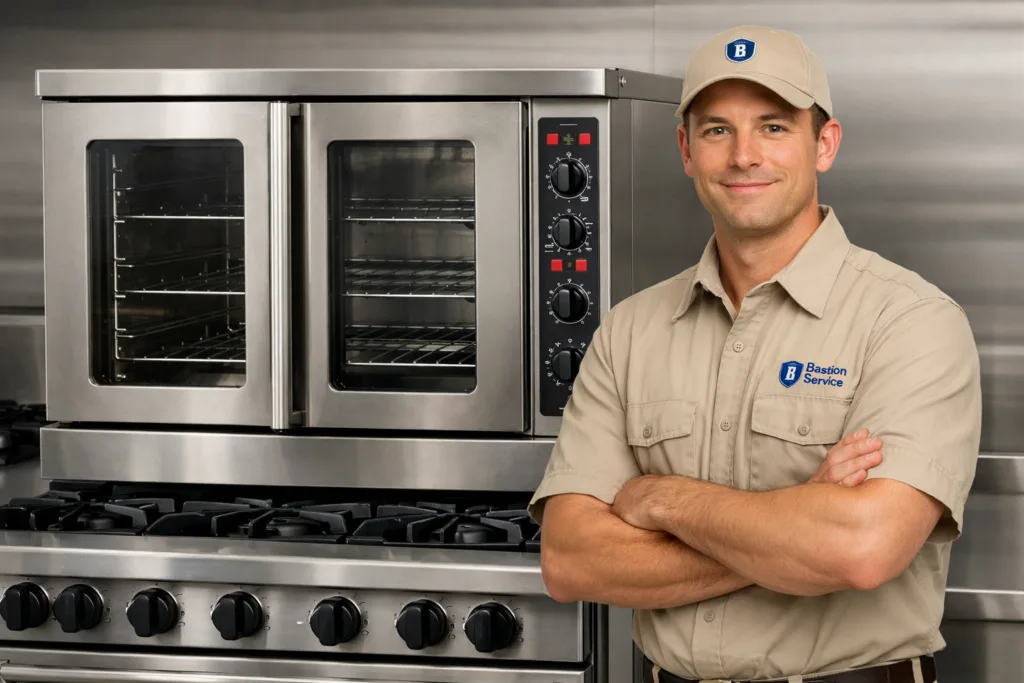




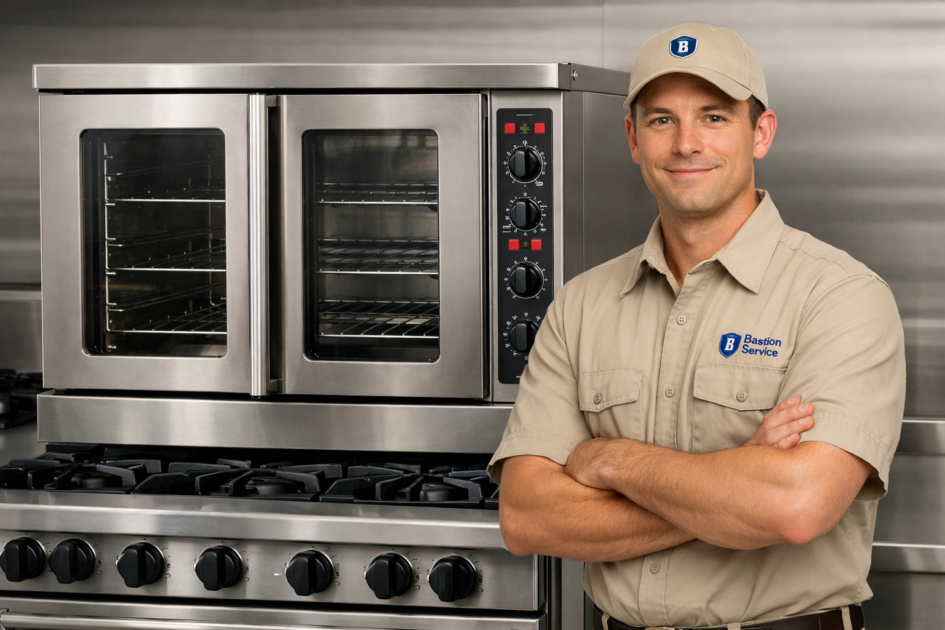
When a Vulcan oven starts missing temperature, heating unevenly, or dropping out mid-shift, the next step should be service based on the actual symptom pattern rather than guesswork. Similar oven failures can come from very different causes, including ignition problems, sensor drift, control faults, wiring issues, gas delivery problems, or worn door and airflow components. For businesses in Pico-Robertson, a repair visit is most valuable when it helps identify the fault quickly, contain downtime, and determine whether the unit can be returned to stable daily use without repeat disruption.
Related commercial service paths in Pico-Robertson include Vulcan Commercial Repair in Pico-Robertson, Commercial Oven Repair in Pico-Robertson, and Vulcan Range Repair in Pico-Robertson.
Service focused on oven performance, uptime, and safe operation
Oven issues affect more than cooking temperature alone. They can slow prep, disrupt ticket timing, create inconsistent food quality, and force staff to compensate with longer cook times or rack rotation. In busy kitchens, even a single Vulcan oven problem can ripple across production.
Bastion Service helps Pico-Robertson businesses evaluate Vulcan oven symptoms in a way that supports repair scheduling and practical decision-making. That includes looking at when the failure occurs, whether it happens on every cycle, whether heat output changes after the oven has been running for a while, and whether the unit is still operating predictably enough to remain in use until service is completed.
Common Vulcan oven symptoms and what they may point to
Not heating evenly or not reaching set temperature
If the oven runs but struggles to reach the selected temperature, the fault may involve the igniter, burner system, thermostat or sensor circuit, control board, safety components, or gas flow. Some units heat slowly and stall below setpoint, while others appear to preheat but cannot maintain temperature once product is loaded.
Uneven heating can show up as hot spots, undercooked pans, overbrowning on one side, or major differences between upper and lower rack positions. That pattern may suggest airflow issues, calibration drift, weak burner performance, gasket wear, or a sensor reading that no longer matches actual cavity temperature. In a production setting, these symptoms usually lead to waste, rework, and avoidable strain on staff timing.
Slow preheat and poor temperature recovery
A long preheat window in the morning or weak recovery between batches often points to declining heat output rather than a simple settings issue. Operators may first notice that the oven seems usable when empty but falls behind during active service. This can happen when ignition is inconsistent, heat transfer is reduced, or the control system is not cycling the burner correctly.
When recovery slows down, kitchens often compensate by staggering loads differently or extending cook times. That may keep service moving for a short time, but it usually masks a repair need that becomes harder to manage as the fault worsens.
Ignition delays, burner trouble, or inconsistent cycling
If the oven hesitates before lighting, clicks repeatedly, cycles on and off unpredictably, or shuts the burner down before the cavity is fully heated, the issue may be tied to ignition components, flame sensing, gas pressure conditions, control sequencing, or safety shutoff behavior. Intermittent ignition is especially important to address because it tends to become more frequent over time.
Some operators notice this first during peak use, when the oven has already been cycling for a while. Others see it after startup, with one normal cycle followed by poor burner response on later cycles. Describing that timing clearly can help narrow the diagnostic path.
Control failures, error displays, and unexpected shutdowns
When a Vulcan oven shows an error, resets without warning, stops responding at the controls, or loses heat during operation, the display message is only one part of the diagnosis. A fault code can relate to a sensor, board, switch, harness, or another condition affecting normal operation.
Unexpected shutdowns matter because they can interrupt production without warning and make the unit unreliable even if it restarts. If staff members are resetting the oven repeatedly just to finish a shift, service should be scheduled before the problem escalates into a complete outage.
When repair should be scheduled sooner rather than later
It is usually time to schedule service when the oven shows repeated temperature drift, extended preheat times, delayed ignition, burner instability, frequent shutdowns, or a clear drop in cooking consistency. These are not minor nuisances when the equipment supports daily production. They are warning signs that the unit is no longer performing predictably.
Continued use may also create a larger repair if the oven is overheating, short-cycling, failing to regulate heat, or showing signs of electrical instability. If cooks are adjusting recipes, moving pans around to avoid cold zones, or adding time to nearly every batch, the equipment is already affecting workflow enough to justify a repair visit.
Repair versus replacement for a Vulcan oven
For many businesses in Pico-Robertson, repair is still the right move when the problem is isolated and the oven remains a good fit for production volume and menu needs. A failed igniter, sensor problem, control issue, or burner-related fault can often make the unit perform badly without meaning the entire oven is at end of life.
Replacement becomes a more serious consideration when breakdowns are stacking up, multiple systems are failing at once, temperature performance remains unstable after prior work, or the overall condition of the unit no longer supports consistent use. The real comparison is not just repair cost against replacement cost. It also includes expected downtime, installation timing, and whether the oven can return to reliable service after the current fault is corrected.
What helps make the service visit more efficient
Before scheduling, it helps to gather the model information and describe exactly what the oven is doing. Useful details include whether the unit fails cold or after warming up, whether it struggles on every cycle or only during busy periods, how long preheat currently takes, and whether the issue involves uneven browning, poor recovery, ignition delay, or random shutdown.
If food is cooking unevenly, note where the inconsistency appears in the cavity and whether the pattern stays the same from batch to batch. If the controls are involved, note any error message, reset behavior, or times when the display becomes unresponsive. The more specific the symptom history, the easier it is to move from problem description to repair plan.
What to expect from a symptom-based oven diagnosis
A proper diagnosis should connect the complaint to the system actually causing it. That may mean checking heat output, sensor response, burner operation, ignition sequence, control behavior, and the conditions under which the failure appears. The goal is not just to make the oven run once, but to understand why it has become unreliable in normal kitchen use.
For Pico-Robertson businesses, that kind of service matters because oven problems affect staffing, batch timing, and product consistency long before the unit fully stops working. When the symptoms are documented clearly and service is scheduled before the fault spreads, repair decisions tend to be faster and more cost-effective. If your Vulcan oven is no longer heating evenly, recovering properly, or staying stable through service, the most practical next step is to schedule an inspection and have the issue traced to the exact component or system behind the downtime risk.





