
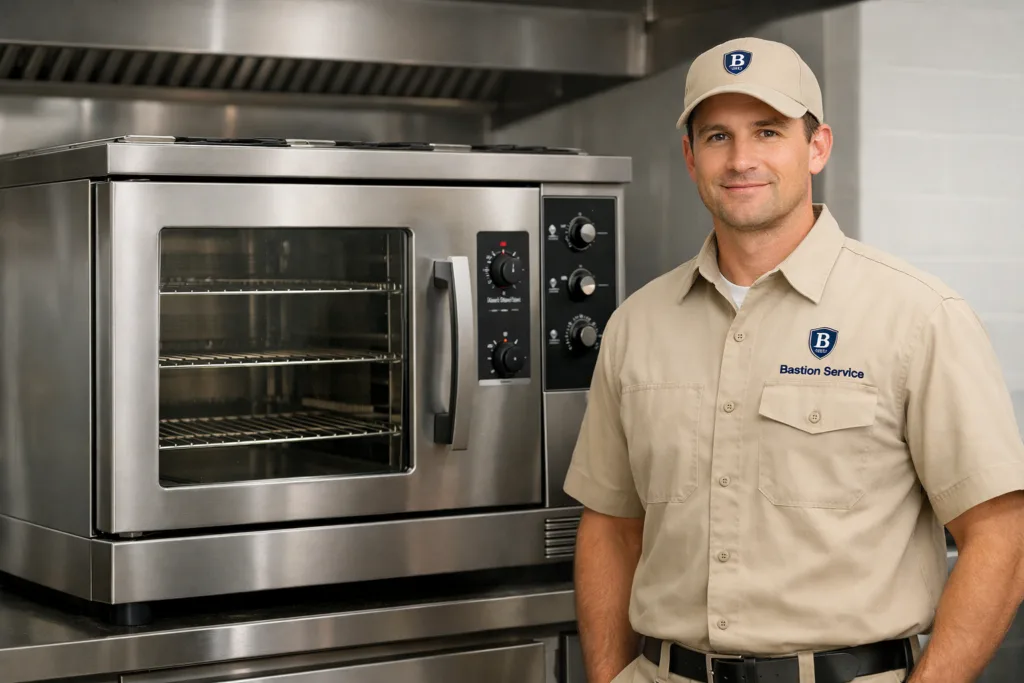




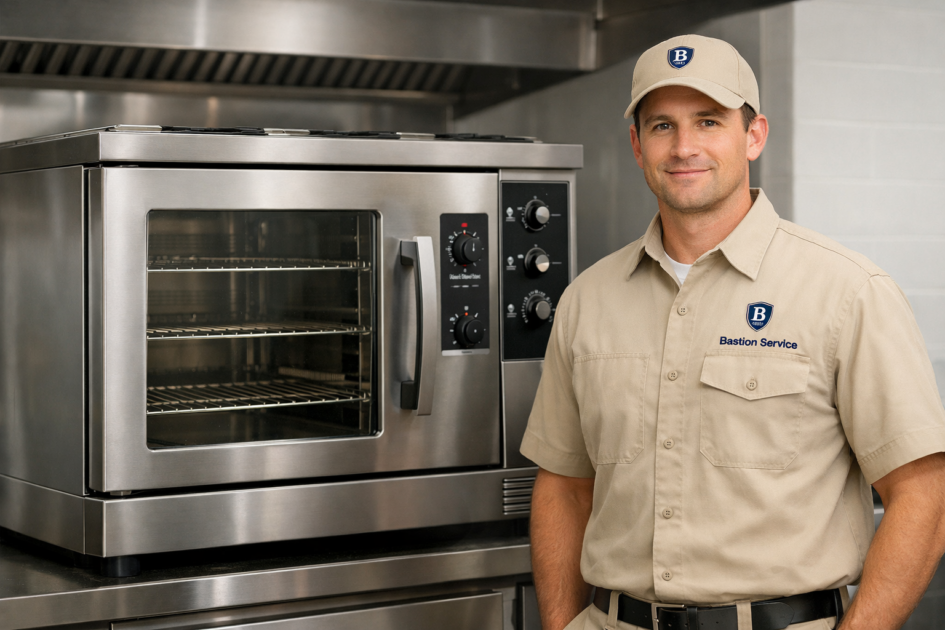
When a Southbend oven starts missing temperature, heating unevenly, or dropping out during a production window, service needs to move beyond guesswork quickly. For businesses in Pico-Robertson, the most useful repair visit is one that matches the symptom pattern to the likely fault, identifies any safety concerns, and helps management decide whether the unit should stay in service, be limited, or be repaired immediately. Bastion Service provides Southbend oven repair for kitchens that need a fast, service-oriented path back to stable heat and predictable output.
Related commercial service paths in Pico-Robertson include Southbend Commercial Repair in Pico-Robertson, Commercial Oven Repair in Pico-Robertson, and Southbend Range Repair in Pico-Robertson.
Common Southbend Oven Problems That Disrupt Daily Operations
Not heating or failing to reach set temperature
If the oven powers on but does not produce enough heat, the problem may involve the igniter, heating system, temperature sensor, thermostat function, control board, gas flow, or internal wiring. In practice, this issue often shows up as slow preheat, undercooked product, or an oven that never seems to catch up during busy periods. A unit that is consistently below set temperature can affect ticket timing, batch consistency, and labor flow across the kitchen.
Uneven baking, roasting, or browning
Uneven heat usually appears before a full breakdown. Staff may notice one side of the cavity cooking faster, top-to-bottom inconsistency, or repeated tray rotation to avoid waste. Causes can include airflow issues, weak heat distribution, sensor drift, failing components, or door seal problems that let heat escape. In a Southbend oven, these symptoms often point to a repairable issue, but the exact cause should be confirmed before parts are replaced.
Ignition delays or burner performance issues
Gas models may develop delayed ignition, inconsistent flame, burners that cycle incorrectly, or burners that fail to light at all. These symptoms can be tied to ignition components, flame sensing, gas valves, pressure-related issues, or controls that are not sending the correct signals. Because ignition complaints affect both cooking performance and safe operation, they should be evaluated before the oven is used for normal production again.
Temperature swings during cooking
An oven that overheats, underheats, or cycles erratically can create product inconsistency even when it appears to be running. In many kitchens, this is first noticed as recipes that suddenly require time adjustments, food that comes out darker than usual, or batches that vary from one rack position to another. Temperature instability may relate to sensor accuracy, calibration drift, relay failure, control issues, or weak heat retention.
Door, gasket, and hinge wear
Heat loss around the door is easy to overlook, but it can have a real effect on recovery time and cooking consistency. Worn hinges, damaged gaskets, misalignment, or latch problems can force the oven to run longer and recover more slowly after each opening. For kitchens in Pico-Robertson that rely on steady throughput, these mechanical issues can quietly reduce output over the course of a shift.
Control failures, shutdowns, or intermittent faults
If the oven shuts down unexpectedly, resets itself, displays error conditions, or responds inconsistently to operator input, the cause may be related to electronic controls, wiring, heat-stressed components, or failed sensing parts. Intermittent problems are especially disruptive because the unit may appear normal until it is under load. These situations usually require direct testing during service rather than trial-and-error part changes.
Why Southbend Ovens Stop Heating Evenly or Reaching Set Temperature
Two of the most common service complaints are uneven cooking and failure to reach the selected temperature. Those symptoms can come from several different sources, which is why the repair decision should be based on testing rather than assumptions.
- Weak or failing ignition components can prevent full burner performance.
- Temperature sensors may drift out of range and report inaccurate cavity temperatures.
- Control boards or thermostatic controls may cycle heat incorrectly.
- Door gasket wear can let heat escape faster than the unit can recover.
- Airflow or circulation problems can create hot spots and cold zones.
- Wiring faults or heat-damaged connections can cause intermittent operation.
When a Southbend oven is not heating evenly or reaching set temperature, the repair plan depends on which of these conditions is actually present. Similar symptoms can come from very different failures, and the wrong first repair can add downtime without fixing the root issue.
When the Problem Is Already Affecting Production
Many ovens continue running after the first signs of trouble, but the workaround usually shifts the burden to staff. If employees are extending cook times, changing rack positions, rotating pans more often, restarting the oven, or avoiding certain menu items, the equipment is already interfering with operations. That is typically the right time to schedule service rather than waiting for a complete shutdown.
Early service is also helpful when the oven still heats but no longer performs consistently. A unit with unstable temperature recovery or recurring ignition trouble may keep working for part of the day and then fail when demand rises. In business settings, that kind of intermittent failure can be harder to manage than a unit that stops outright.
What a Symptom-Based Repair Visit Should Clarify
A useful service call should do more than identify a bad part. It should help the operator understand how the symptom connects to the failed component, whether any secondary wear is present, and how urgent the repair is for continued operation. For example, slow preheat might be tied to an ignition issue, but it could also point to heat loss at the door or a control problem that is preventing full heating cycles.
For kitchens in Pico-Robertson, that distinction matters because scheduling decisions often depend on whether the oven can safely be used in a limited way until repair is completed. In some cases, continued operation risks incomplete ignition, poor product quality, or additional component damage. In others, the issue is isolated and can be addressed before it spreads into a larger failure.
Repair or Replace?
Many Southbend oven problems are still strong repair candidates when the cavity, frame, and core structure remain in good condition. Faults involving ignition, sensing, controls, door hardware, or heating performance are often worth repairing if the unit has otherwise been dependable. A targeted repair can restore stable performance without the expense and disruption of replacement.
Replacement becomes a more serious consideration when the oven has multiple active failures, repeated breakdowns, severe wear, or downtime that no longer fits the needs of the operation. The right choice depends on the age and condition of the unit, the importance of that oven to production, and whether the current issue appears isolated or part of broader decline.
Preparing for Southbend Oven Service in Pico-Robertson
Before scheduling repair, it helps to note exactly how the oven is failing. Useful details include whether the problem happens during preheat or mid-cycle, whether it affects all cooking modes, whether the issue is constant or intermittent, and whether staff have noticed odd noises, ignition delays, shutdowns, or visible heat loss at the door. That information can make the visit more efficient and help narrow the fault faster.
If the oven is affecting timing, consistency, or safe operation, the next step is to schedule service based on the actual symptom pattern rather than waiting for total failure. For businesses in Pico-Robertson, Southbend oven repair is most effective when the issue is evaluated early, the cause is confirmed, and the repair plan is aligned with downtime, workflow, and the demands of daily production.


