
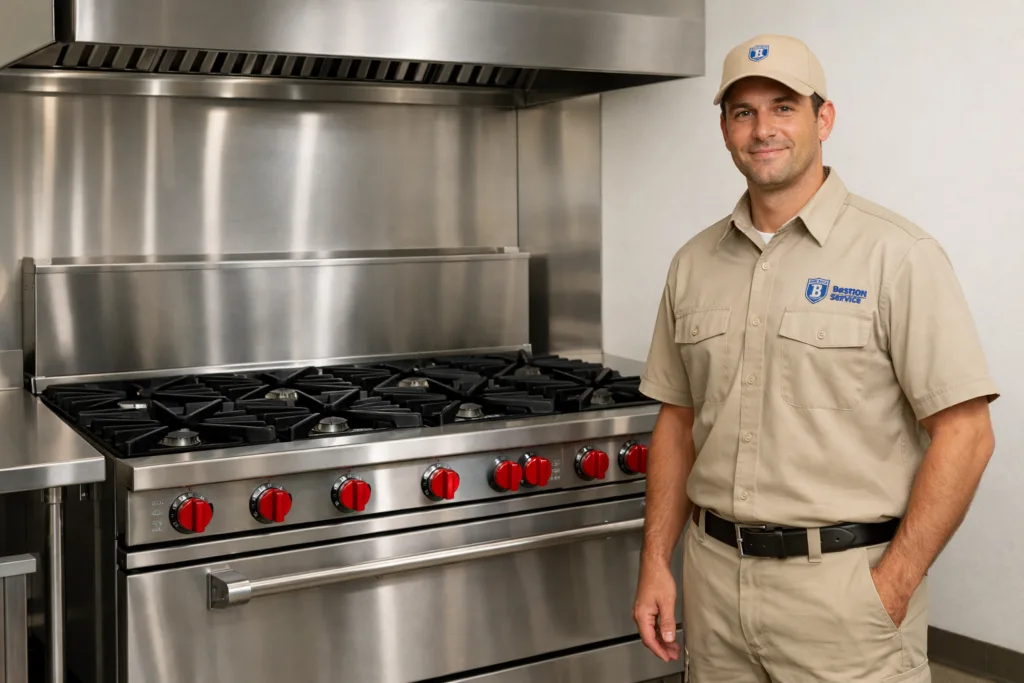




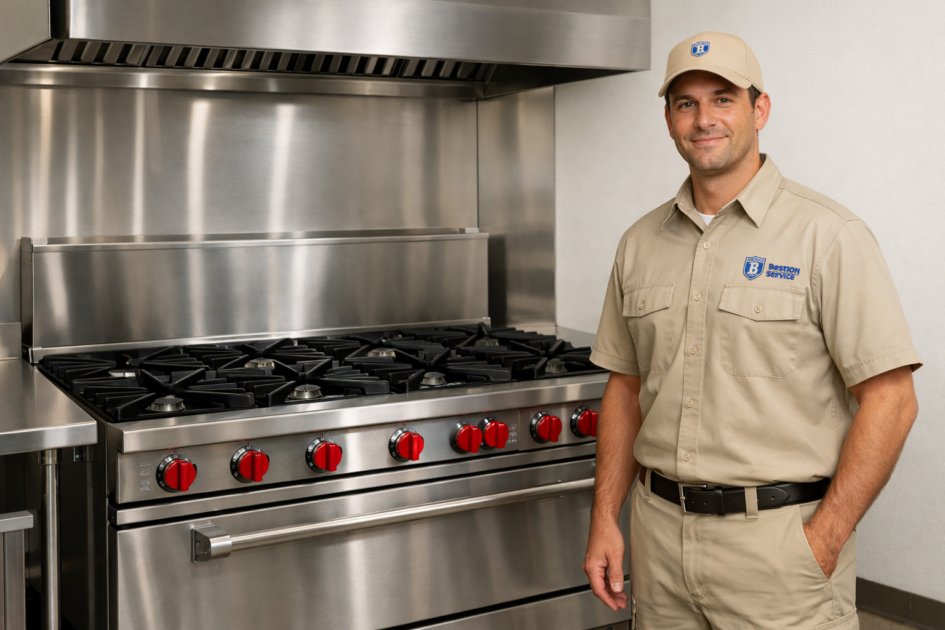
When a Vulcan fryer, oven, or range starts missing temperature, failing to ignite, or slowing production in Palms, the priority is to identify the fault quickly and decide how to handle downtime. A service call should help answer practical questions: whether the unit can stay in limited use, whether it should be taken offline, what components appear to be involved, and how repair timing may affect daily output.
For specific equipment paths in Palms, review Vulcan Oven Repair in Palms, Vulcan Range Repair in Palms, and Vulcan Fryer Repair in Palms.
For businesses in Palms, cooking equipment problems can ripple through prep schedules, ticket times, food consistency, and staffing. Bastion Service works on Vulcan cooking equipment with an emphasis on symptom-based troubleshooting, repair planning, and scheduling that supports kitchen operations as closely as possible.
Common Vulcan cooking equipment problems that affect daily operations
Most equipment does not fail all at once. It usually shows warning signs first: longer heat-up times, temperature drift, uneven cooking, burner issues, repeated resets, intermittent ignition, or shutdowns during use. These symptoms matter because they often point to problems that can spread into larger failures if the equipment keeps running under strain.
One reason diagnosis matters is that the same symptom can come from different causes. A fryer that will not recover may have a sensing issue, a control problem, or a burner-related fault. An oven that bakes unevenly may be dealing with temperature feedback problems, ignition issues, or airflow and heat-distribution concerns. A range that clicks but does not light may involve the igniter, gas flow, burner assembly, or control components.
Fryer symptoms that usually need repair attention
Fryer problems tend to become urgent quickly because recovery time and oil temperature directly affect production. If a Vulcan fryer is heating too slowly, overshooting the set temperature, dropping heat during rush periods, or shutting down unexpectedly, output and food quality can suffer right away.
Operators often notice:
- Slow recovery between batches
- Oil that does not hold a steady temperature
- Failure to reach the programmed setting
- Overheating or erratic cycling
- Ignition problems at startup or during use
- Unexpected shutdowns that interrupt production
These symptoms can point to issues involving controls, thermostatic regulation, sensors, ignition parts, burners, or related heat-performance components. If the fryer is no longer operating predictably, continued use can lead to wasted product, uneven results, and added component stress.
Oven problems that show up as inconsistent cooking
With ovens, the complaint is often not “the oven is broken” but “the food is coming out wrong.” A Vulcan oven may still run while producing hot spots, long cook times, pale centers, burned edges, or inconsistent batch results. That usually means the equipment needs more than a quick adjustment.
Common oven symptoms include:
- Failure to preheat properly
- Temperature running above or below the set point
- Uneven baking from rack to rack
- Mid-cycle shutdowns
- Delayed or unreliable ignition
- Controls that do not respond normally
Because these problems can stem from several systems, the repair decision should be based on testing rather than assumption. In some cases the issue is isolated and straightforward. In others, the fault affects overall heating performance and raises the question of whether the oven should stay in rotation until service is completed.
Range burner and ignition issues that slow the line
A Vulcan range does not have to stop working completely to create a serious problem in the kitchen. Weak burner output, unstable flame, delayed ignition, burners that will not stay lit, or controls that no longer respond correctly can all reduce line speed and force staff to work around the equipment.
Typical range-related complaints include:
- Burners clicking without proper ignition
- Flame output that seems too low or uneven
- Burners going out during use
- Hot spots or inconsistent heating
- Control issues that affect normal operation
These symptoms may involve burner assemblies, igniters, gas delivery components, regulators, switches, or other control-related parts. If staff are changing their process to compensate for a burner problem, that is usually a sign the unit should be evaluated before the issue gets worse.
Signs the equipment should be taken out of service
Some problems can be scheduled around slower periods, but others justify stopping use immediately. Equipment should be evaluated promptly if it shows:
- Repeated shutdowns during normal operation
- Ignition failure or delayed ignition
- Severe overheating
- Temperature control that is no longer reliable
- Burners with visibly irregular flame behavior
- Controls that reset, freeze, or stop responding
- Performance changes that are getting worse shift after shift
Even if the equipment is still technically running, unreliable heat or ignition can create production delays and increase the chance of secondary damage. Early service is often less disruptive than waiting for a full outage at a busy time.
What a repair visit should help you decide
A useful service visit does more than identify a failed part. It should help the operator understand the severity of the issue, whether the unit can remain in use, whether additional components should be checked, and how the repair affects scheduling. For businesses in Palms, those answers matter because the real question is not only what failed, but how the problem affects output today and serviceability going forward.
That assessment is especially important with cooking equipment that supports daily production. A fryer that cannot hold temperature, an oven with unstable heat, or a range with unreliable ignition may still appear partly usable, but partial operation is not the same as dependable operation.
Repair or replace?
Replacement is not always necessary when Vulcan cooking equipment develops faults. Many issues can be resolved with targeted repair, restoring normal heating, ignition, and control performance without the cost of replacing the unit. At the same time, repeated breakdowns, multiple related failures, chronic temperature problems, or advanced wear can change the value of continued repair.
A proper evaluation helps clarify:
- Whether the current issue is isolated or part of a larger pattern
- How the condition of related components affects reliability
- Whether repair is likely to restore stable performance
- How ongoing downtime compares with replacement timing
That kind of information helps operators make a decision based on equipment condition and business impact rather than making a rushed choice during an outage.
Service-focused support for Palms kitchens
When Vulcan cooking equipment starts causing temperature problems, ignition faults, shutdowns, or slower production in Palms, the next step is to schedule service based on the actual symptom pattern and the urgency of the disruption. A repair-first evaluation can help determine what is failing, whether the unit should remain in use, and how to plan the work with the least possible interruption to daily operations.


