
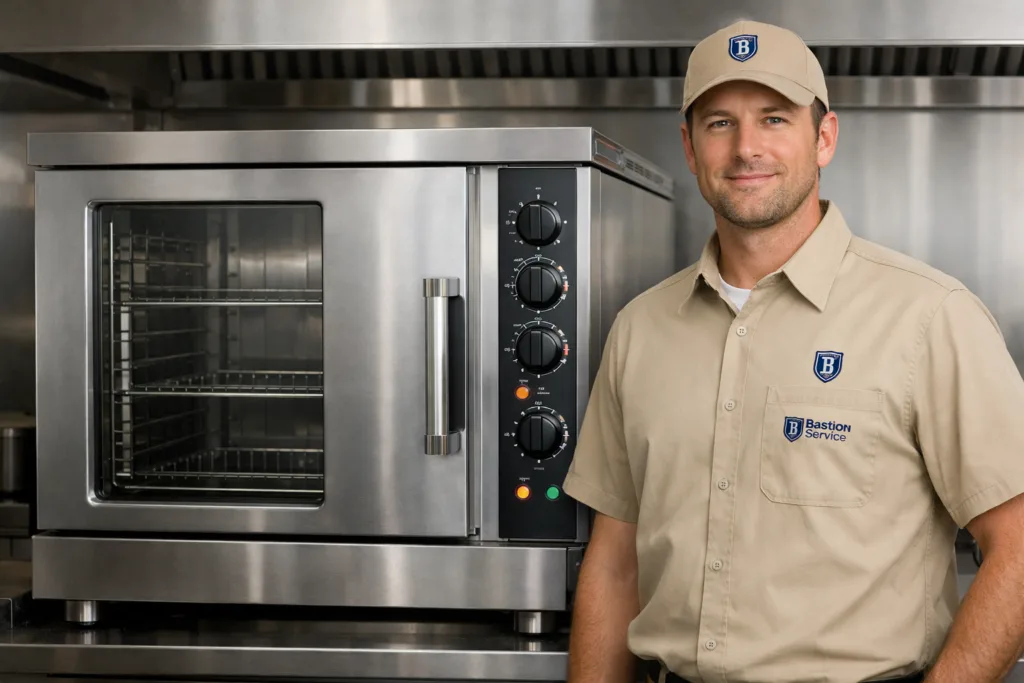




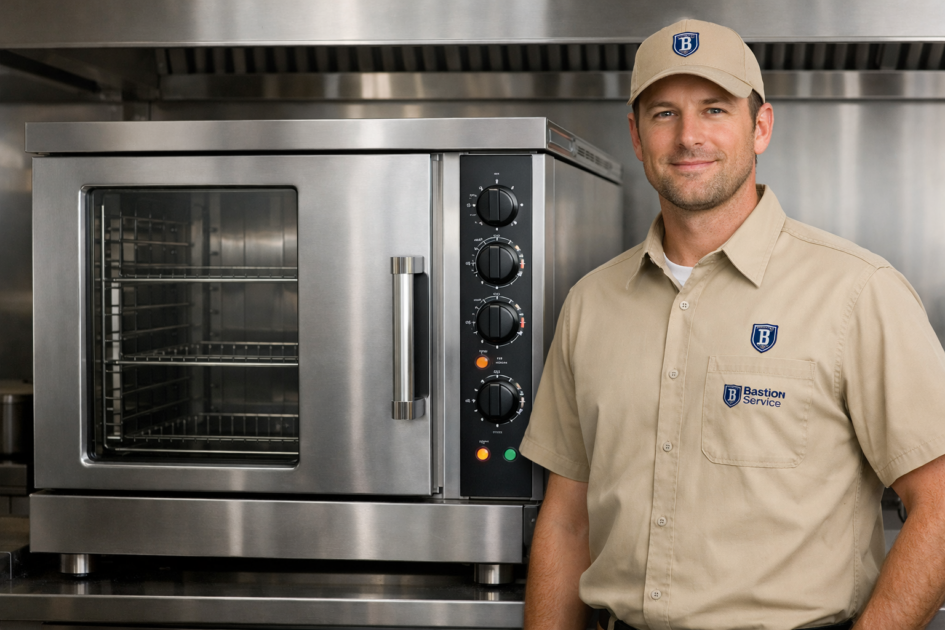
When a Vulcan oven stops holding temperature, heats unevenly, or fails to start a cycle during service, the issue quickly affects production timing, food quality, and staff workflow. For businesses in Mid-City, the most useful next step is to schedule service based on the exact symptom pattern, because similar oven problems can come from very different faults such as ignition failure, sensor drift, control issues, wiring defects, gas-flow problems, or door-seal wear.
Related commercial service paths in Mid-City include Vulcan Commercial Repair in Mid-City, Commercial Oven Repair in Mid-City, and Vulcan Range Repair in Mid-City.
Service starts with symptom-based diagnosis
A Vulcan oven can appear to be partly working while still creating costly problems during the day. Slow preheat, weak temperature recovery, hot spots, intermittent startup, or random shutdowns often point to underlying component failure rather than a simple adjustment. A proper diagnosis helps determine whether the fault is isolated, whether continued use risks further damage, and whether repair is the best path for restoring steady operation.
Bastion Service helps Mid-City businesses evaluate Vulcan oven issues in a way that supports scheduling, repair planning, and reduced downtime instead of trial-and-error part replacement. That matters when the oven is tied directly to output and staff cannot keep compensating for inconsistent performance.
Why a Vulcan oven may not heat evenly or reach set temperature
When a Vulcan oven struggles to reach the selected temperature or cooks unevenly once it gets there, the cause is often more than one simple part failure. In many cases, the problem involves the temperature sensor, thermostat or control system, burner performance, airflow, ignition reliability, or heat loss from worn mechanical components.
Common signs include:
- Longer-than-normal preheat times
- Food finishing too early in one area and too late in another
- Temperature swings during repeated cooking cycles
- Weak recovery after the door is opened
- Staff adjusting cook times to compensate
These symptoms usually mean the oven should be inspected before the issue leads to greater product loss or a full no-heat condition.
Common Vulcan oven symptoms and what they can indicate
Not heating at all
If the oven powers on but does not generate heat, the problem may involve the ignitor, heating circuit, control board, relays, contactors, thermostat, gas-valve function within the unit, or internal wiring. On busy lines, this sometimes begins as inconsistent startup before progressing to complete heat loss.
Uneven baking or roasting
Hot and cold spots can point to fan trouble on convection models, restricted airflow, burner irregularity, sensor issues, calibration drift, damaged interior parts, or door gasket wear. If pans need frequent rotation or recipes are becoming less predictable, the oven is no longer performing consistently enough for daily production.
Ignition failure or intermittent startup
If the oven clicks, attempts to light, then locks out or shuts down, the fault may involve ignition hardware, flame sensing, control response, gas delivery inside the appliance, or electrical supply to the oven. Intermittent ignition problems should be checked promptly because they often worsen under repeated use.
Overheating or unstable temperature control
An oven that runs too hot, overshoots the set point, or cycles unpredictably may have a failing sensor, thermostat problem, relay issue, board failure, or wiring deterioration. This type of fault affects food consistency quickly and can also create safety concerns if the unit is no longer regulating heat correctly.
Door seal, hinge, or closure problems
Heat loss around the door can make the oven seem weak even when the heating system is still operating. Worn hinges, damaged gaskets, and poor door alignment can all reduce thermal retention, extend cook times, and force the oven to work harder throughout the day.
When continued operation is no longer the right choice
Some ovens continue running even while performance is falling off, which makes it tempting to keep using them until they fail completely. In practice, that often leads to more disruption. Service should be scheduled when the oven shows repeated temperature inconsistency, delayed ignition, error codes, unexpected shutdowns, visible heat loss, or cooking results that staff are constantly correcting by hand.
Continued use is especially risky when the unit overheats, starts unreliably, trips during operation, or needs repeated resets. Those conditions can place extra strain on connected components and turn a limited repair into a more expensive equipment problem.
Repair versus replacement for a Vulcan oven
Many Vulcan oven problems are still good repair candidates when the fault is limited to a specific heating, ignition, control, sensing, or mechanical component and the rest of the unit remains in solid condition. Repair is often the better choice when it restores stable operation without changing the kitchen layout or interrupting established workflow.
Replacement becomes more likely when the oven has multiple overlapping failures, ongoing reliability issues after previous work, severe wear, or condition problems that make further investment hard to justify. For businesses in Mid-City, the decision usually comes down to the exact fault, the overall condition of the oven, the urgency of restoring production, and whether the repair will provide dependable operation rather than a short-term fix.
How to prepare for a service visit
A few details from staff can make diagnosis faster and more precise. Before the visit, it helps to note when the problem occurs, whether it happens during preheat or mid-cycle, whether the issue affects all cooking loads or only certain ones, and whether there are control errors, ignition delays, or shutdown patterns. If the oven has been producing inconsistent food results, that information is also useful because it often points to temperature-control or airflow issues.
Helpful details include:
- Whether the oven fails cold, after warming up, or throughout the day
- If the problem is no heat, low heat, uneven heat, or overheating
- Any unusual noises, odors, or repeated reset behavior
- Whether the door is sealing properly
- How the issue is affecting production timing or product consistency
Oven repair that supports day-to-day operations
For Mid-City businesses, oven service is not just about restoring heat. It is about identifying the actual failure, understanding whether the unit can be used safely in the meantime, and choosing the repair path that best protects uptime and workflow. When a Vulcan oven starts slowing production, disrupting consistency, or failing during active use, scheduling diagnosis promptly is the most practical next step toward getting the kitchen back on track.


