
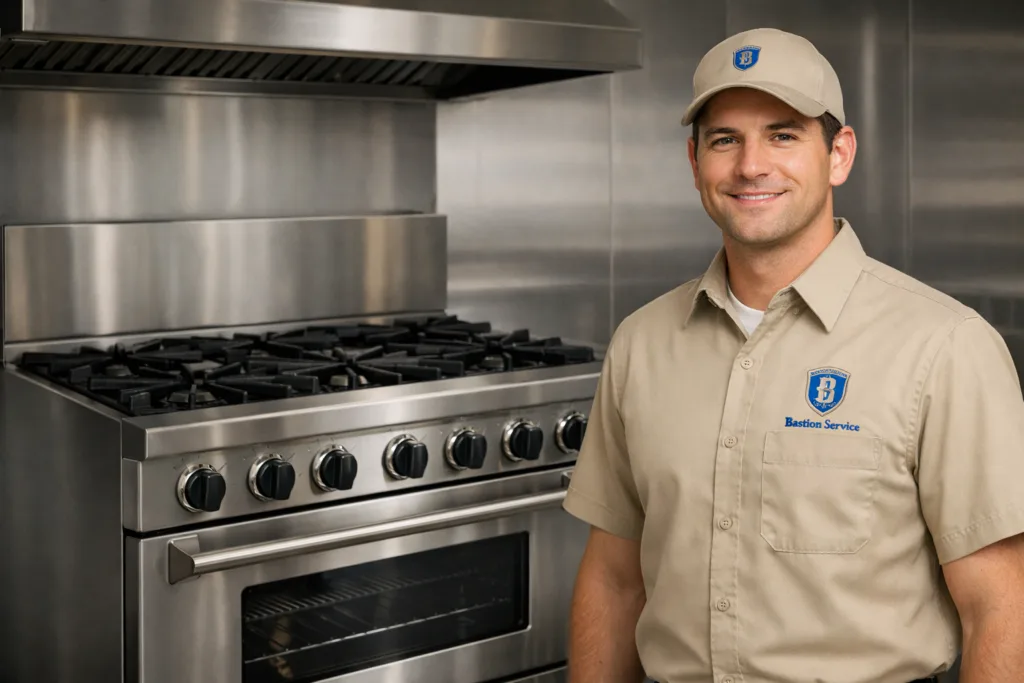





Range problems on a busy line usually start as a performance issue before they become a full shutdown. A burner that lights late, an oven base that runs cool, or controls that stop responding can slow prep, disrupt timing, and put extra pressure on staff. For businesses in Mid-City, the most effective next step is service that identifies the actual failure, explains the operational risk, and helps schedule repair around the urgency of the problem. Bastion Service works on Vulcan range issues with that service-focused approach so kitchens can make informed repair decisions instead of guessing at parts.
Related commercial service paths in Mid-City include Vulcan Commercial Repair in Mid-City, Vulcan Oven Repair in Mid-City, and Vulcan Fryer Repair in Mid-City.
Why symptom patterns matter before repair
Two ranges can show the same complaint and still need different repairs. “Not heating right” might involve a burner assembly, ignition component, thermostat, sensor, valve, switch, wiring problem, or a combination of wear across multiple parts. That is why the symptom pattern matters.
Useful details often include:
- whether the issue affects top burners, the oven section, or both
- whether the failure is constant or intermittent
- whether the problem appears more often after the range has been running for a while
- whether the flame looks weak, unstable, delayed, or uneven
- whether temperature drift is minor or severe enough to affect output
That information helps narrow the diagnosis and keeps the repair process focused on the cause rather than the most obvious visible symptom.
Why a Vulcan range may stop lighting, heating, or holding temperature
Ignition trouble at the burners
If a burner clicks without lighting, lights only after several tries, or needs repeated relighting, the issue may involve igniters, pilot-related parts, clogged burner ports, gas flow problems, switches, or wiring faults. Delayed ignition is especially important to address promptly because it can create rough starts and make normal operation less safe and less predictable.
Weak flame or uneven heat
A burner that ignites but does not deliver normal heat may be dealing with blockage, worn burner components, valve issues, or pressure-related problems. On an active line, that usually shows up as slower pan recovery, inconsistent cooking speed, and staff shifting work to other sections of the range to compensate.
Oven section running cool or drifting off set temperature
When the oven base struggles to preheat, does not maintain temperature, or swings too widely during use, possible causes include thermostat problems, sensor faults, igniter weakness, burner issues, or heat-loss conditions from worn seals and internal wear. If batches are coming out unevenly, the problem may be in temperature control rather than food prep.
Controls not responding correctly
If a burner stays too high, does not adjust smoothly, or fails to respond to the knob setting, the fault may be in the valve, switch, thermostat, or control assembly. These issues are disruptive because they turn normal line work into guesswork and make it harder to produce consistent results.
Intermittent shutdowns during service
Some failures only appear after the range has been operating for an extended period. Heat-related electrical faults, aging controls, unstable connections, and worn ignition components can all behave this way. If the range performs normally at opening but starts acting up later in the shift, that timing is a meaningful service clue.
Signs the problem is starting to affect operations
Not every fault takes the range fully offline, but many problems still justify prompt service because they reduce output and increase risk of a larger failure. Common signs include:
- burners that take longer and longer to light
- flame patterns that look inconsistent from one burner to another
- hot spots or cool spots affecting pan performance
- oven temperatures that no longer match expected results
- staff changing prep timing to work around one section of the unit
- recurring clicking, relighting, or unexpected shutdowns
Once operators are building workarounds into service, the range is no longer functioning as intended. Addressing the issue earlier often helps avoid secondary wear and a more disruptive breakdown.
When continued use can make the repair more complicated
Some symptoms should not be pushed through a full schedule. Delayed ignition, unstable flame, overheating, repeated clicking, and major temperature control problems can all place added stress on related components. What starts as one faulty part can turn into additional damage if the range stays in heavy use while the problem is active.
That matters in Mid-City kitchens because downtime rarely happens at a convenient moment. If the range is already affecting throughput, waiting for total failure can create a much more difficult service window.
Repair or replace: how businesses usually decide
Many Vulcan range issues are repairable, especially when the problem is isolated to ignition parts, controls, valves, sensors, or burner-related components. Replacement becomes a more serious consideration when the range has repeated failures, broad wear across multiple systems, or declining performance that keeps returning after service.
A sound decision usually considers more than part cost alone. Businesses often weigh:
- how critical the range is to daily production
- whether the current fault is isolated or part of a larger pattern
- how much labor is being lost to inconsistent performance
- whether repair is likely to restore stable operation for a reasonable period
- how much disruption a replacement would create compared with a repair
The goal is not just to get heat back temporarily. It is to restore a level of performance that supports normal workflow.
What to note before scheduling service
Good service preparation can make diagnosis more efficient. Before the appointment, it helps to note:
- the model if available
- which burner, side, or oven section is affected
- whether the problem is constant or happens only under load
- whether the issue began suddenly or worsened over time
- any recent repairs, part replacements, or recurring symptoms
Specific examples are useful. “Front right burner lights late after lunch rush,” “oven runs 50 degrees low after preheat,” or “one side of the range stays too hot” provides much more value than a general note that the unit is not working right.
Service-focused repair support for Mid-City kitchens
Vulcan ranges are built for demanding kitchen use, but heavy daily operation eventually brings ignition wear, burner faults, control issues, and temperature problems that need expert attention. For businesses in Mid-City, the best next step is timely repair service that matches the symptom severity, confirms what has failed, and helps prevent a manageable issue from turning into a larger interruption. If the range is slowing service, affecting food consistency, or creating uncertainty on the line, scheduling diagnosis and repair is the practical move.


