
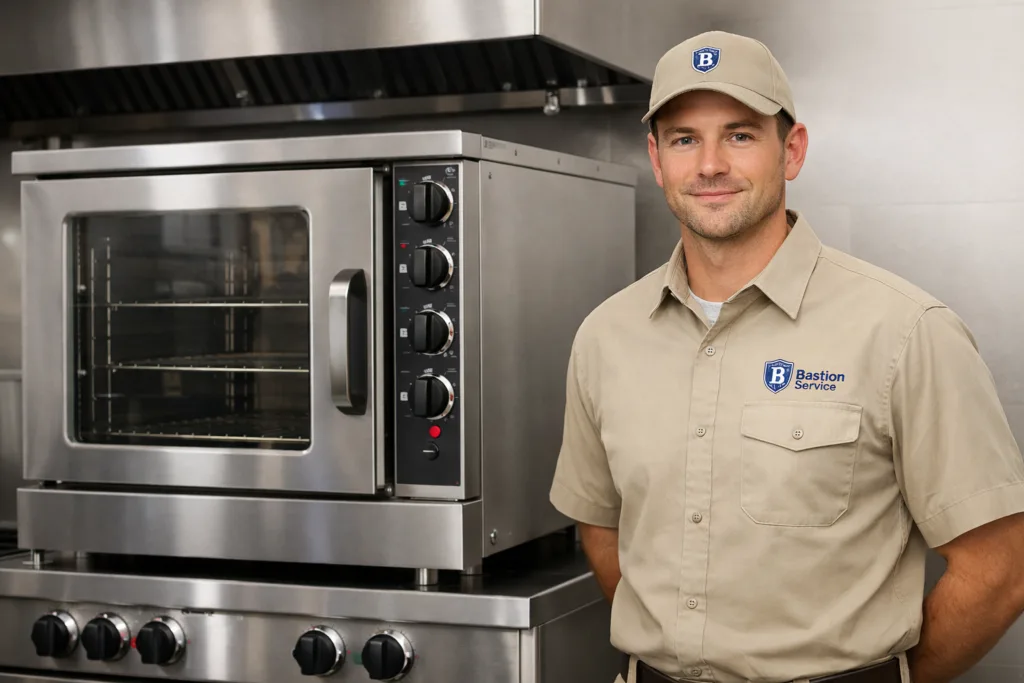




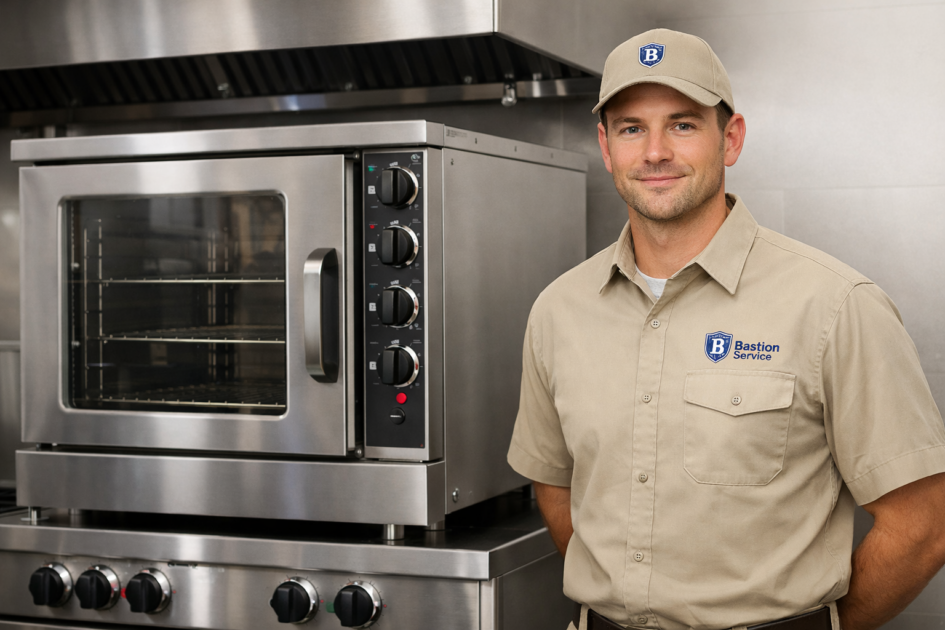
When a Vulcan oven starts running hot, cold, uneven, or not at all, production can slip fast. For businesses in Mar Vista, the most useful next step is service that identifies the actual fault before parts are ordered or the unit is pushed through another shift. Bastion Service works on Vulcan oven problems with a diagnosis and repair plan based on symptom pattern, operating condition, and the impact on daily kitchen output.
Related commercial service paths in Mar Vista include Vulcan Commercial Repair in Mar Vista, Commercial Oven Repair in Mar Vista, and Vulcan Range Repair in Mar Vista.
What a failing Vulcan oven usually looks like in day-to-day operation
Oven problems are not always obvious at first. In many kitchens, the first signs are slower ticket times, longer preheat, extra pan rotation, inconsistent browning, or staff adjusting settings more often than usual to get the same result. Those patterns matter because one symptom can point to several different causes, including ignition faults, sensor drift, control failure, weak heat output, airflow problems, worn door seals, or electrical issues.
A service visit is most productive when the problem is described in operating terms: whether the oven fails on startup, loses temperature during a rush, recovers too slowly after the door opens, or only acts up after running for a while. That kind of detail helps narrow down whether the issue is isolated or part of a broader performance decline.
Why is my Vulcan oven not heating evenly or reaching set temperature?
Uneven heating or failure to reach the selected temperature often comes down to how the oven is producing, sensing, and holding heat. On some units, the problem may be a weak ignition sequence, a failing temperature sensor, control board issues, calibration drift, or reduced airflow in the cavity. On others, worn gaskets, door alignment problems, or internal component wear can let heat escape or distribute poorly.
In practical terms, this shows up as undercooked product on one rack, over-browning on another, inconsistent batch timing, or a unit that says it is ready before it is actually stable. If staff have started compensating by changing cook times, rotating pans more aggressively, or increasing the set temperature to chase results, the oven should be checked before those workarounds create more inconsistency.
Common Vulcan oven symptoms and what they can indicate
Oven not heating at all
A complete no-heat condition can involve failed ignition components, power supply problems, control faults, safety shutdown conditions, or failed heating elements on electric units. Because this usually stops production immediately, it is often the clearest sign that repair should be scheduled without delay.
Slow preheat
If the oven takes much longer than normal to come up to temperature, possible causes include weak heat output, sensor or thermostat issues, heat loss at the door, or restricted airflow. Slow preheat often starts as an annoyance and then turns into a schedule problem during opening prep or busy service periods.
Temperature swings during use
An oven that overshoots, drops too low, or cycles unpredictably can affect both food quality and timing. This may point to controls, relays, sensing components, or other internal faults that prevent stable temperature management. When the unit cannot hold a consistent range, batch-to-batch reliability usually suffers.
Uneven cooking from rack to rack
Hot spots and cold zones can come from poor airflow, convection-related fan issues, cavity wear, seal problems, or heat distribution faults. This is especially disruptive when menus depend on repeatable bake or roast performance and staff need to keep adjusting pan position to compensate.
Ignition problems or delayed startup
If the oven starts inconsistently, lights late, or occasionally fails to fire, the issue may involve ignition components, controls, or related safety systems. Intermittent startup problems can be easy to ignore when the oven eventually turns on, but they often get worse and create harder-to-manage downtime.
Door, hinge, or gasket wear
Doors that do not close correctly or seals that no longer hold heat can reduce efficiency and make stable temperature harder to maintain. While these issues may seem minor compared with a no-heat failure, they can still affect recovery time, consistency, and operator workflow throughout the day.
When to schedule service instead of waiting
It is usually time to schedule repair when the oven cannot maintain set temperature, requires repeated manual adjustment, causes visible inconsistency in finished product, or slows production enough that staff are planning around the equipment instead of using it normally. Service also makes sense when the unit is still operating but doing so unreliably, because partial function often masks a problem that is getting worse.
Waiting can increase downtime if a sensor, ignition, or control issue spreads into additional component stress. It can also make diagnosis less straightforward once multiple symptoms start overlapping.
Signs the oven should not keep running under load
Continued use may worsen repair scope when the oven is overheating, failing to ignite consistently, shutting down unexpectedly, tripping electrical protection, or losing temperature so badly that output quality cannot be trusted. In those cases, the immediate concern is not just productivity but whether continued operation is putting more strain on the system.
For businesses in Mar Vista, the safest call is usually to stop relying on the unit for critical volume once performance becomes unpredictable. A controlled repair visit is generally easier to manage than a full outage in the middle of active service.
Repair or replacement: how the decision is usually made
A drop in performance does not automatically mean the oven should be replaced. The better decision depends on the confirmed failure, overall condition of the unit, repeat repair history, parts involved, and how important that specific oven is to the kitchen’s workflow. If the problem is isolated and the rest of the unit remains sound, repair is often the efficient choice.
Replacement becomes a more serious discussion when there are multiple major failures, ongoing reliability issues, or repair needs that no longer align with the value the oven delivers to the operation. That choice is easier to make after the actual fault has been identified rather than guessed at from symptoms alone.
How to prepare for a Vulcan oven service visit
Before service is scheduled, it helps to note when the problem happens, whether it affects every cook cycle or only some of them, and whether the issue appears at startup, during preheat, or once the oven has been running for a while. If there are error conditions, unusual noises, delayed ignition, or a pattern of temperature drift, those details can shorten the path to the right repair.
It is also helpful to know how the problem is affecting production: missed timing, uneven bake results, slower recovery, or the need for constant adjustment by staff. That operational context matters because the goal is not only to restore heat, but to restore predictable performance for the kitchen.
Service-focused support for Mar Vista kitchens
For Mar Vista businesses, oven repair is ultimately about protecting uptime and restoring consistent output without unnecessary guesswork. When a Vulcan oven begins showing heating, ignition, control, or temperature-holding problems, the smartest next step is to schedule service based on the actual operating symptoms, confirm whether the unit can continue in use safely, and move forward with repairs that match the diagnosed issue.


