
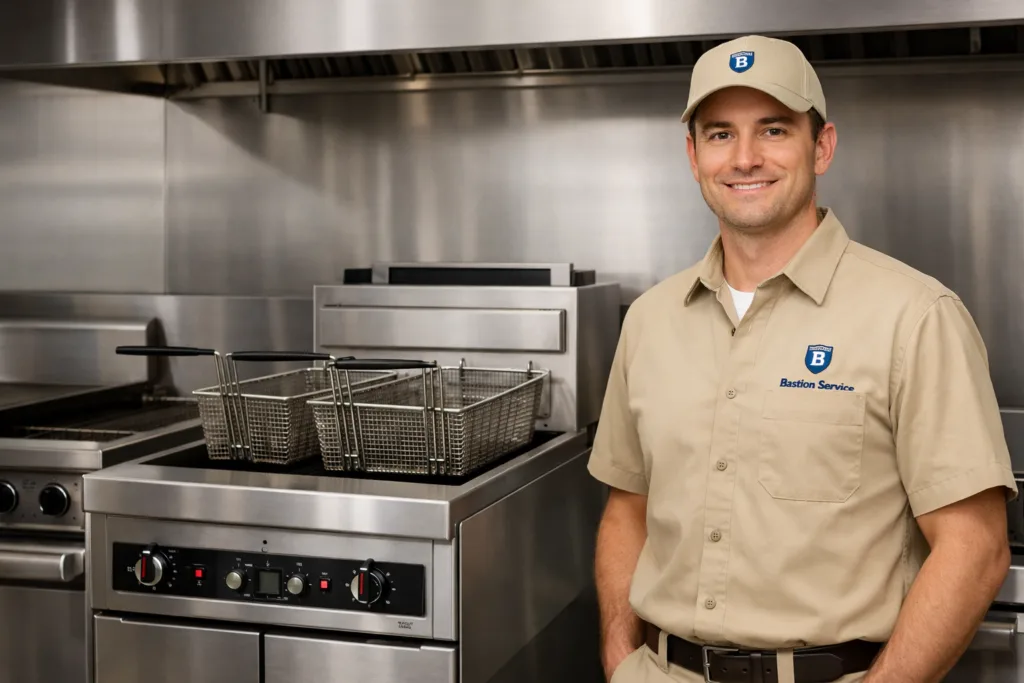





When a Vulcan fryer starts running hot, lagging on recovery, or shutting down during service in Culver City, the immediate concern is lost output, inconsistent cook times, and pressure on the kitchen. The most useful next step is to inspect the exact symptom pattern before ordering parts, because the same complaint can come from different failures in the thermostat circuit, high-limit safety, ignition system, gas flow, burner assembly, or electrical controls. Bastion Service works with businesses in Culver City to identify the cause, confirm whether the fryer is safe to run, and schedule repair based on how the equipment is affecting daily operations.
Related commercial service paths in Culver City include Vulcan Commercial Repair in Culver City, Commercial Fryer Repair in Culver City, and Vulcan Oven Repair in Culver City.
Common Vulcan fryer problems and what they can indicate
Fryer not heating or recovering temperature slowly
If the fryer does not heat at all, heats only partway, or takes too long to recover between batches, the issue may involve the thermostat, temperature sensor, ignition components, gas valve, burner performance, or control board. Slow recovery is often treated as a minor inconvenience at first, but in practice it leads to longer ticket times, uneven product color, and difficulty keeping up during busy periods.
In some cases, operators notice that the fryer eventually reaches temperature when idle but falls behind as soon as the basket load increases. That usually points to a system that is producing heat, but not at the level needed for normal production. A service call can determine whether the problem is related to heat regulation, combustion, or a safety component beginning to fail.
Oil temperature does not match the setting
When the oil runs hotter or cooler than the set temperature, food quality becomes inconsistent fast. Product may come out greasy, pale, too dark, or uneven from batch to batch. This can indicate thermostat drift, a sensing problem, control failure, or burner issues that are affecting how heat is delivered.
Temperature inaccuracy also increases oil wear. If the fryer is overheating, oil breaks down faster and may begin smoking sooner than expected. If it is running cool, cook times stretch and product may not finish properly. Both problems justify service before they turn into waste and repeat complaints.
Pilot or ignition problems
If the fryer has trouble lighting, will not hold a pilot, clicks without ignition, or starts intermittently, the fault may involve the igniter, thermocouple, thermopile, gas valve, wiring, or burner contamination. Ignition problems often begin as occasional startup trouble and then become a full no-heat failure with little warning.
A fryer that needs repeated relighting or behaves differently from one shift to the next should be checked sooner rather than later. Intermittent ignition usually means the problem is already progressing, even if the unit still comes on part of the time.
Burners are weak, uneven, or noisy
Weak flame, uneven burner output, delayed heating response, popping sounds, or other unusual burner behavior can point to restricted ports, debris buildup, pressure problems, or worn components affecting combustion. Operators may first notice this as slower production rather than an obvious shutdown.
Because burner issues can mimic temperature-control problems, it helps to inspect both systems together. What looks like a bad thermostat can sometimes be a heat-production issue, while what seems like weak burners may actually be tied to regulation or safety interruptions.
High-limit trips or the fryer shuts down unexpectedly
If the fryer overheats, trips a safety, or turns off without warning, there may be a failed high-limit, a control fault, a temperature regulation problem, or a condition causing the fryer to run outside normal range. Repeated shutdowns should not be ignored, especially if the unit needs resetting to keep working.
Unexpected shutdowns are disruptive on their own, but they also matter because they can point to a condition that affects safe operation. Service should focus on why the shutdown is happening, not just on getting the fryer to restart.
Leaks, residue, and visible wear around the fry station
Oil around fittings, residue near valves, worn handles, damaged baskets, and other visible wear do not always stop production immediately, but they often signal broader reliability concerns. A fryer with several smaller issues at once may still run, yet create enough interruptions to justify repair planning before the next busy stretch.
Why is my Vulcan fryer not heating or recovering temperature properly?
This symptom can come from several different causes, which is why replacing a single part based on guesswork often does not solve the problem. A Vulcan fryer that is not heating or recovering properly may have a failed thermostat, inaccurate sensor input, weak ignition, burner restriction, gas-flow issue, high-limit interruption, or an electronic control problem. It may also be heating, but not producing enough consistent output to recover after each batch.
That distinction matters. A fryer that is completely cold is diagnosed differently from one that heats slowly, overshoots temperature, or falls behind only during peak use. Looking at how the fryer behaves under load helps determine whether the problem is ignition-related, combustion-related, or tied to regulation and safety controls.
Why diagnosis matters before parts are ordered
Fryer symptoms overlap. “Not heating properly” can describe a no-heat condition, slow recovery, short cycling, inaccurate temperature, or repeated shutdowns. Each of those can trace back to different components. Ordering parts too early can add cost, extend downtime, and still leave the root problem unresolved.
A proper inspection helps narrow the fault to the actual failed system, spot secondary wear that may affect reliability after repair, and determine whether the unit is worth restoring based on condition and workload. For kitchens in Culver City, that matters because the repair decision is not only about the component that failed, but also about how quickly the fryer needs to return to stable service.
Signs it is time to schedule fryer repair
Service should be scheduled when the fryer begins showing any of these symptoms:
- Slow heat-up or poor recovery between batches
- Oil temperature running too high or too low
- Pilot will not stay lit or ignition is unreliable
- Burners appear weak, uneven, or unusually loud
- Frequent shutdowns or repeated high-limit trips
- Food color and cook times becoming inconsistent
- Visible leaks, residue, or wear affecting operation
These issues usually become more obvious during heavier use. Waiting until the fryer fails completely can mean a more difficult service window, more food waste, and a bigger interruption to the line.
Repair versus replacement considerations
Repair is often the better option when the fryer is structurally sound, the failure is isolated, and the unit still meets the kitchen’s production needs. Replacement becomes more likely when the fryer has a history of repeat temperature problems, multiple worn systems, persistent shutdowns after prior work, or condition issues that make continued investment difficult to justify.
The right decision depends on more than age alone. A fryer may be worth repairing if the core equipment is still solid and the current problem is confined to one serviceable area. On the other hand, a unit with ongoing instability may cost more in lost uptime than a one-time repair estimate suggests.
What to have ready before the service visit
To help speed up diagnosis, it is useful to note whether the fryer is not heating at all, heating slowly, overshooting temperature, shutting down after reaching temperature, or failing only during heavy production. It also helps to know whether the issue is constant or intermittent, whether any reset has been needed, and whether the problem started suddenly or has been getting worse over time.
If possible, have the model information available and be ready to describe what the fryer was doing just before the issue appeared. Details like unusual flame behavior, delayed ignition, smoke, or temperature swings can make the inspection more efficient.
For businesses in Culver City, the goal is to get from symptom to repair decision quickly, with a service plan that matches the fryer’s condition and the kitchen’s workload. If your Vulcan fryer is losing heat, recovering too slowly, or shutting down unexpectedly, scheduling service early is the best way to limit downtime and restore more predictable operation.


