
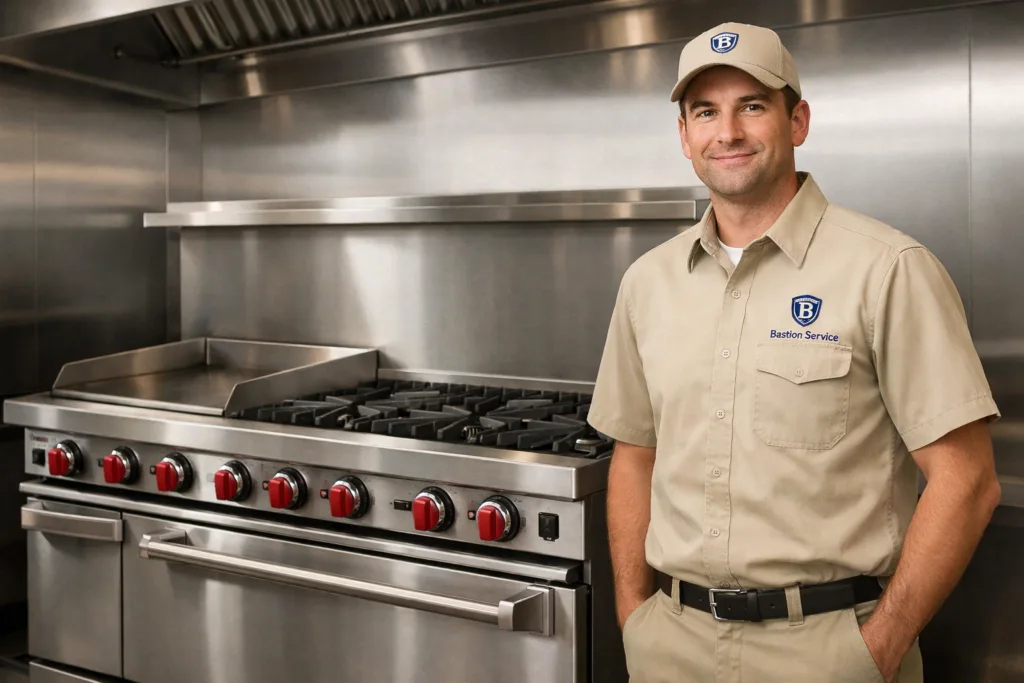




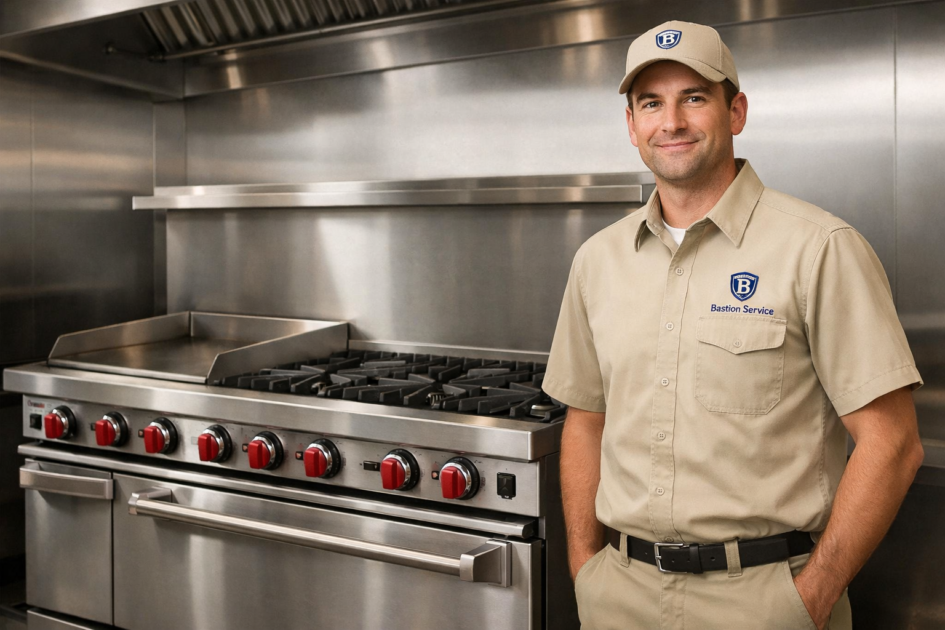
When a Vulcan oven, range, or fryer starts missing temperature targets, delaying ignition, or shutting down mid-shift, the next decision should be based on serviceability and operating risk rather than trial and error. For kitchens in Culver City, the immediate concern is usually how the fault affects production, whether the unit can stay online safely, and how quickly repair can be scheduled without creating a larger interruption.
For specific equipment paths in Culver City, review Vulcan Oven Repair in Culver City, Vulcan Range Repair in Culver City, and Vulcan Fryer Repair in Culver City.
Bastion Service works with businesses that need symptom-based diagnosis for Vulcan cooking equipment used in daily food-service operations. That includes sorting out whether a problem is isolated to one component, tied to a broader control issue, or likely to worsen under load during lunch, dinner, or prep periods.
What Vulcan cooking equipment problems do you troubleshoot?
Most service calls involve symptoms that reduce output before the equipment fully fails. A fryer may still heat but recover too slowly to keep up. An oven may run hot, run cold, or cook unevenly from one rack position to another. A range may light inconsistently, lose burner strength, or create uneven heat that slows line work.
Common problems businesses report include:
- Temperature drift or failure to hold setpoint
- Delayed ignition or no ignition
- Burners dropping out during operation
- Slow fryer heat recovery
- Uneven oven performance and hot spots
- Controls that stop responding normally
- Intermittent shutdowns during service
- Performance loss that creates ticket delays
These symptoms matter because cooking equipment can appear partly functional while still causing wasted product, inconsistent results, and labor slowdowns. The repair path depends on how the unit behaves during actual use, not just whether it powers on.
Oven, range, and fryer symptoms often point to different repair needs
Oven problems that affect consistency
When an oven underheats, overheats, cycles poorly, or cooks unevenly, the issue may involve temperature sensing, control regulation, ignition, gas delivery, heating components, relays, or board-level faults. In a busy kitchen, even a small temperature error can show up as inconsistent bake times, uneven finishing, or repeat cooking because product is not coming out correctly the first time.
Service becomes more urgent when the oven cannot recover after the door opens, takes too long to preheat, or produces obvious hot and cold areas. Those are the kinds of problems that turn normal production into guesswork.
Range issues that slow the line
Range problems are often noticed first as weak burner output, ignition delays, burners that do not stay lit, or uneven flame across the cooking surface. For operators, this is not just an equipment nuisance. It changes timing, reduces station efficiency, and forces staff to shift work to other burners or other pieces of equipment.
Burner instability can be related to ignition components, flame sensing, gas valves, switches, wiring, or control faults depending on the unit design and failure pattern. If the problem comes and goes, it is especially important to have the symptoms documented before the next service visit.
Fryer faults that affect volume and recovery
Fryers often create operational problems before a full shutdown happens. Slow recovery, oil that does not return to cooking temperature fast enough, unstable heating, and sudden cutoffs can all reduce batch capacity and extend ticket times. In higher-volume kitchens, this can quickly become a service bottleneck.
These issues may point to heating system wear, thermostat or sensor problems, ignition faults, control issues, or other component failures that only become obvious under repeated cycles. If the fryer struggles most during peak demand, that pattern is useful in narrowing the repair approach.
Signs the equipment should be scheduled for service soon
Some problems can wait for a planned service window, but others should be addressed before the next heavy-use period. Scheduling sooner is usually the better choice when you notice:
- Repeated ignition attempts before the unit lights
- Temperature swings that affect food quality
- Burners cutting out while cooking
- Longer heat-up times than normal
- Controls failing intermittently
- Shutdowns that require resets or cool-down time
- Output loss that forces staff workarounds
Even if the equipment is still operating, recurring symptoms often indicate a fault that is becoming less predictable. Waiting can turn a manageable repair into a shift-disrupting outage.
Why intermittent faults are harder than complete failures
A unit that fails completely is easier to identify than one that works for part of the day and then drops out. Intermittent shutdowns are common with cooking equipment that has developing issues in safety circuits, overheating conditions, loose electrical connections, failing controls, or flame-proving systems. The challenge is that these faults may appear only after the equipment has been running long enough to reach normal operating conditions.
For that reason, helpful details include when the shutdown happens, whether the unit restarts on its own, whether the problem appears only during busy periods, and whether heat output changes before the failure. That information helps determine whether the issue is tied to startup, sustained heat, repeated cycling, or component breakdown under load.
Repair versus replacement depends on the actual failure pattern
Not every Vulcan issue points to replacing the entire unit. Many oven, range, and fryer problems involve a specific failed component, calibration-related correction, ignition-system repair, or control-related fault that can be addressed without retiring the equipment. The better decision usually comes down to age, condition, service history, parts involved, and how essential the unit is to daily kitchen output.
Diagnosis is what makes that decision useful. Instead of reacting to downtime alone, operators can compare the nature of the failure, the likelihood of stable operation after repair, and the impact of keeping the equipment in service.
What a service visit should help you determine
A productive visit should do more than confirm that the equipment has a problem. It should help identify the active fault, show how that fault affects operation, and clarify what comes next. For business operators, that typically means understanding:
- Why the equipment is losing heat, ignition, or control response
- Whether the unit can continue operating before repair
- How the symptom affects output and food consistency
- Whether one issue may be causing related performance problems
- How to prioritize repair if more than one unit is affected
This is especially important in Culver City kitchens where one unstable piece of cooking equipment can shift workload onto the rest of the line and create production pressure across the entire operation.
Scheduling the next step for a busy kitchen
If your Vulcan cooking equipment is creating delays, inconsistent heating, burner problems, or unexpected shutdowns, the best next move is to schedule service before the issue spreads into a larger production problem. A focused repair assessment helps determine whether the equipment should stay in use, be taken offline, or be repaired on an accelerated timeline so kitchen operations in Culver City can keep moving with less disruption.


