
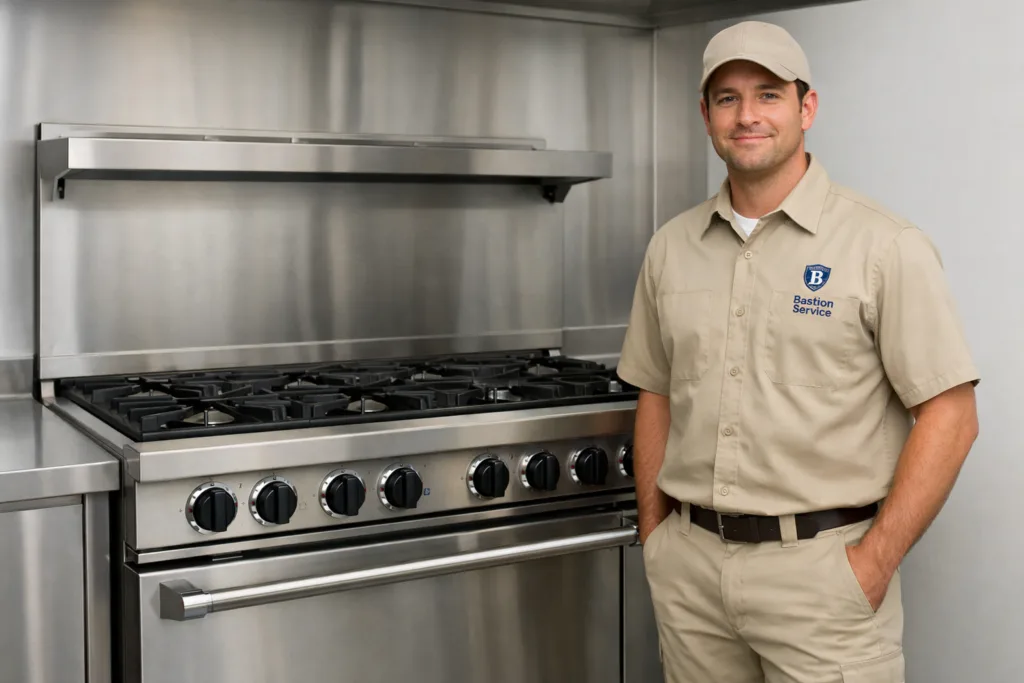




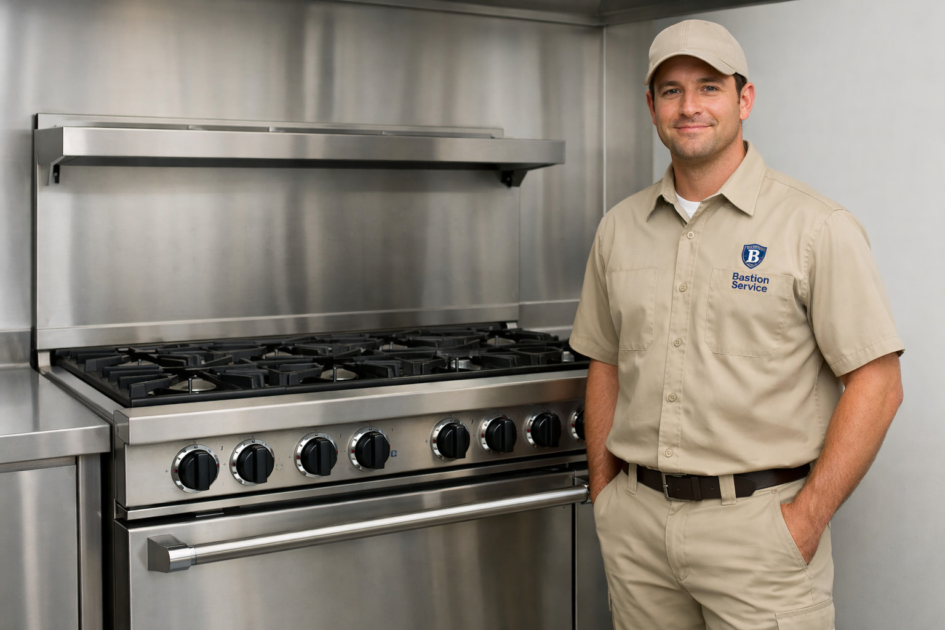
When a Vulcan oven, range, or fryer starts losing heat, failing to ignite, or dropping out during service, the next step should be focused troubleshooting tied to repair scheduling and operating risk. For businesses in West Hollywood, the goal is not just finding the symptom name; it is confirming what has failed, whether the unit can remain in limited use, and how quickly the problem could turn into a larger outage. Bastion Service helps evaluate those issues so owners and kitchen managers can make practical decisions about downtime, parts, and timing.
For specific equipment paths in West Hollywood, review Vulcan Oven Repair in West Hollywood, Vulcan Range Repair in West Hollywood, and Vulcan Fryer Repair in West Hollywood.
Vulcan cooking equipment problems that commonly disrupt kitchen operations
Cooking equipment issues often show up first as slower production, inconsistent results, or staff workarounds. A fryer may still heat but recover too slowly during rush periods. An oven may run, yet produce uneven results from one rack position to another. A range may ignite sometimes but not reliably enough for steady line use. These patterns matter because they usually point to specific heating, ignition, sensor, burner, or control faults that need repair rather than continued adjustment by staff.
In many cases, one visible symptom can have more than one cause. Low temperature can come from a failing control, a sensor problem, burner weakness, or gas-flow-related issues. Intermittent shutdowns can involve safety components, wiring faults, overheating conditions, or control failure. That is why symptom-based diagnosis is important before ordering parts or deciding whether the equipment should stay in service.
Heating and temperature-control faults
If a Vulcan unit runs too hot, too cool, or struggles to hold a set temperature, output becomes harder to predict. Ovens may bake unevenly or require longer cook times. Fryers may lag behind demand or overshoot temperature. Ranges may deliver inconsistent flame and uneven pan performance. These issues can involve thermostats, probes, sensors, calibration drift, gas-heating problems, or control components that no longer respond accurately.
Temperature problems should be taken seriously even when the unit still appears usable. Once staff begin compensating with guesswork, longer cook cycles, or repositioning product, the equipment is already affecting labor, consistency, and service speed.
Ignition and burner-related issues
Delayed ignition, repeated clicking, pilot trouble, weak flames, and burners that light inconsistently are common reasons businesses schedule service for Vulcan cooking equipment. On a range, that can slow prep and station timing. On an oven or fryer, ignition trouble can lead to no-heat conditions, burner dropout, or unreliable recovery during busy periods.
These symptoms may point to igniters, pilot assemblies, flame-sensing components, switches, valves, or related control issues. Because ignition faults can become less predictable over time, it is usually better to schedule repair before the equipment is relied on for full production again.
Unexpected shutdowns and intermittent operation
Intermittent failures are among the most disruptive problems in a working kitchen because they create uncertainty. A unit may run normally for part of the day and then shut off mid-cycle, stop heating without warning, or require resets before it works again. That kind of pattern can involve safety circuits, electrical faults, loose connections, failing controls, or components that break down once the equipment reaches operating temperature.
For businesses in West Hollywood, intermittent issues are often harder on operations than a full no-start condition because staff cannot trust the equipment during service. When that happens, repair planning should focus on reliability, not just whether the unit powers on during a quick check.
Symptom-based repair guidance by equipment type
Vulcan fryer repair concerns
Fryer problems usually become obvious through slow heat recovery, oil that does not reach set temperature, overheating, ignition failure, or burners that cut out under load. Even when food can still be produced, slower recovery can reduce batch volume and create ticket delays. Overheating can affect product quality and operating safety. Intermittent burner operation can cause inconsistent frying results and force staff to avoid using the unit at full capacity.
Typical repair paths may involve controls, sensors, ignition components, burner-related parts, or other heating-system faults. If the fryer is already requiring resets, showing unstable heat, or producing uneven results from batch to batch, it is usually time to schedule service rather than keep pushing it through peak periods.
Vulcan oven repair concerns
Oven issues often appear as uneven cooking, temperature swings, slow preheat, weak heat, or complete no-heat conditions. In some kitchens, staff first notice the problem because products need to stay in longer than usual or because results vary from one load to the next. Those signs can point to thermostat problems, temperature sensor faults, ignition failure, burner issues, or control-related problems.
An oven that still runs but cannot maintain dependable heat can be just as disruptive as one that will not start. Product inconsistency, rework, and extended cook times can quietly increase labor costs and slow the rest of the line.
Vulcan range repair concerns
Range trouble often shows up as burners that do not ignite cleanly, flames that are too weak or unstable, uneven heating across stations, or controls that no longer respond as expected. A single unreliable burner can interrupt prep flow, while multiple burner issues can slow the entire kitchen. Because range performance is tied closely to timing, even minor-looking flame problems can become major operational problems during service.
Repair may involve burner components, ignition parts, valves, switches, or related control and gas-heating issues. If cooks are avoiding certain burners or adjusting workflow to compensate, the range is already affecting throughput and should be evaluated.
Signs the equipment should not stay in normal use
Some problems justify prompt repair scheduling even if the unit still turns on. Watch for patterns such as:
- Delayed or failed ignition
- Heat that drops unexpectedly during use
- Repeated resets or restarts
- Slow recovery that backs up production
- Temperature swings that affect consistency
- Burners that cycle irregularly or cut out
- Controls that respond inconsistently
When these symptoms are present, continuing normal operation can increase the chance of a full shutdown at the worst time. It can also make diagnosis more difficult if multiple stressed components begin failing together. A scheduled repair visit is often the better option before the equipment becomes unavailable altogether.
How repair decisions are usually made
Not every issue leads to the same recommendation. Some Vulcan cooking equipment problems are limited to a specific ignition, control, or burner-related part. Others involve older units with recurring heat problems, multiple failing components, or a history of unreliable operation. The best decision usually depends on the actual fault, the condition of the rest of the unit, and how much the current problem is already affecting kitchen output.
For a business in West Hollywood, the repair question is often tied to timing as much as cost. If a unit can be repaired quickly and returned to dependable performance, that may be the right move. If the equipment has become unpredictable, needs repeated service, or risks disrupting every busy period, it may be time to weigh larger next-step decisions. Diagnosis should help clarify that choice rather than leave the business guessing.
What a service visit should help clarify
A productive service call should identify the failed system, explain how the symptom connects to day-to-day operation, and help determine whether limited use is realistic until repair is completed. It should also narrow down whether the issue appears isolated or whether related components may need attention at the same time.
If your Vulcan cooking equipment is causing slow recovery, ignition trouble, uneven heat, burner instability, or unexpected shutdowns, scheduling service is the most practical way to protect production and avoid a broader interruption. For businesses in West Hollywood, early repair action is often the difference between a manageable fix and a much longer equipment outage.


