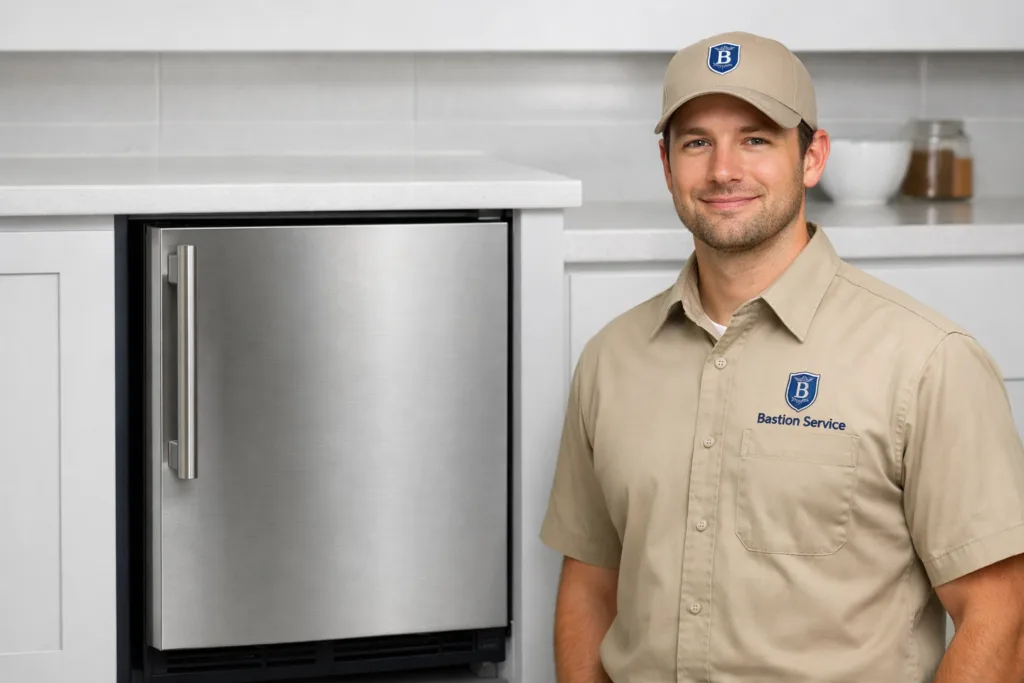
When a U-Line refrigerator starts warming, leaking, or frosting over, the symptom by itself does not tell the whole story. The same temperature complaint can come from airflow restrictions, sensor problems, fan failure, a weak door seal, or a more serious cooling-system issue. Getting the cause right matters, especially with built-in and specialty refrigeration where access, ventilation, and cabinet fit can affect performance.
What different symptoms usually point to
Homeowners in Fairfax often notice a problem first as a change in food temperature, a new sound, or moisture where it does not belong. Those signs are useful because they help narrow the fault pattern before any parts are replaced.
The refrigerator is running, but not staying cold
If the unit powers on and seems active but temperatures are drifting upward, the issue may be related to air movement, condenser performance, a faulty thermistor or thermostat, evaporator fan trouble, or an electronic control problem. In some cases, the compressor runs but cooling remains weak, which can suggest sealed-system concerns. Intermittent cooling is especially important to address because the refrigerator may appear to recover for short periods while the underlying problem gets worse.
Temperature swings from too cold to too warm
Wide temperature swings often point to controls, sensors, airflow imbalance, or frost interfering with normal circulation. A refrigerator that freezes items one day and feels warm the next is not operating normally, even if it has not fully stopped. These fluctuations can shorten food life and are often a sign that the unit is struggling to regulate consistently.
Water inside the cabinet or on the floor
Leaks can come from a blocked drain, excess condensation, door gasket gaps, or ice melting in areas where it should not form. Small puddles are easy to ignore, but repeated moisture can damage surrounding flooring and cabinetry. If water shows up after door openings, after a defrost cycle, or at random times during the day, that pattern can help identify whether the source is drainage, sealing, or frost-related.
Frost buildup on walls, shelves, or around the door
Frost usually means warm air is entering where it should not, or the unit is not clearing moisture properly during normal operation. A damaged gasket, misaligned door, blocked airflow path, or defrost problem can all contribute. Even light frost matters because it can reduce airflow, force longer run times, and lead to uneven temperatures throughout the cabinet.
Buzzing, clicking, rattling, or nonstop running
Some operational sound is normal, but new or louder noises deserve attention. Rattling can be vibration-related, clicking may point to start or relay trouble, and loud fan noise can indicate obstruction or motor wear. If the refrigerator seems to run constantly, that often means it is working harder than it should to maintain temperature. Longer run times can stem from dirty condenser components, poor ventilation, gasket leaks, or a cooling-system issue.
Why U-Line refrigerator problems should not be guessed at
U-Line units are often installed in compact kitchen layouts, bars, islands, or specialty built-in spaces. Because of that, a simple-sounding complaint can have more than one contributing cause. For example, a refrigerator that feels warm may have both reduced airflow and a door-seal issue. A unit with frost may also have a fan problem that is masking the original fault.
That is why diagnosis should focus on the full symptom pattern: when the issue started, whether it is constant or intermittent, what the temperature is doing, and whether noise, frost, or leaks are happening at the same time. That approach is much more reliable than replacing parts based on a single symptom.
Signs it is time to schedule service
It is usually time to arrange service when you notice one or more of the following:
- Food or drinks are no longer staying consistently cold
- The refrigerator cycles for unusually long periods
- Water keeps collecting inside or under the unit
- Frost returns soon after being cleared
- The door does not close firmly or seal evenly
- New clicking, buzzing, or fan noise appears
- The cabinet temperature changes without any control adjustment
Waiting can allow a smaller issue to spread. A gasket problem can turn into frost and airflow trouble. A drainage issue can create hidden moisture damage. A fan or condenser problem can place more strain on the compressor over time.
What to check before a technician arrives
A few basic observations can make troubleshooting faster and more accurate. You do not need to disassemble anything, but it helps to note what the refrigerator is doing under normal use.
- Whether the cabinet is fully warm or only inconsistent
- Whether the freezer section, if present, seems normal or also affected
- Where frost is forming and how quickly it returns
- Whether leaks happen after defrost cycles or heavy door use
- Whether the door closes smoothly and seals all the way around
- Whether the unit is noisier at startup, during operation, or all the time
- Whether surrounding cabinetry leaves adequate ventilation space
If possible, remove items that may be blocking interior vents and confirm that temperature settings were not accidentally changed. These simple checks will not solve every issue, but they can help separate normal loading problems from a mechanical or electrical fault.
Repair or replacement: how homeowners usually decide
Most repair-versus-replacement decisions come down to the failed component, the age of the refrigerator, the overall condition of the appliance, and whether the problem is isolated or part of a larger pattern. A single fan motor, control, sensor, or drain issue is often a reasonable repair if the unit is otherwise in good shape. The conversation changes when the refrigerator has major cooling-system trouble, repeated failures, or multiple symptoms appearing at once.
Built-in and specialty refrigeration can also make replacement decisions less straightforward than they are with standard freestanding models. Fit, finish, paneling, and installation layout may all matter. In many cases, the best next step is to identify the exact fault first and then compare the repair path with the long-term value of keeping the unit.
Common household situations that deserve closer attention
The refrigerator seems fine in the morning, then warm by evening
This often suggests intermittent airflow, a fan issue, control inconsistency, or a component that weakens as it heats up during operation. These problems can be difficult to judge without testing because the appliance may partially recover before the next cycle.
The unit cools, but food does not last as long as it should
Minor temperature instability does not always feel dramatic at first. You may notice soft produce, dairy spoiling early, or beverages taking too long to chill. Those are early signs that the refrigerator is not maintaining a stable range, even if it still feels cold at a glance.
There is no major leak, just recurring dampness
Light moisture on shelves, around drawers, or near the door can be an early warning of condensation or sealing trouble. It is worth addressing before it turns into visible pooling, frost, or cabinet damage.
The door needs an extra push to close
A door that looks closed but does not seal tightly can create a steady stream of temperature and moisture problems. Even slight misalignment or gasket wear can lead to frost, long run times, and poor cooling performance.
Focused help for U-Line refrigeration in Fairfax
For households in Fairfax, the most helpful approach is to match the repair plan to the exact behavior of the refrigerator rather than the most obvious symptom alone. If your U-Line unit is losing temperature, building frost, leaking, or running louder and longer than usual, service is typically the best way to determine whether the issue is a manageable component failure or a larger cooling problem.
The sooner the pattern is evaluated, the better the chance of preventing spoiled food, reducing strain on the appliance, and avoiding added damage around the refrigerator.