
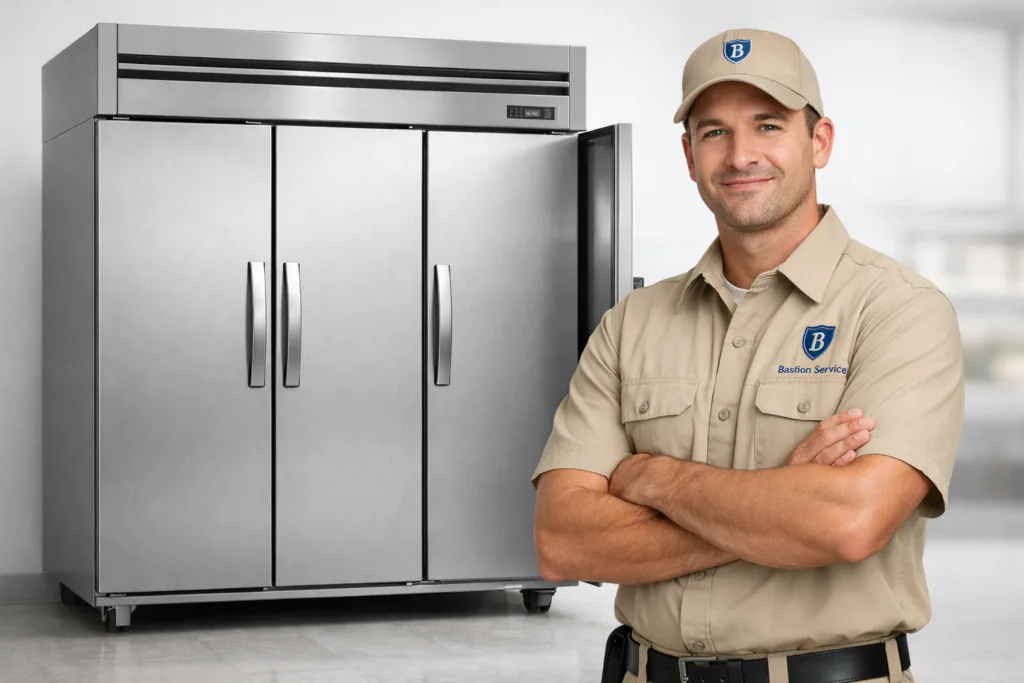




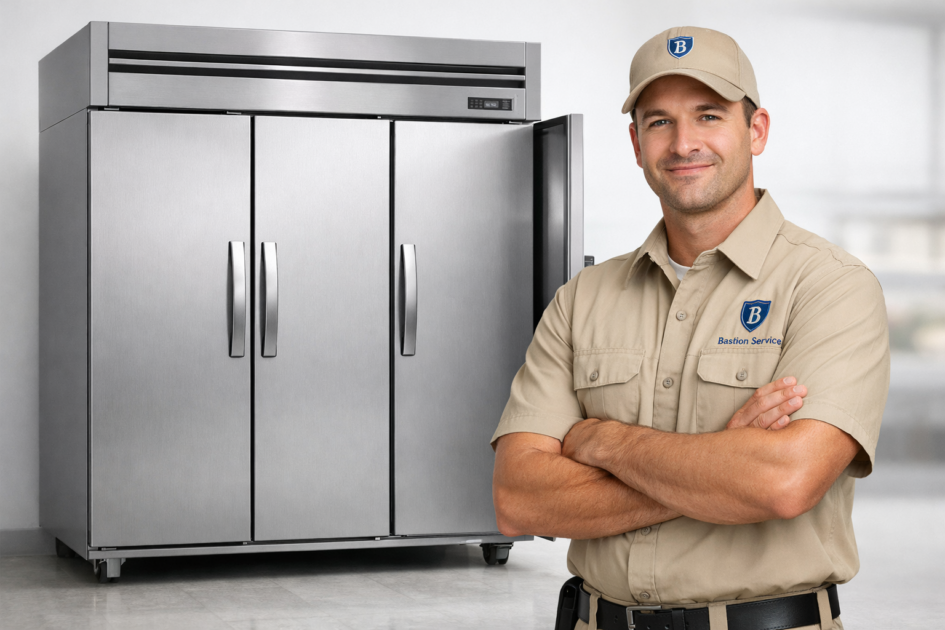
When a Turbo Air refrigerator starts running warm, icing over, leaking, or short-cycling in Beverly Hills, the most useful next step is service built around the exact symptom pattern. A warm cabinet, repeated frost buildup, or uneven product temperatures can come from very different causes, and the repair path changes depending on whether the problem involves airflow, controls, defrost, door sealing, fan operation, or the refrigeration system itself. For businesses that depend on stable cold storage, early diagnosis helps limit downtime, protect inventory, and make repair scheduling more predictable.
Related commercial service paths in Beverly Hills include Turbo Air Commercial Repair in Beverly Hills, Commercial Refrigerator Repair in Beverly Hills, and Turbo Air Freezer Repair in Beverly Hills.
Bastion Service works with Beverly Hills businesses that need Turbo Air refrigerator problems diagnosed before a minor performance issue turns into a full loss of cooling. In many cases, the important question is not just whether the unit still runs, but whether it is still operating safely and consistently enough for daily use. That is why symptom-based service matters: it helps determine urgency, likely repair scope, and whether continued operation is realistic while service is arranged.
Common Turbo Air Refrigerator Problems
Cabinet not holding temperature
If the cabinet cannot stay at set temperature, possible causes include restricted condenser airflow, evaporator fan problems, sensor or control faults, door gasket leakage, or sealed-system performance issues. This symptom often shows up as soft product temperatures, slow recovery after the doors open, or a refrigerator that appears to run constantly without pulling the cabinet down properly. For businesses in Beverly Hills, even a small temperature swing can interrupt workflow and create uncertainty around product holding.
Frost buildup inside the unit
Frost on the evaporator cover, ice around the door opening, or repeated ice formation inside the cabinet usually points to a defrost fault, warm air infiltration, damaged gaskets, or a door that is not closing fully. On Turbo Air refrigerators, frost problems often begin as an airflow issue before turning into a larger cooling complaint. Once circulation is blocked by ice, the unit may run longer, cool unevenly, or stop maintaining usable storage conditions.
Water leaking onto the floor or into the cabinet
Leaks can be caused by clogged drains, poor defrost drainage, excess condensation, or ice melt related to airflow and temperature problems. In a busy kitchen, prep area, or storage room, water around refrigeration equipment becomes more than a nuisance. It can affect sanitation, create slip hazards, and signal that the refrigerator is no longer managing moisture correctly.
Noisy operation or frequent cycling
Buzzing, clicking, rattling, or repeated starting and stopping can suggest fan motor wear, compressor stress, loose components, airflow restrictions, or electrical control issues. A refrigerator that cycles too often or runs nearly nonstop is often working harder than it should. That can increase wear on major components and make a repair call more urgent than the noise alone might suggest.
Uneven cooling from top to bottom
When one section of the cabinet stays colder than another, the issue may involve blocked airflow, fan failure, sensor placement problems, loading patterns, or early evaporator icing. Uneven cooling is especially important to address because it can be mistaken for a general temperature problem when the real issue is circulation inside the box. A proper service visit helps separate airflow faults from deeper refrigeration concerns.
Why Symptom-Based Diagnosis Matters
Refrigeration problems rarely have a one-part answer. The same complaint can come from several different failures. A cabinet that runs warm, for example, might be dealing with dirty condenser conditions, a failed evaporator fan, a faulty control reading, door leakage, or reduced cooling capacity. Replacing parts before the cause is confirmed can add cost and waste time while the original problem continues.
For Beverly Hills businesses, diagnosis also helps answer practical questions quickly: whether product should be moved, whether the unit can stay in limited use, whether the issue is likely to worsen soon, and whether parts or follow-up repair planning may be needed. That matters when refrigeration supports daily service, food prep, beverage storage, or back-of-house operations that cannot easily pause.
Signs Service Should Be Scheduled Promptly
- The refrigerator is running but not returning to set temperature.
- Frost keeps coming back after manual clearing.
- The cabinet sounds louder than usual or cycles abnormally.
- Water is collecting under or inside the unit.
- Temperatures vary from shelf to shelf or zone to zone.
- The doors are not sealing cleanly or are popping back open.
- The unit runs continuously with little cooling improvement.
These symptoms usually mean the refrigerator is under strain, not simply having a temporary off day. In a business setting, waiting too long can lead to product loss, staff workarounds, and additional wear on fans, controls, and compressor-related components.
When Continued Use Can Make the Problem Worse
Some Turbo Air refrigerator issues become more expensive when the equipment stays in service without repair. Airflow restrictions can force longer run times. Defrost problems can lead to heavy ice buildup that blocks circulation completely. Door gasket failure can bring in moisture and warm air that make the refrigeration system work harder than normal. What starts as an intermittent issue can become a total cooling failure if the underlying cause keeps progressing.
If the cabinet is only partly cooling, recovering slowly, or showing persistent ice or leak problems, continued use should be evaluated carefully. A refrigerator that still powers on is not necessarily a refrigerator that is safe to rely on for normal business use. Service is often the better decision before the unit reaches a point where downtime becomes unavoidable.
Repair or Replacement: How Businesses Usually Evaluate the Decision
Not every Turbo Air refrigerator with a cooling problem needs to be replaced. Many issues involving controls, fan motors, drainage, door sealing, or defrost components are repairable when the cabinet and overall equipment condition are still solid. At the same time, repeated major breakdowns, declining reliability, or a high-cost repair tied to broader wear can make replacement worth considering.
The best decision usually comes down to the diagnosed failure, the condition of the cabinet and door system, the service history of the unit, and how important that refrigerator is to daily operations in Beverly Hills. A proper inspection helps separate an isolated repair from a sign that the equipment is becoming difficult to rely on.
How Businesses Can Prepare for a Service Visit
Before service is scheduled, it helps to note the exact symptom rather than just the final outcome. Useful details include current cabinet temperature, whether the problem is constant or intermittent, whether ice or water is visible, whether the unit is making new noises, and whether the issue started after cleaning, loading changes, or prolonged door use. Even basic observations can help narrow the likely cause faster.
If product temperatures are already drifting, staff should verify holding conditions and be ready to relocate sensitive inventory if needed. Keeping door openings to a minimum and avoiding unnecessary resets can also help preserve usable conditions until diagnosis is completed.
What Effective Refrigerator Service Should Accomplish
A productive repair visit should do more than replace a part and hope for improvement. It should identify the actual failure point, explain how that fault affects cooling performance, clarify whether the refrigerator can remain in use, and outline the next step based on the condition of the equipment. For businesses in Beverly Hills, that kind of service approach supports better scheduling decisions and reduces the chance of repeat interruptions.
If your Turbo Air refrigerator is showing warm temperatures, frost, leaks, airflow problems, or unstable operation, timely service can help prevent larger downtime and protect day-to-day operations. The right next step is to have the symptom pattern evaluated, confirm what is failing, and schedule repair based on urgency rather than guesswork.


