
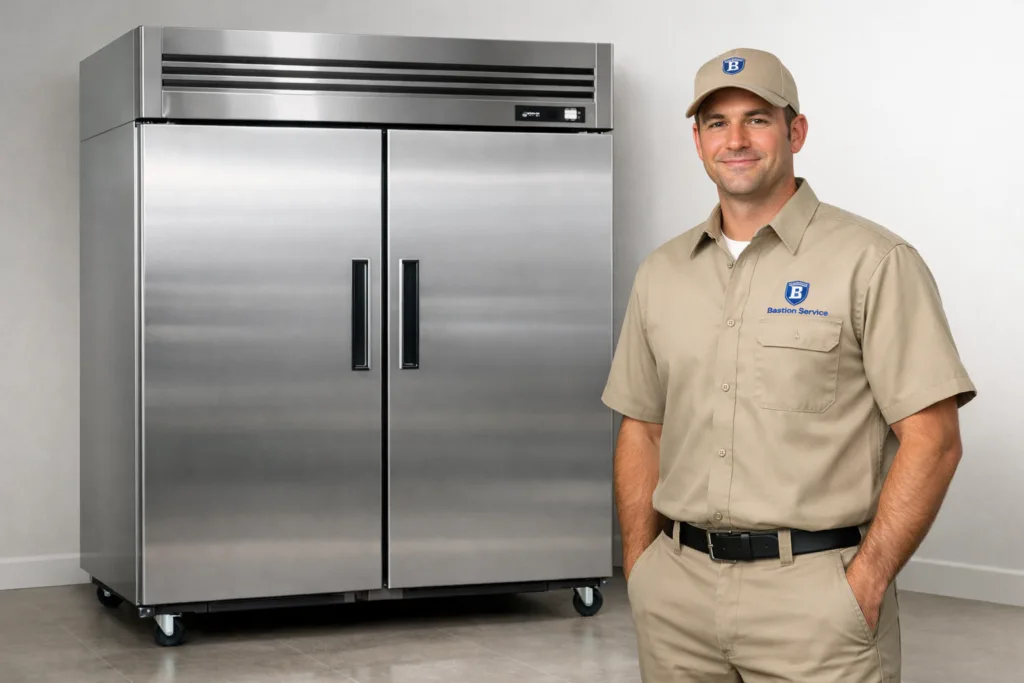




When a refrigerator or freezer starts drifting out of range, the priority is not just finding the symptom but deciding how quickly the equipment needs service and whether it can stay in operation without creating a larger problem. For restaurants, markets, hotels, prep kitchens, and other food-service businesses in Beverly Hills, repair planning should focus on product protection, recovery time, and how the unit is performing during actual daily use. Bastion Service helps local operators evaluate Turbo Air refrigeration equipment issues, schedule repair, and determine the most practical next step before downtime spreads into inventory loss or workflow disruption.
For specific equipment paths in Beverly Hills, review Turbo Air Refrigerator Repair in Beverly Hills, Turbo Air Freezer Repair in Beverly Hills, and Commercial Appliance Repair in Beverly Hills.
How Turbo Air Refrigeration Problems Usually Show Up
Most service calls begin with a few recognizable warning signs. A cabinet may still be running, but temperatures are inconsistent, frost starts building faster than usual, airflow feels weak, or the unit takes too long to recover after doors are opened. Those symptoms can point to very different causes, which is why repair decisions are best made after the unit is checked as a system rather than by guessing from one visible issue.
On Turbo Air refrigeration equipment, common fault areas include:
- Temperature controls and sensors
- Evaporator or condenser airflow restrictions
- Fan motor performance problems
- Defrost component failures
- Door gasket and sealing issues
- Drain or moisture-management problems
- Refrigerant-related cooling loss
For business operators, the important question is whether the problem is isolated and repairable on a straightforward schedule or whether continued operation is likely to make the failure more expensive.
Refrigerator Symptoms That Need Attention Early
Cabinet running warm
A refrigerator that stays above its target temperature may still appear functional, but warmer storage conditions usually mean the system is struggling. Dirty coils, blocked interior vents, weak evaporator fans, sensor issues, or door leakage can all reduce cooling performance. In busy kitchens, the problem often becomes more obvious during peak hours, when frequent door openings expose weak recovery.
Uneven temperatures from top to bottom
If products near one section stay colder while other areas trend warm, airflow should be checked. Poor circulation can come from ice buildup, fan wear, blocked product placement, or internal restrictions. Uneven temperatures are especially important for businesses that rely on consistent holding conditions across the full cabinet, not just one shelf.
Long run times or nonstop operation
When the unit rarely cycles off, it is often compensating for a cooling problem. That may be caused by heat exchange issues, control faults, leaking gaskets, or refrigerant loss. Running constantly increases wear on major components and can turn a manageable repair into a larger failure if the problem is left unresolved.
Freezer Problems That Often Escalate Fast
Frost buildup on walls, panels, or around the evaporator area
Heavy frost is rarely just a cosmetic issue. It can indicate a defrost problem, poor door sealing, excess moisture entry, or restricted airflow. Once ice starts interfering with air movement, freezer performance usually drops further, and recovery after door openings becomes much slower.
Soft product or slow pull-down
If a freezer takes too long to return to set temperature or stored product does not stay consistently frozen, the equipment may be dealing with coil issues, fan problems, thermostat faults, or a broader sealed-system concern. This is one of the clearest signs that service should be scheduled quickly, especially when inventory quality is at risk.
Ice around doors or sealing surfaces
Ice near door frames often suggests warm air intrusion. Worn gaskets, alignment issues, or doors not closing fully can let moisture in and force the freezer to work harder. Over time, that pattern can lead to more frost, reduced efficiency, and additional component stress.
Airflow, Leaks, and Other Warning Signs
Weak internal airflow
Refrigeration equipment depends on steady circulation to hold product temperatures evenly. If airflow feels weak or some sections of the cabinet seem stagnant, the cause may be fan failure, blocked vents, coil contamination, or ice accumulation. Weak airflow often gets mistaken for a simple temperature problem, but it directly affects how well the entire cabinet performs.
Water around the unit
Water on the floor or inside the cabinet can come from clogged drains, defrost drainage problems, excess condensation, or icing that later melts. Even when cooling seems mostly normal, water leaks should be addressed promptly because they create slip hazards, can affect surrounding equipment, and may signal a deeper operating issue.
Reduced cooling with no obvious visible cause
Sometimes the unit looks normal from the outside but takes longer to cool, runs harder, and fails to reach set temperature. That pattern may point to a less visible fault involving controls, airflow, or refrigerant loss. These cases are exactly why symptom-based repair should lead to testing rather than assumption.
What a Service Visit Should Help You Decide
For a business owner or manager, the value of diagnosis is not just identifying a failed part. It should also answer the practical questions that matter to operations:
- Is the refrigerator or freezer safe to keep using in the short term?
- Is the issue affecting only one component or the broader cooling system?
- Does the problem explain the full symptom pattern, including temperature recovery and frost?
- Is repair the better path, or is the unit showing signs of broader decline?
- How should service be scheduled to reduce interruption to staff and product handling?
That approach is especially useful in Beverly Hills operations where refrigeration equipment supports daily production, storage, or front-of-house service timing.
When Continued Operation Can Make Damage Worse
Some units can remain in limited use while awaiting repair, but others should be taken out of service or monitored very closely. Warning signs include warm cabinet conditions that do not recover, repeated icing that blocks airflow, nonstop running, pooling water near electrical areas, or a freezer that no longer protects stored product. Continuing to run the equipment in those conditions may increase wear on the compressor, fans, controls, and related components.
If the equipment is still functioning but clearly declining, early scheduling usually gives a business more options. It may allow time to shift product, plan a repair window, and avoid an emergency call during the busiest part of the day.
Repair or Replace?
Many Turbo Air refrigerator and freezer problems are repairable when the issue is tied to a defined component failure and the cabinet remains structurally sound. Repair is often the better choice when the unit has been dependable overall and the current problem does not suggest repeated system-wide decline.
Replacement becomes more likely when cooling failures are recurring, major components have already been replaced multiple times, or the unit is showing several symptoms at once, such as poor recovery, chronic icing, leak concerns, and inconsistent temperature control. The right decision depends on overall condition, expected reliability after repair, and how important that specific piece of equipment is to daily operations.
Scheduling Turbo Air Refrigeration Equipment Repair in Beverly Hills
Businesses using Turbo Air refrigeration equipment need more than a general troubleshooting list; they need a repair process that connects the symptom to an actionable service plan. Whether the issue involves a refrigerator running warm, a freezer icing over, weak airflow, water leakage, or loss of cooling capacity, the next step is to schedule inspection and determine the scope of repair before a partial performance problem becomes a full outage. For Beverly Hills operators, timely service helps protect inventory, reduce disruption, and restore equipment reliability with a clear plan for repair timing and continued use.


