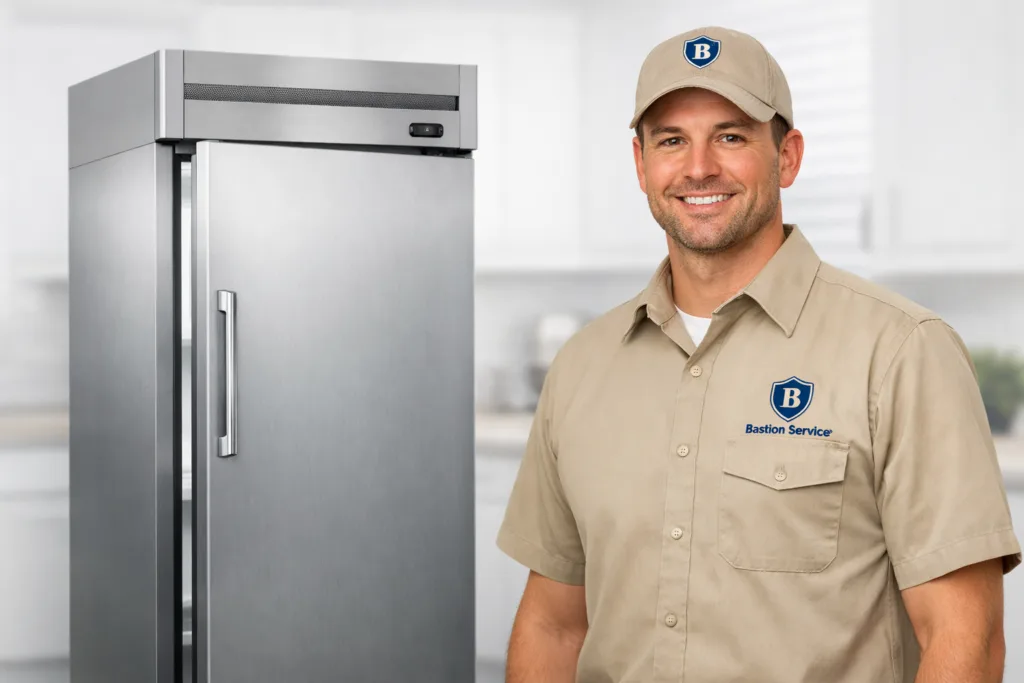
When temperature problems start affecting food storage

A freezer issue usually becomes obvious in everyday use before it becomes a full breakdown. Ice cream turns soft, frozen meals develop ice crystals, or food near one shelf stays harder than food in another area. With a True freezer, those signs can point to anything from an airflow problem to a defrost failure, a weak fan, a door sealing issue, or trouble with temperature controls.
What matters most is looking at the full pattern of symptoms instead of guessing from one sign alone. A unit that is too warm and noisy suggests a different repair path than one that is too warm and heavily frosted. That distinction helps avoid unnecessary part replacement and gives homeowners a better sense of whether repair is worth pursuing.
Common True freezer symptoms and what they often mean
Not freezing well or slowly losing cold temperature
If food is no longer staying solidly frozen, the cause may be reduced airflow through the evaporator, dirty condenser coils, a failing fan motor, sensor trouble, or a compressor startup problem. In some homes, a freezer can also seem weak simply because the door is not closing tightly or warm kitchen air is entering more often than expected.
This symptom should not be ignored for long. A freezer that still feels cold but cannot maintain true freezing temperature can lead to hidden food spoilage and longer run times.
Frost buildup on shelves, walls, or the back panel
Frost is often a clue that moisture is getting in or that the unit is not defrosting correctly. A worn gasket, a misaligned door, or repeated warm-air intrusion can all create visible frost. If frost is concentrated around interior panels, the issue may be tied to the defrost heater, sensor, timer, or control system.
As frost thickens, airflow drops. Once that happens, the freezer may start showing uneven cooling, longer cycles, and more strain on the system overall.
Running constantly or cycling much longer than usual
A True freezer that rarely shuts off is usually trying to overcome a problem rather than working normally. Dirty coils, poor ventilation, a door leak, frost restriction, or weak cooling output can all keep the machine running longer than it should.
Constant operation does not automatically mean the compressor has failed, but it does mean efficiency and temperature stability are already being affected.
Buzzing, clicking, rattling, or fan noise
Unusual sounds can help narrow down the source of the problem. Clicking may point to start components or electrical switching. Buzzing can happen when a compressor is struggling to start. Scraping or rattling may indicate a fan blade hitting ice, a loose panel, or vibration from mounting hardware.
Noise becomes more meaningful when paired with performance changes. A noisy freezer that is also warming up deserves faster attention than a freezer making a minor sound with no cooling change.
Water under the freezer or moisture inside
Leaks and moisture can result from blocked drainage, partial thawing, frost melt, or a sealing problem that allows humid air into the cabinet. Even a small recurring leak can damage nearby flooring or create odor and mold issues if it continues unchecked.
Why symptom patterns matter on a True freezer
Two freezers can appear to have the same problem while needing very different repairs. One unit may be warm because frost has blocked airflow. Another may be warm because the fan is not circulating cold air. A third may have a start issue that prevents the cooling system from engaging consistently.
That is why a practical repair plan starts with diagnosis instead of assumptions. For Rancho Park homeowners, that approach makes it easier to compare the likely repair with the freezer’s age, condition, and history of past problems.
Signs the problem may be getting worse
Some freezer issues stay mild for a while, then accelerate quickly. A little frost can turn into blocked airflow. A slightly noisy fan can become a no-cooling complaint. A small door-seal issue can push run time up day after day until food quality starts to drop.
Watch for these warning signs that usually mean the issue is no longer minor:
- Food thawing and then refreezing
- Frost returning soon after being cleared
- Long run times with little improvement in temperature
- Warm spots in parts of the cabinet
- Repeated clicking or buzzing during startup
- Water collecting beneath the appliance
When to stop relying on the freezer
If the freezer is no longer holding a stable freezing temperature, it is best not to treat it as reliable food storage. Sensitive items should be moved to another freezer or an insulated cooler as soon as possible. Continuing to load a struggling unit with more food usually makes recovery slower and increases the risk of food loss.
You should also limit door openings while waiting for service, since each opening adds heat and moisture that the appliance may already be struggling to remove.
Repair or replacement: how the decision is usually made
Many household freezer problems are repairable when they involve components such as fan motors, gaskets, controls, sensors, drains, or defrost parts. In those cases, repair often makes sense if the cabinet is otherwise in good condition and the freezer has not had repeated major issues.
Replacement becomes more likely when the appliance has multiple developing faults, advanced wear, or a major cooling-system problem on an older unit. The better question is not only whether the freezer can be repaired, but whether the repair is likely to restore stable daily use without leading to another major issue soon after.
What homeowners can check before service
There are a few simple checks that can help you understand what is happening without taking the appliance apart. Make sure containers or bins are not blocking the door from sealing fully. Look for obvious frost accumulation, especially around interior vents or panels. If the exterior coils are accessible, check whether dust buildup may be reducing heat release. Also note whether the freezer is running nonstop, silent when it should be cooling, or making a new sound.
For a service visit in Rancho Park, the most useful details are usually the simplest ones: how long the problem has been happening, whether the freezer is too warm all the time or only intermittently, whether frost or water is present, and what kind of noise you hear. Those clues often lead to a faster and more accurate repair path.
Household situations where faster service helps
Some freezer problems are especially disruptive in daily home use. Families storing bulk groceries, prepared meals, frozen baby food, or specialty dietary items usually feel the impact quickly when temperatures become unstable. In those cases, even a partially working freezer can create uncertainty about what is still safe to keep.
Prompt service is also helpful when the appliance is installed in a finished kitchen or utility area where leaks, condensation, or repeated door icing can affect surrounding cabinets or flooring.
A focused approach for Rancho Park homeowners
True freezers are built for strong cooling performance, but they still depend on healthy airflow, accurate controls, proper sealing, and a functioning defrost system to work the way they should. When one part of that system falls out of balance, the symptoms often appear in combinations rather than one isolated failure.
For homeowners in Rancho Park, the most useful next step is to match those symptoms to the actual fault, then decide whether the repair is sensible based on the freezer’s overall condition. That keeps the decision grounded in how the unit is really performing, not just in the first symptom that showed up.