
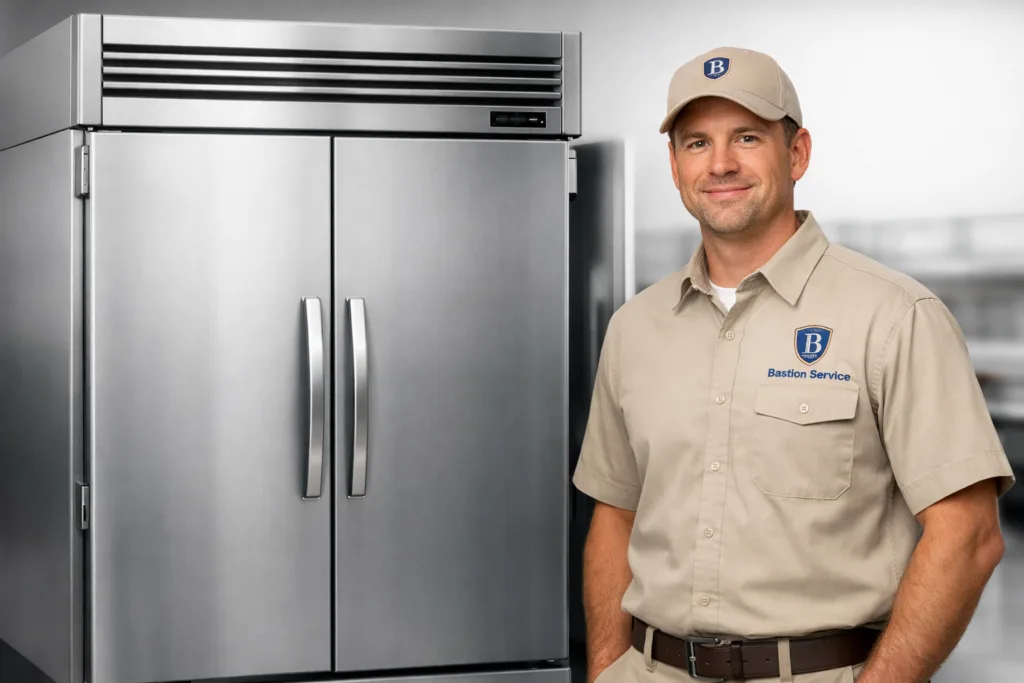




True refrigerator downtime can disrupt service fast
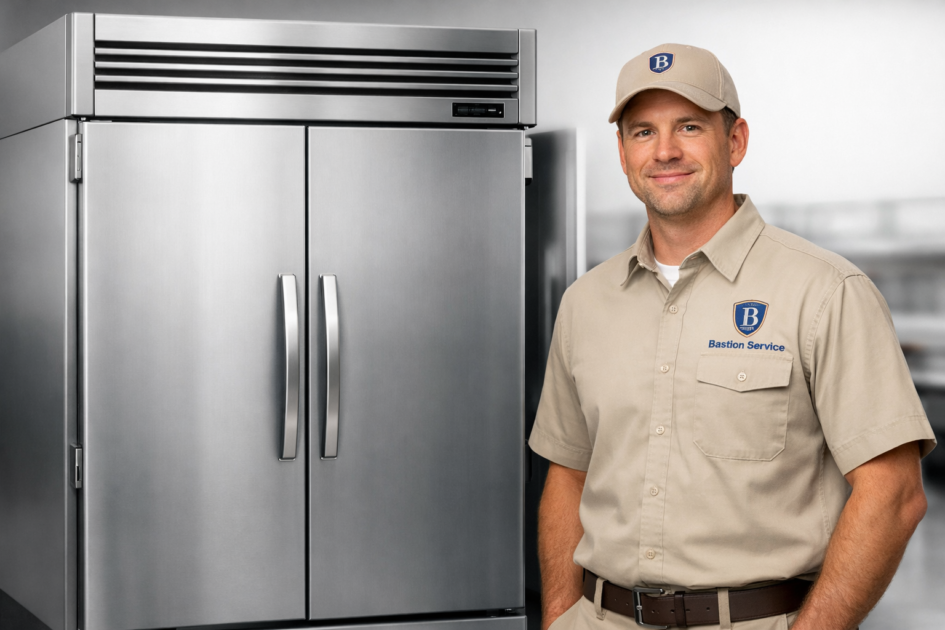
When a True refrigerator starts drifting out of range, leaking, running nonstop, or recovering slowly after the door opens, the next step should be a service visit focused on the actual fault rather than guesswork. For businesses in Redondo Beach, refrigeration problems can affect product safety, prep schedules, staffing flow, and daily operations very quickly. Bastion Service handles True refrigerator repair with an emphasis on identifying the cause, explaining the repair priority, and helping operators schedule work before a smaller issue turns into a longer outage.
Related commercial service paths in Redondo Beach include True Commercial Repair in Redondo Beach, Commercial Refrigerator Repair in Redondo Beach, and True Freezer Repair in Redondo Beach.
On busy equipment, one symptom can lead to several possible causes. A cabinet that feels warm might involve blocked airflow, fan failure, worn gaskets, sensor problems, defrost trouble, or a sealed-system issue. Water on the floor may come from a drain problem, excessive condensation, or frost melting at the wrong time. The value of diagnosis is not just finding a bad part. It is understanding what is happening now, how urgent it is, and whether continued operation is likely to make the problem worse.
Common True refrigerator symptoms and what they can indicate
Temperature instability or product running warm
If the cabinet does not stay at the intended temperature, common causes include dirty condenser coils, weak evaporator airflow, failing door seals, sensor or control faults, refrigerant issues, or frost restricting circulation. Warm product should be treated seriously because repeated temperature swings can affect inventory quality and place extra stress on the refrigeration system.
Some operators first notice this as a subtle pattern rather than a complete failure. The refrigerator may seem acceptable early in the day but struggle during peak use, or it may cool again overnight and then fall behind once door traffic increases. That kind of pattern often points to an airflow or heat-exchange problem that still needs repair.
Unit runs constantly or cycles abnormally
A True refrigerator that seems to run all day without satisfying the thermostat may be dealing with poor condenser airflow, gasket leaks, hot-air infiltration, sensor issues, or declining refrigeration performance. Short cycling can indicate a control problem, overheating protection, or another condition preventing normal operation.
Either pattern matters because excessive run time increases wear on key components. What starts as longer cooling cycles can eventually become a no-cool complaint if the underlying issue is left unresolved.
Water leaks or excess interior moisture
Water inside the cabinet or on the floor below it may come from a blocked drain, condensation caused by poor door sealing, a defrost-related issue, or frost melting where it should not. In kitchens, prep areas, and other workspaces, leaking refrigeration equipment can create sanitation concerns and slippery floor conditions in addition to cooling problems.
Moisture is also a useful diagnostic clue. If water appears along with frost, slow cooling, or doors that do not close cleanly, the leak may be part of a larger airflow or defrost problem rather than an isolated nuisance.
Frost buildup or ice formation
Frost on interior panels, around the evaporator area, or near the door opening usually points to moisture intrusion, defrost failure, poor air circulation, or a sealing issue. Heavy ice buildup reduces airflow through the cabinet and makes the refrigerator work harder to maintain temperature.
In some cases, staff may clear the ice and see temporary improvement, only for the frost to return soon after. When that happens, the issue usually needs repair rather than repeated manual clearing.
Noise, vibration, or fan-related sound changes
Buzzing, clicking, rattling, or grinding can come from fan motors, loose hardware, compressor operation, or strain caused by restricted airflow. A new noise does not always mean immediate failure, but it is often an early warning that a component is wearing out or working under abnormal conditions.
Sound changes are especially important when they appear alongside warm temperatures, inconsistent cycling, or frost. Combined symptoms usually provide a clearer picture of what the unit is doing and why service should not be delayed.
Why a True refrigerator may not be holding temperature
When a refrigerator is not holding temperature, the problem is often broader than a single “not cooling” complaint. Heat may be entering through damaged gaskets or doors that are not closing fully. Airflow may be restricted by dirty coils, blocked product loading, or an evaporator fan problem. Controls may not be reading cabinet conditions correctly, or a defrost fault may be interfering with normal cooling.
There are also cases where the system cools, but not efficiently enough to recover after routine door openings. That can show up as gradual warming during service hours, product temperatures that fluctuate from shelf to shelf, or a cabinet that seems cold in one area and weak in another. Those details help narrow the likely cause and guide the repair plan.
- Warm cabinet temperatures during busy periods
- Slow recovery after stocking or door openings
- Cold spots and warm spots in the same cabinet
- Product freezing unexpectedly near certain air paths
- Frequent alarm conditions or repeated resets
Why diagnosis comes before repair decisions
On a True refrigerator, overlapping symptoms can make the problem look different from the actual root cause. A unit with frost buildup and warm temperatures may appear to have a major cooling failure, but the source could be a fan issue or a defrost problem. A refrigerator that runs all day may seem to need major system work when the cabinet is actually losing temperature through poor sealing or restricted condenser airflow.
That is why repair decisions should follow inspection and testing, not assumptions. The important questions are whether the refrigerator is still operating safely, which condition is driving the complaint, what parts of the system are being affected, and whether continued use risks more damage. For managers in Redondo Beach, those answers help with staffing, inventory planning, and downtime scheduling.
When to schedule service
Schedule service as soon as the refrigerator starts showing repeat symptoms instead of waiting for complete failure. Early attention is especially important when cooling becomes inconsistent, frost returns after being cleared, fans sound different, water begins collecting, or the cabinet struggles after normal door openings.
Service urgency increases when the unit cannot maintain temperature, the compressor is running excessively hot, the refrigerator cycles erratically, or stored product is at risk. Intermittent performance is also worth addressing quickly because it creates uncertainty; a unit that works some of the time can still disrupt operations just as much as one that stops entirely.
When continued operation may make the problem worse
Some refrigerators can remain in place until a scheduled visit, but not every condition should be left running. If the cabinet is obviously warming, forming heavy frost, leaking significantly, or operating with nonstop run time, continued use can increase wear on the compressor, fan motors, and controls. A unit that is already struggling often works harder to compensate, which can turn one repair into several.
Daily use patterns matter too. Overloading shelves, blocking interior air channels, or frequent door traffic during peak periods can intensify an existing fault. That does not mean normal use caused the failure, but it can speed up the point where the refrigerator can no longer keep up with the demands placed on it.
Repair versus replacement considerations
The right choice is not always based on whether a part can be changed. Businesses usually look at the current symptom, the condition of the cabinet, recent service history, the likelihood of stable performance after repair, and the operational cost of more downtime. A focused repair often makes sense when the refrigerator is otherwise in solid condition and the issue is limited to a manageable component failure.
Replacement becomes a stronger consideration when breakdowns are recurring, cooling performance has become unreliable over time, or the overall condition of the unit suggests more than one major problem is developing. The goal is to make a sound equipment decision based on uptime, risk, and remaining service life rather than reacting only to the latest symptom.
What to note before a service visit
A few observations from staff can make service more efficient. If possible, note when the problem started, whether it is constant or intermittent, what temperatures are being observed, and whether the issue gets worse during heavy use. It also helps to mention any recent frost buildup, water leaks, unusual noise, door-closing problems, or times when the refrigerator was reset to restore operation.
Useful details include:
- Whether the cabinet is warm all the time or only during certain periods
- If the issue started after cleaning, stocking, or a power interruption
- Whether fans are running normally
- If frost or condensation returns quickly
- Whether doors are sealing and closing as expected
These details do not replace technical diagnosis, but they do help connect symptom patterns to likely causes and speed up the path to the correct repair.
Service support for businesses in Redondo Beach
True refrigerator problems rarely stay minor for long when the unit is central to daily operations. A refrigerator that is warming, leaking, icing up, or struggling to recover needs more than trial-and-error fixes. For businesses in Redondo Beach, timely service helps reduce product risk, limit disruption, and determine whether the next step is a targeted repair or a broader equipment decision. If your True refrigerator is showing repeated cooling or airflow problems, scheduling service promptly is the most practical way to protect uptime and restore reliable performance.


