
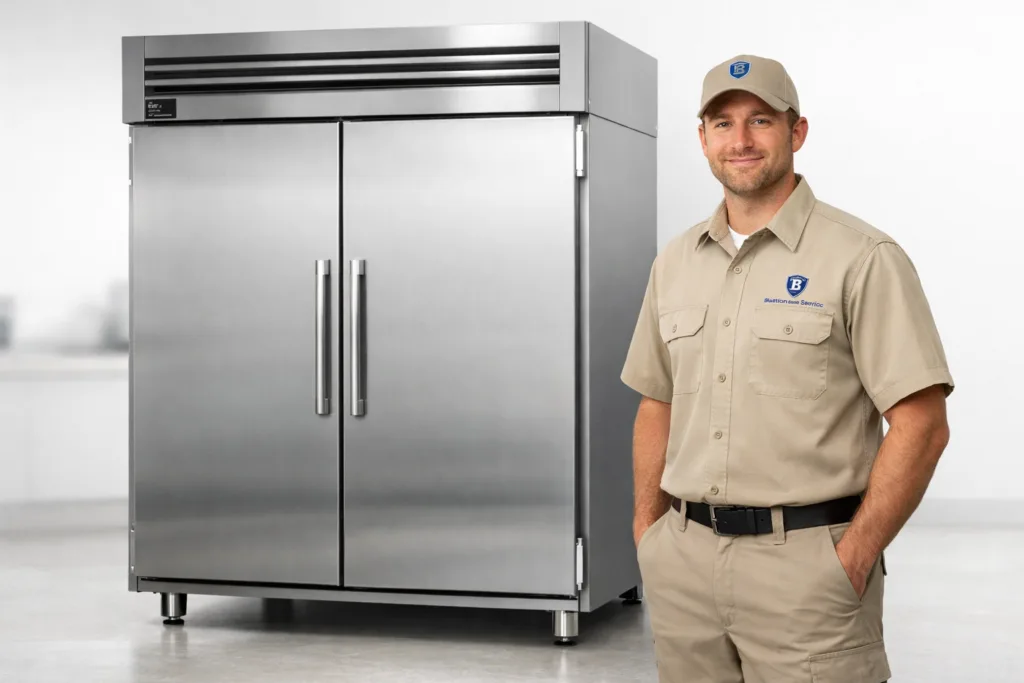




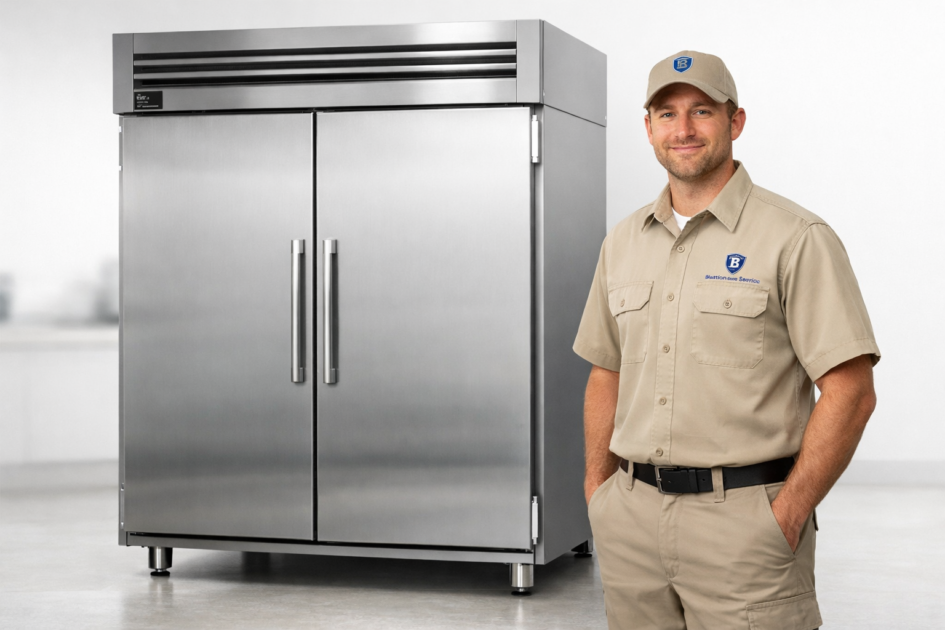
When True refrigeration equipment begins losing temperature control, collecting frost, leaking water, or struggling to recover during normal use, service decisions need to be made quickly around product protection, staffing, and daily operations. Bastion Service provides repair support in Redondo Beach with symptom-based troubleshooting, repair scheduling, and guidance on whether a refrigerator or freezer can remain in use while the issue is being addressed.
For specific equipment paths in Redondo Beach, review True Refrigerator Repair in Redondo Beach, True Freezer Repair in Redondo Beach, and Commercial Appliance Repair in Redondo Beach.
For businesses in Redondo Beach, the main goal is not simply identifying that cooling performance is off. It is understanding what the symptom pattern suggests, how urgent the issue is, and what repair path best protects inventory and uptime. The same complaint can come from airflow restrictions, fan failure, defrost trouble, controls, door sealing problems, or deeper system faults, so a targeted diagnosis matters before repair decisions are made.
True Refrigerator and Freezer Problems That Commonly Need Repair
Refrigeration equipment rarely fails all at once without warning. More often, businesses notice a shift in performance first: warmer storage, longer run times, ice where it should not be, uneven cooling, or water around the cabinet. Those early signs are often the best time to schedule service before a manageable repair turns into a larger interruption.
Temperature Swings and Warm Cabinets
If a True refrigerator or freezer is running but not holding proper temperature, several systems may need to be checked. Causes can include control problems, sensor faults, weak airflow, dirty coils, evaporator or condenser fan issues, door gasket leakage, refrigerant loss, or compressor-related problems. What matters from an operating standpoint is how fast temperatures are drifting and whether the unit can still protect stored product consistently.
Warm cabinets are especially disruptive because they affect inventory decisions immediately. A service visit helps determine whether the problem is isolated to one component or part of a broader cooling failure, and whether the equipment should stay in limited use, be unloaded, or be prioritized for immediate repair.
Weak Airflow and Uneven Cooling Zones
When one section of a cabinet is colder than another, or when airflow seems weak even though the unit is running, the problem often points to circulation issues inside the system. Ice buildup on the evaporator, a failing fan motor, blocked air channels, dirty coil conditions, or control-related cycling problems can all reduce how effectively cold air moves through the cabinet.
In day-to-day operation, poor airflow often shows up as product near one area staying cold while items in another section begin warming too quickly. This kind of symptom should not be dismissed as a loading issue until the equipment is checked, because uneven airflow often leads to longer run times, poor temperature recovery, and added strain on major components.
Frost Buildup and Defrost-Related Trouble
Frost inside a refrigerator or freezer is more than a cosmetic issue. On True equipment, heavy frost or ice accumulation may indicate defrost system failure, moisture intrusion from door sealing problems, airflow restriction, sensor trouble, or control faults that prevent proper cycling. In freezers, frost can also interfere with fan operation and reduce the system’s ability to recover after door openings.
Businesses often first notice this as ice on interior panels, frost near product, or a gradual decline in cooling performance. Once frost begins affecting airflow, temperature stability usually gets worse. Repair at this stage can prevent a minor defrost-related issue from becoming a larger cooling breakdown.
Leaks, Water Around the Unit, and Excess Condensation
Water on the floor or inside the cabinet can come from blocked drains, defrost drainage problems, excessive condensation, internal icing, or other operating faults that disrupt normal moisture management. In some cases, what looks like a simple leak is actually connected to a larger cooling or airflow issue.
Because water symptoms can have several causes, inspection is important before assuming the problem is minor. For businesses in Redondo Beach, recurring leaks create both safety concerns and equipment concerns, especially if moisture begins affecting insulation, surrounding surfaces, or internal components.
Freezer Recovery Problems After Door Openings
A freezer that takes too long to pull back down after normal access may be showing early signs of airflow loss, frost obstruction, fan problems, control issues, refrigerant problems, or compressor strain. Even if the cabinet eventually gets cold again, slow recovery is often a warning that performance margin is shrinking.
This matters in active kitchens and food-service environments where frequent access is normal. A freezer that no longer recovers properly can move from “still running” to unusable very quickly, especially during busy operating periods.
What a Symptom Pattern Can Reveal
Looking at one symptom alone does not always explain the actual fault. A warm cabinet with no frost may point in one direction, while a warm cabinet with heavy ice buildup and weak airflow points in another. That is why repair decisions are more accurate when the full pattern is considered together.
- Warm temperatures with continuous running may suggest the unit is struggling to satisfy demand.
- Frost plus weak airflow often points toward a defrost or circulation problem.
- Leaks plus temperature inconsistency can indicate drainage trouble connected to icing or cooling faults.
- Intermittent performance changes may involve controls, sensors, or components failing under load.
This kind of symptom-based evaluation helps businesses decide whether repair should be scheduled urgently, whether the cabinet can remain in temporary use, and whether inventory should be moved as a precaution.
When Continued Operation Can Increase Downtime
Some refrigeration issues allow a short window for managed operation while service is being arranged. Others become more expensive the longer the equipment is pushed. If a True refrigerator or freezer is short cycling, running continuously without reaching target temperature, icing over repeatedly, or leaking water day after day, continued use may increase the chance of secondary damage.
Waiting too long can lead to product loss, fan obstruction, heavier frost accumulation, and additional stress on the cooling system. If performance is clearly getting worse instead of staying stable, repair should usually be scheduled before the unit reaches complete failure during business hours.
Repair Planning for Redondo Beach Businesses
Repair planning is often about more than the equipment itself. Businesses in Redondo Beach may need to coordinate around product transfers, staffing, prep schedules, and service windows that minimize disruption. A proper assessment helps answer practical questions such as whether the unit should remain powered, whether loading should be reduced, and whether temporary operational changes are needed until repairs are completed.
That planning becomes especially important when the problem is intermittent. Equipment that cools correctly part of the time can still be at risk of failing under heavier demand, so documenting symptom timing, frost patterns, leak frequency, and recovery behavior can help speed up diagnosis and reduce unnecessary delays.
Repair or Replacement Evaluation
Not every True refrigeration problem leads to the same recommendation. In many cases, a focused repair restores reliable operation, particularly when the issue is identified early and secondary damage has not spread. In other cases, age, repeat failures, overall condition, and the scale of the repair may change the conversation.
A useful service evaluation looks at current symptoms, likely fault scope, repair value, and whether the unit is likely to return to stable operation after the work is completed. That helps businesses avoid both avoidable replacement and repairs that do not meaningfully improve reliability.
Scheduling Service Before a Small Problem Escalates
If your True refrigerator or freezer is showing warm temperatures, weak airflow, frost buildup, water leaks, or poor recovery, the next step is to schedule repair service before the disruption expands into lost product or a full equipment outage. For businesses in Redondo Beach, timely diagnosis supports better repair planning, clearer operating decisions, and a faster path back to stable refrigeration performance.


