
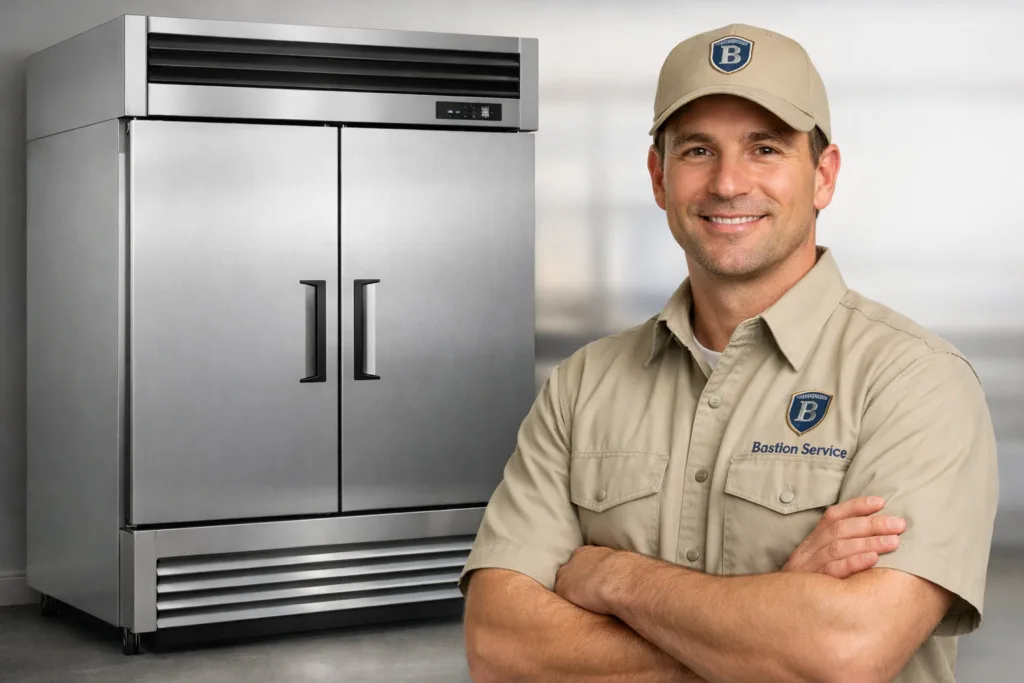




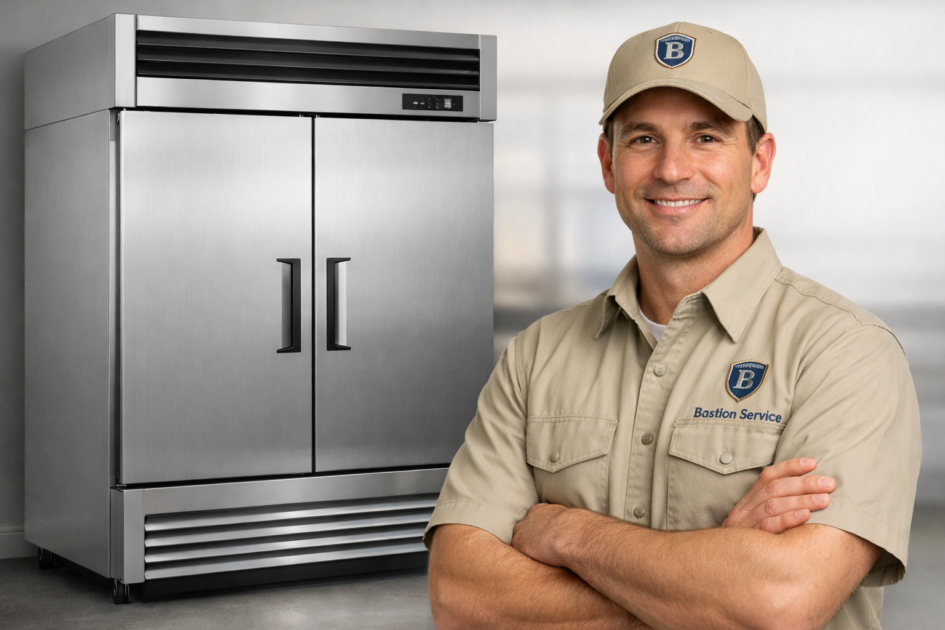
A True freezer that starts warming, icing over, or making unusual noise can disrupt storage, prep timing, and daily workflow fast. For businesses in Redondo Beach, the most useful next step is service built around the actual symptom pattern, the urgency of the temperature problem, and how the equipment is performing under normal use. Bastion Service helps diagnose True freezer issues, explain what is likely causing the failure, and schedule repair based on product risk, downtime impact, and the condition of the unit.
Related commercial service paths in Redondo Beach include True Commercial Repair in Redondo Beach, Commercial Freezer Repair in Redondo Beach, and True Refrigerator Repair in Redondo Beach.
What service calls for True freezers usually involve
Freezer problems often look similar at first, but the source can be very different. A cabinet that seems to have a major cooling failure may actually be struggling with restricted airflow or a leaking door gasket. A freezer that is only a few degrees warm may be showing an early control, fan, or defrost problem that can become more serious if ignored.
Service typically focuses on temperature accuracy, evaporator airflow, condenser condition, fan operation, defrost performance, door closure, gasket sealing, and compressor run behavior. That process helps determine whether the repair is likely to be straightforward or whether the freezer is showing broader signs of wear that could affect reliability after the immediate problem is fixed.
Common True freezer symptoms and what they can mean
Not staying cold enough
If the freezer is not holding set temperature, several faults may be involved. Dirty condenser coils, blocked airflow, weak evaporator fan performance, a poor door seal, control issues, or compressor-related problems can all reduce cooling. In some cases, heavy frost around the evaporator limits air movement enough that the cabinet cannot pull down properly.
This symptom should be taken seriously because longer run times can stress major components and increase the chance of product loss. If temperature recovery is getting slower during normal use, the unit should be evaluated before it turns into a full no-cool situation.
Frost or ice buildup inside the cabinet
Excess frost is often linked to warm air entering the freezer, a door that is not sealing correctly, a defrost issue, or poor air circulation. Ice on interior panels, shelving, or around the evaporator area is more than a cosmetic issue. It can reduce storage space, interfere with airflow, and create uneven cabinet temperatures.
Repeated frost after cleaning or manual defrost usually means the root cause is still present. A service visit can help determine whether the issue is related to gaskets, hinges, defrost components, sensors, timers, or controls.
Running constantly or cycling too often
A freezer that runs nearly nonstop may be trying to compensate for heat gain, coil blockage, fan failure, or declining refrigeration performance. Frequent starting and stopping can point to electrical faults, control problems, capacitor or relay issues, or compressor starting trouble.
Both patterns matter because they increase wear and often signal a problem that will not improve on its own. The longer the unit struggles, the greater the chance of a more disruptive failure during business hours.
Fan noise, buzzing, clicking, or rattling
Unusual sounds can come from evaporator fans, condenser fans, loose hardware, vibration, damaged fan blades, or compressor start components. Noise does not always mean the freezer is close to shutting down, but it often provides an early warning that something is no longer operating normally.
If the sound is new, louder than usual, or paired with warming temperatures, frost, or alarms, it is worth scheduling service sooner rather than later.
Leaks, water, or unexpected ice around the unit
Water near a freezer can be related to drain issues, defrost-related ice buildup, door sealing problems, or thawing caused by unstable cabinet temperature. Even when the freezer is still running, moisture problems can indicate that the unit is not completing normal cooling and defrost cycles correctly.
Because leaks and ice can create safety concerns and signal a larger cooling issue, they should be evaluated before the condition spreads to nearby components or flooring.
Why symptom-based diagnosis matters
Replacing parts based only on the most obvious symptom can lead to wasted time and repeat service. A warm cabinet does not always mean compressor failure. Frost does not always mean a failed heater. Slow recovery can come from airflow loss, door leakage, control misreading, or refrigeration-system weakness.
A good diagnosis connects the symptom to the actual failure point and checks whether that failure has affected surrounding components. That is especially important for busy kitchens, storage rooms, and food-service operations in Redondo Beach where a freezer may be opened often and expected to recover quickly throughout the day.
When repair should be scheduled right away
Service should move up in priority when the freezer has stopped freezing, temperatures are climbing during normal use, the compressor is running excessively hot, alarms are active, or the cabinet is no longer recovering after door openings. The same is true when heavy frost is blocking airflow or the unit is short cycling.
Continuing to run a freezer in that condition can increase damage, extend downtime, and put stored inventory at risk. If the symptom pattern has changed suddenly, or if the unit has become unreliable from one day to the next, faster service is usually the better decision.
Repair versus replacement for an aging True freezer
Many True freezers are worth repairing when the cabinet is still in good condition and the problem is limited to serviceable parts such as fans, controls, gaskets, defrost components, or electrical items. Repair becomes less attractive when the freezer has repeated major failures, unstable temperature performance after prior work, or multiple aging components declining at the same time.
The key question is whether the repair is likely to return the freezer to dependable operation for the way the equipment is actually used. For businesses in Redondo Beach, that usually means looking at repair cost, likely follow-up needs, downtime exposure, and the importance of restoring consistent freezing performance quickly.
How to prepare for a service visit
Before the appointment, it helps to note the main symptom, when it started, whether the problem is constant or intermittent, and whether the freezer has been manually defrosted recently. Staff observations about alarms, unusual sounds, longer run times, or changes after busy periods can also speed up diagnosis.
- Record the temperature range you have been seeing.
- Note whether frost is forming in one area or throughout the cabinet.
- Listen for changes in fan or compressor noise.
- Check whether doors are closing fully and gaskets are sealing evenly.
- Make sure the unit is accessible for inspection.
That information can help narrow down whether the issue is related to airflow, door sealing, controls, defrost, or cooling-system performance.
Service-focused next steps for Redondo Beach businesses
When a True freezer starts affecting storage conditions, the most practical response is to have the symptom evaluated before the problem spreads into product loss or a full shutdown. Whether the issue involves temperature swings, frost buildup, fan noise, slow recovery, or a freezer that is no longer freezing properly, timely repair scheduling helps protect operations and makes it easier to choose the right next step with less guesswork.


