
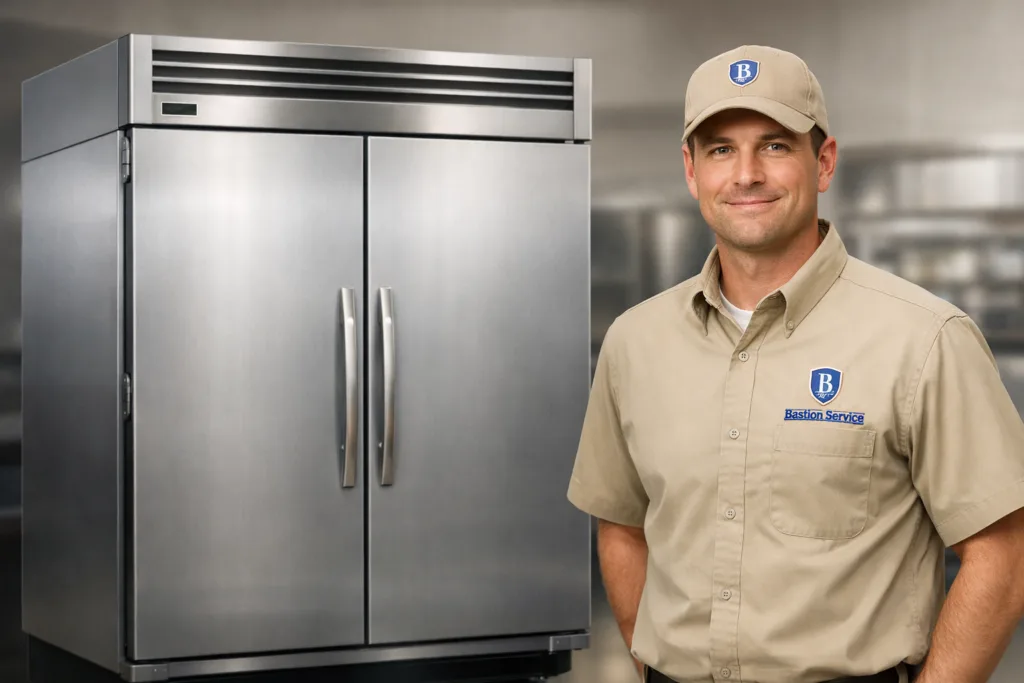




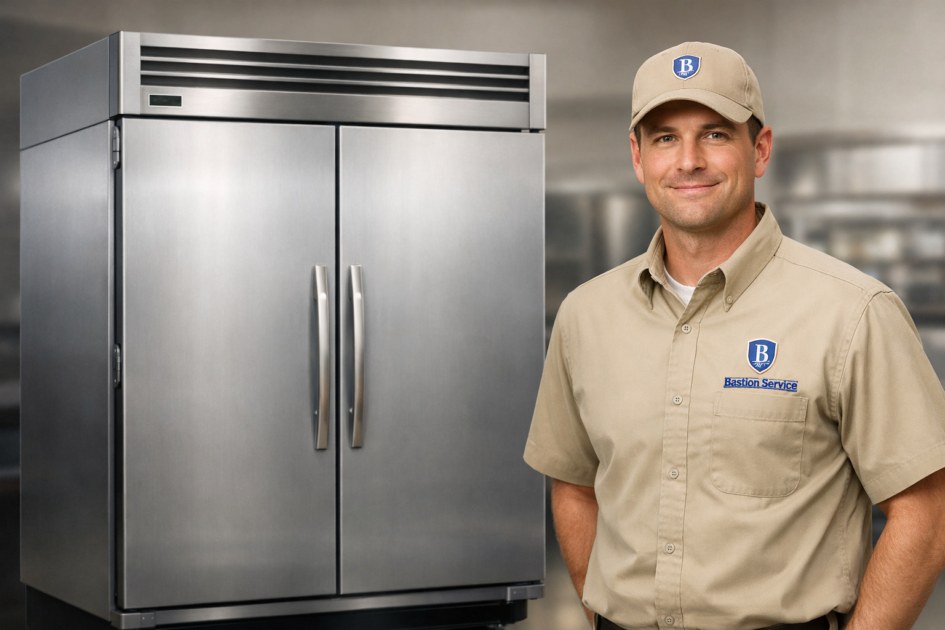
When a True refrigerator starts drifting warm, icing up, leaking, or running in ways that do not match normal operation, fast service matters because refrigeration problems can interrupt prep, storage, and daily workflow. For businesses in Marina del Rey, the most useful next step is to match the symptom pattern to the likely failure area, then schedule repair based on urgency, product risk, and how the unit is performing under load. Bastion Service works with businesses that need True refrigerator repair decisions grounded in actual operating symptoms rather than part-swapping.
Related commercial service paths in Marina del Rey include True Commercial Repair in Marina del Rey, Commercial Fridge Repair in Marina del Rey, and True Freezer Repair in Marina del Rey.
What True refrigerator problems usually look like in day-to-day use
Refrigeration issues often show up before a full no-cool failure. Staff may notice product temperatures rising slowly, recovery times getting worse after door openings, more condensation around the door, louder fan noise, or frost returning soon after clearing. In many cases, the refrigerator is still running, but it is no longer maintaining stable conditions.
That matters because one visible symptom can have several causes. A warm cabinet may come from airflow restriction, a weak fan motor, a control problem, poor door sealing, or loss of refrigeration performance. Frost can point to defrost trouble, door leaks, or moisture entering the cabinet too often. Water on the floor may be a drain issue, but it can also connect to icing and thawing inside the unit. Good repair planning starts by narrowing down which system is actually failing.
Why a True refrigerator may not be holding temperature
If the cabinet is not staying at set temperature, the cause is not always the thermostat or control. Temperature instability usually needs a full check of airflow, heat exchange, door condition, fan operation, and cooling performance.
- Dirty condenser coils: Reduced heat transfer makes the system run longer and cool less effectively.
- Evaporator airflow problems: Blocked airflow or failing fan motors can leave some sections warm while other areas seem acceptable.
- Door gasket or closure issues: Warm air entering the cabinet can cause long run times, moisture buildup, and poor temperature recovery.
- Sensor or control faults: The unit may cycle at the wrong times or fail to respond accurately to internal temperature changes.
- Refrigeration-system loss: If cooling performance has weakened, the refrigerator may run constantly without bringing the cabinet back into range.
When a True refrigerator cools inconsistently rather than failing all at once, diagnosis during actual operation is often the only reliable way to determine whether the problem is airflow-related, electrical, or tied to the sealed system.
Frost buildup, ice formation, and blocked airflow
Heavy frost is more than a cosmetic issue. Ice around the evaporator area, interior panels, or air passages can reduce circulation and create uneven temperatures across shelves. In a busy kitchen or food-service setting, that can lead to sections of the cabinet performing very differently from one another.
Common causes include:
- Damaged or loose door gaskets
- Doors not closing fully or consistently
- Defrost component problems
- Drain restrictions that contribute to freeze-thaw issues
- Airflow interruptions inside the cabinet
If frost returns quickly after being removed, the underlying cause is still active. Continued use can force longer run times and put more stress on fans and refrigeration components.
Water leaks and condensation problems
Water inside the cabinet or on the floor should be checked promptly. In addition to affecting sanitation and workflow, leaking can create slip hazards in active work areas. On True refrigerators, leak complaints often connect to blocked drains, excess condensation, door seal issues, or internal icing that later melts.
A service visit typically needs to determine whether the water is coming from normal condensation that is no longer draining correctly or from a larger cooling or airflow issue that is causing freeze-thaw cycling. If the leak returns after cleanup, the repair should focus on the cause rather than repeated floor management.
Noise changes, long run times, and unusual cycling
A refrigerator that suddenly sounds different is often giving early warning before performance gets worse. Buzzing, clicking, rattling, or fan noise changes may indicate loose components, blade interference, motor wear, compressor strain, or electrical control problems.
Run pattern changes are just as important:
- Running almost constantly: Often tied to coil condition, airflow issues, door leaks, or declining cooling capacity.
- Short cycling: May point to controls, sensors, electrical faults, or compressor-related stress.
- Slow restart or failed restart: Can signal electrical component trouble or overheating under repeated demand.
These symptoms may start as a nuisance but can turn into a full interruption if ignored during active operations.
When service should be scheduled right away
Some refrigerator problems allow a short window for planned repair, while others call for immediate attention because inventory protection and reliable holding are already at risk. A True refrigerator should be evaluated quickly when the cabinet temperature is no longer stable, frost is blocking airflow, or the unit is leaking into surrounding work areas.
Priority scheduling is usually the right move when:
- The cabinet is warm or recovering very slowly
- The compressor is hot and running nearly nonstop
- Fan operation is weak, intermittent, or absent
- Ice buildup is spreading across interior air channels
- Water is pooling repeatedly around the refrigerator
- The unit trips power, clicks without starting, or shuts down unexpectedly
If the refrigerator is still partially cooling but the symptom pattern is getting worse, early repair can help avoid a more disruptive outage during service hours.
Why symptom-based diagnosis saves time and cost
With True refrigeration equipment, different faults can produce similar complaints. A warm interior does not automatically mean a refrigerant issue. A noisy unit does not always mean compressor failure. Replacing parts based on assumptions can increase cost without restoring stable performance.
A better service process checks how the refrigerator is actually behaving: cabinet temperature trend, airflow, coil condition, fan response, defrost behavior, door sealing, and control operation. That helps determine whether the repair is straightforward or whether the unit has a larger performance problem that affects repair value.
Repair versus replacement considerations
Many True refrigerator issues are repairable, especially when the problem is caught before long run times and repeated overheating affect other components. Fan motors, gaskets, drain issues, controls, and maintenance-related cooling problems are often worth correcting if the rest of the cabinet is in solid condition.
Replacement becomes a more serious discussion when the refrigerator has repeated breakdowns, major cooling-system failure, poor overall cabinet condition, or repair costs that no longer make sense compared with expected remaining service life. For businesses in Marina del Rey, the decision usually comes down to the current failure, the risk of future downtime, and whether repair will return the unit to stable operation rather than temporary improvement.
How to prepare for a service visit
Before repair is scheduled, it helps to note the exact operating pattern. Useful details include whether the cabinet is warm all the time or only during certain hours, whether frost is concentrated in one area, whether the refrigerator has become louder, and whether leaks happen continuously or only after defrost cycles. Temperature readings, alarm behavior, and how long the unit has been acting up can also shorten the diagnostic process.
If product protection is already a concern, staff should avoid overloading the cabinet, limit unnecessary door openings, and move sensitive inventory if holding conditions are no longer reliable. Those steps do not fix the refrigerator, but they can reduce additional loss while repair is being arranged.
Service-focused next steps for Marina del Rey businesses
True refrigerator repair is usually most effective when the problem is addressed at the first clear sign of unstable cooling, airflow restriction, water leakage, or abnormal cycling. For businesses in Marina del Rey, timely diagnosis helps limit downtime, reduce repeat interruptions, and clarify whether the right path is repair now, monitored operation until parts arrive, or a broader equipment decision based on condition and risk.


