
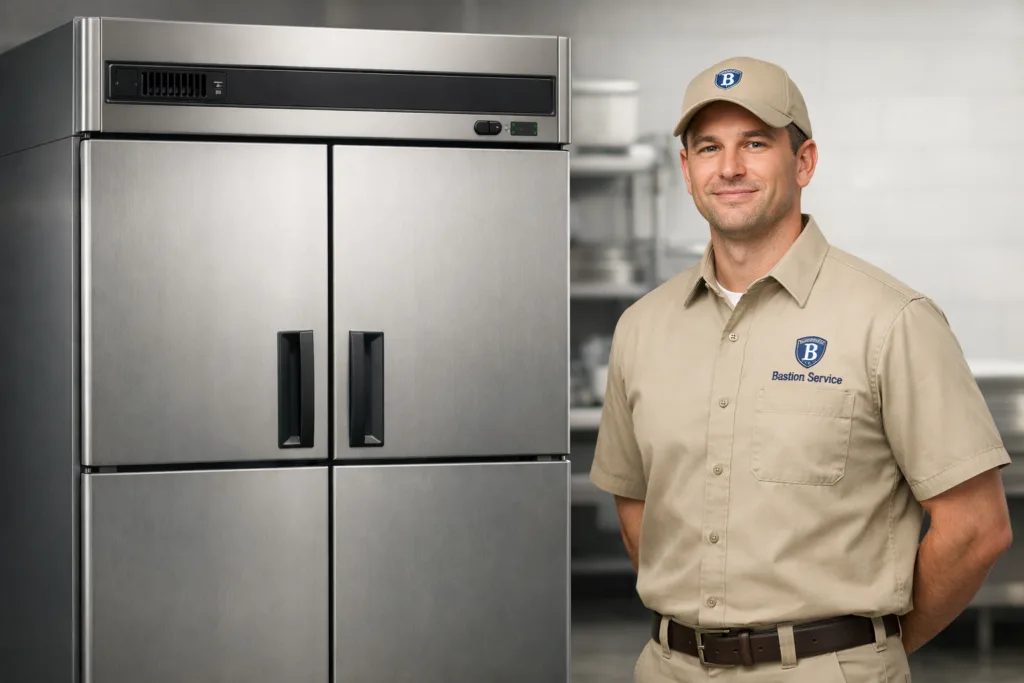




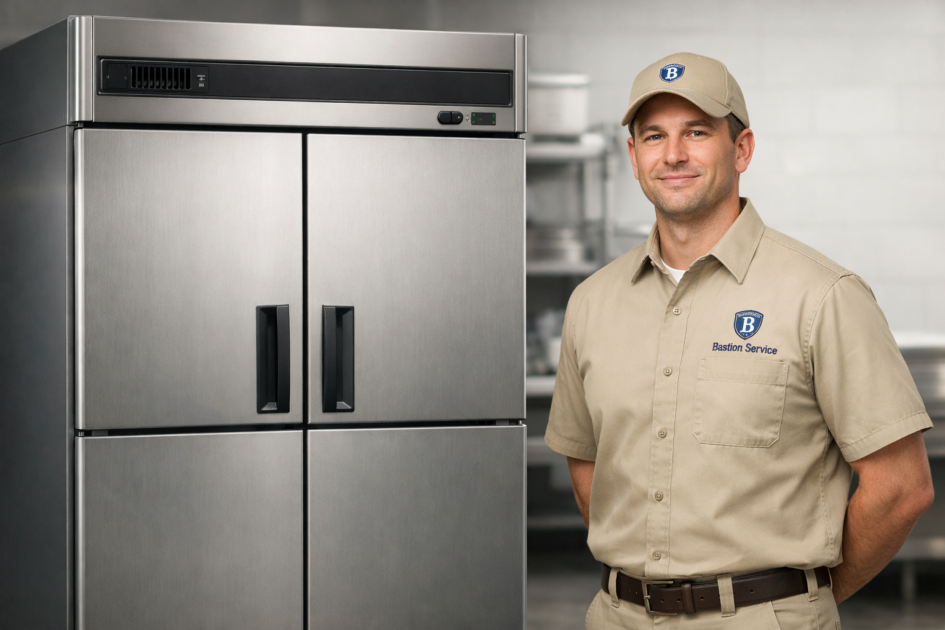
Temperature drift, poor airflow, frost, leaks, and unusual cycling are all signs that a Hoshizaki refrigerator needs service based on what the unit is actually doing in the field. In Marina del Rey, businesses often need more than a basic inspection—they need the fault narrowed down fast so staff can decide whether the refrigerator can stay in use, whether product needs to be moved, and how quickly repair should be scheduled to limit downtime.
Related commercial service paths in Marina del Rey include Hoshizaki Commercial Repair in Marina del Rey, Commercial Fridge Repair in Marina del Rey, and Hoshizaki Freezer Repair in Marina del Rey.
Bastion Service handles Hoshizaki refrigerator repair by tracing the symptom pattern first: cabinet temperature, fan operation, coil condition, defrost performance, door sealing, drain flow, compressor behavior, and control response. That process helps separate a targeted repair from a wider refrigeration problem and avoids wasting time on guesswork.
Common Hoshizaki Refrigerator Problems
Not holding temperature
If a refrigerator is running warm, recovering slowly after the door opens, or showing inconsistent temperatures during normal use, several issues may be involved. Dirty condenser coils, weak fan motors, sensor problems, control faults, door gasket leaks, airflow obstruction, or a sealed-system problem can all cause similar symptoms. A unit that still cools part of the time should not be assumed safe, because unstable temperature control often gets worse under daily load.
Frost or ice buildup inside the unit
Frost on the evaporator cover, ice around interior panels, or repeated icing after defrost can point to moisture intrusion, a defrost failure, poor airflow, fan problems, or a door that is not sealing consistently. Ice buildup reduces heat transfer and can block circulation, which leads to warmer product temperatures even when the refrigerator sounds like it is running normally.
Water leaking inside or onto the floor
Leaks often come from clogged drains, frozen drain lines, excess condensation, or door seal issues that allow humid air into the cabinet. In a busy kitchen or storage area, water around refrigeration equipment creates cleanup issues and slip hazards, but it can also be an early sign that cooling performance is no longer stable.
Noisy operation or constant running
Rattling, buzzing, clicking, fan noise, or a refrigerator that seems to run without stopping can indicate motor wear, loose components, airflow restriction, relay issues, or compressor stress. Constant operation usually means the unit is struggling to reach target temperature, and that extra runtime can accelerate wear on major components.
Control panel or alarm problems
When the display shows alarms, erratic readings, or poor control response, the issue may be with sensors, wiring, boards, or the refrigeration system itself. A displayed temperature is not always the same as the true cabinet condition, which is why alarm complaints need to be checked against actual operating performance.
What These Symptoms Usually Mean for Repair
Many refrigerator problems overlap. A warm cabinet can be caused by weak airflow, a failing fan motor, a dirty condenser, a defrost problem, a door issue, or refrigerant-related trouble. Frost buildup may start with a gasket problem but end up exposing a defrost or fan failure. A leak may be a drain issue, but it can also appear alongside temperature instability.
That is why symptom-based service matters. Instead of replacing parts based on the first visible problem, the visit should identify the root cause, confirm whether the refrigerator is still protecting product properly, and show whether the issue is isolated or affecting multiple systems.
Signs You Should Schedule Service Promptly
Businesses in Marina del Rey should schedule service quickly when a Hoshizaki refrigerator is showing any of the following:
- Cabinet temperatures rising above normal range
- Food or product not staying consistently cold
- Heavy frost returning after it is cleared
- Water collecting inside the cabinet or around the base
- Fans not running properly or airflow feeling weak
- Repeated alarms, sensor errors, or inconsistent display readings
- Compressor running constantly or short-cycling
- Noticeable increase in noise during normal operation
These conditions often start before total cooling loss. Calling for service at the first sign of instability can help prevent product loss, reduce strain on the compressor, and improve the chance of a more contained repair.
How a Service Visit Helps You Make the Right Call
A useful repair visit should answer the questions that matter operationally: Is the box temperature accurate? Are fans, controls, and defrost components working correctly? Is the problem maintenance-related, component-related, or part of a larger refrigeration failure? Can the unit remain in limited use, or should it be taken offline until repaired?
For restaurants, hotels, and other businesses in Marina del Rey, those answers affect staffing, storage decisions, prep timing, and daily workflow. The goal is not just to identify a bad part, but to define the condition of the refrigerator in a way that supports a repair decision with less uncertainty.
Repair or Replace?
Many Hoshizaki refrigerator calls still lead to repair rather than replacement. Fan motors, sensors, controls, defrost components, drain issues, door hardware, and coil-related airflow problems are often correctable when caught in time. In those cases, service can restore normal performance without forcing a larger equipment decision.
Replacement becomes more likely when there is repeated major failure, significant compressor or sealed-system trouble, advanced wear across multiple components, or repair cost that no longer makes sense for the condition of the unit. The best decision depends on equipment age, service history, present fault severity, and how much risk continued downtime creates for the business.
Preparing for Hoshizaki Refrigerator Repair
Before service arrives, it helps to note the exact symptom pattern. Useful details include current cabinet temperature, when the issue started, whether the problem is constant or intermittent, whether alarms have appeared, and whether frost, leaks, or unusual sounds are also present. If the refrigerator is holding product, knowing whether temperatures rise during peak use or remain unstable all day can also speed diagnosis.
If the unit is clearly warming, icing heavily, or leaking persistently, it is smart to protect product and avoid relying on the refrigerator as if it were operating normally. A symptom that seems minor in the morning can become a full cooling failure by the end of the day.
For Hoshizaki refrigerator repair in Marina del Rey, the most useful next step is scheduling service when the first pattern of failure becomes clear, not after the cabinet stops cooling completely. Early diagnosis helps businesses plan around downtime, protect inventory, and move forward with the repair that fits the actual condition of the equipment.


