
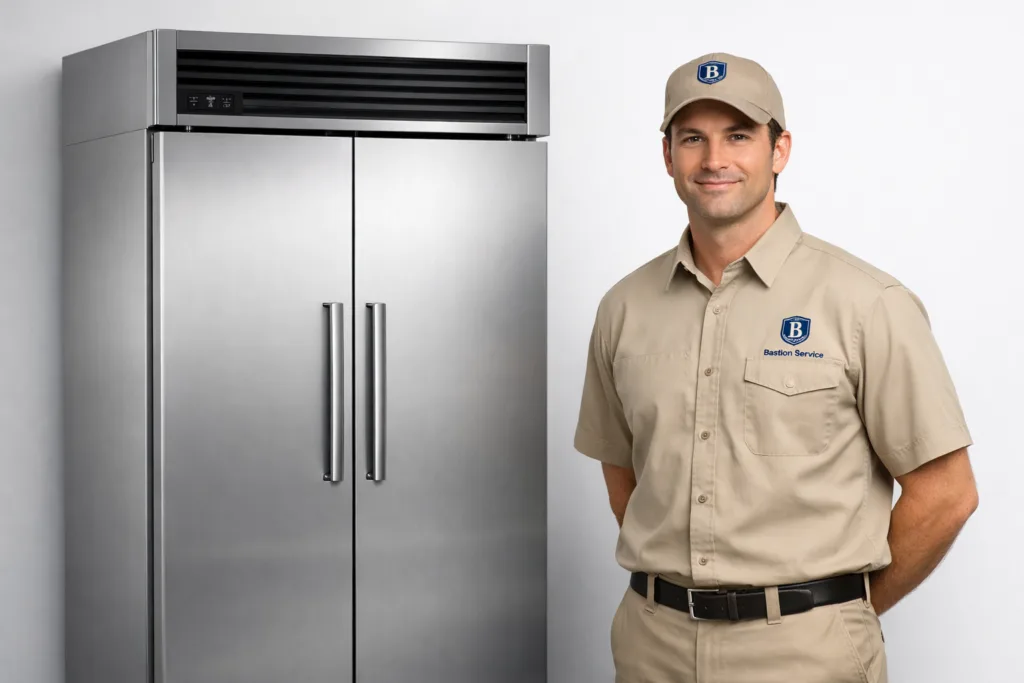




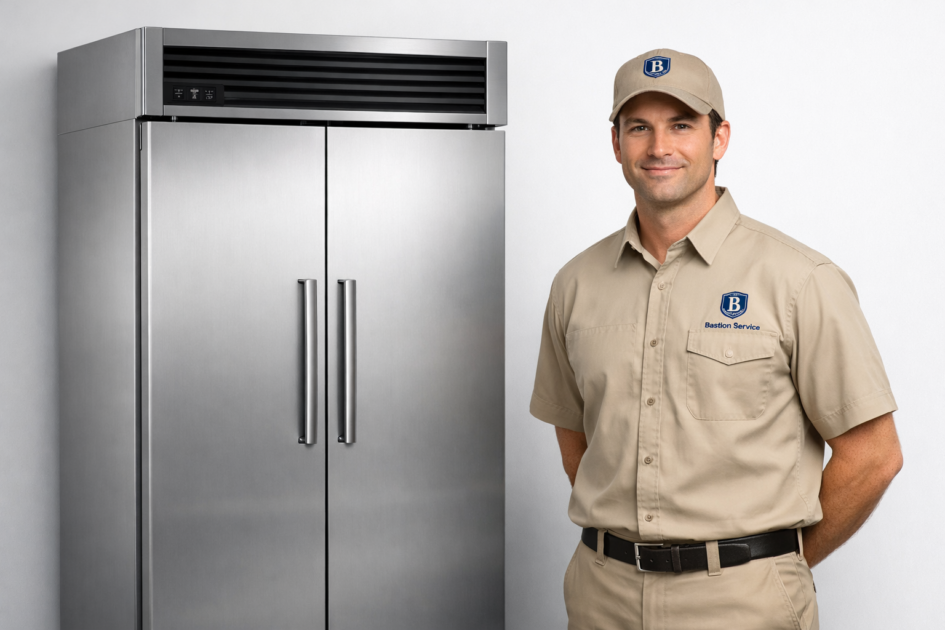
Freezer problems rarely stay isolated for long. A True unit that starts running warm, building frost, leaking, or making new noise can affect inventory, prep timing, and staff workflow within the same day. For businesses in Mar Vista, the best next step is service that identifies the actual source of the problem, explains whether the unit can stay in use safely, and schedules repair based on how the freezer is performing right now. Bastion Service works with symptom-based freezer issues so repair decisions are based on tested findings rather than assumptions.
Related commercial service paths in Mar Vista include True Commercial Repair in Mar Vista, Commercial Freezer Repair in Mar Vista, and True Refrigerator Repair in Mar Vista.
How True freezer problems are diagnosed on service calls
Many freezer symptoms overlap. A cabinet that will not hold temperature might have a failing fan motor, a defrost issue, restricted airflow, a damaged door gasket, a control problem, or a sealed-system fault. Because the same complaint can come from several different causes, repair usually starts with temperature verification, airflow checks, component testing, and inspection of frost patterns, coils, fans, controls, and door sealing surfaces.
This matters because the repair path changes depending on what is confirmed. In some cases, the issue is contained to a replaceable part. In others, continued operation may put added strain on the compressor or create more severe icing inside the evaporator section. Proper fault isolation helps businesses decide whether the freezer should remain in limited use, be taken out of service, or be repaired as quickly as possible to reduce downtime.
Symptoms that often point to True freezer repair needs
Not freezing hard enough or failing to recover temperature
If product is softening, cabinet temperature is drifting upward, or the freezer takes too long to pull back down after the door opens, several issues may be involved. Airflow restrictions, weak evaporator fan performance, dirty condenser conditions, inaccurate sensing, refrigerant-related problems, or heat entering through a poor door seal can all reduce freezing performance.
Slow recovery is especially important in busy operations because the freezer may appear functional while still spending too much time above target temperature. That pattern often shows up as longer run cycles, unstable cabinet readings, and complaints that the unit is “working all day” without fully catching up.
Frost buildup on panels, product, or around the evaporator area
Heavy frost often signals a defrost problem, moisture intrusion, blocked airflow, or a door that is not sealing correctly. In some cases, ice buildup starts behind interior panels before staff notices a temperature problem. Once airflow is restricted, the freezer may run longer, cool unevenly, and struggle to maintain a consistent box temperature.
Repeated manual ice removal may provide temporary relief, but it does not correct the source of the moisture or defrost failure. If frost returns quickly, service is usually needed before airflow and cooling performance worsen further.
Door gasket issues, condensation, or visible air leaks
A worn or torn gasket can let in warm, humid air every time the freezer cycles. That added moisture can lead to frost, longer run times, wet surfaces, and unstable temperatures. Doors that sit unevenly, fail to self-close, or need to be pushed shut should also be checked because alignment and hinge issues can create the same operational problems as a damaged gasket.
These problems may look minor at first, but they often contribute to energy waste, product risk, and excess strain on the refrigeration system.
Fan noise, rattling, buzzing, or short cycling
Unusual sound changes are often early signs that a component is beginning to fail. Fan blades can strike ice, motors can wear, panels can vibrate, and electrical components may click repeatedly when a control or compressor-related issue is developing. Short cycling can be especially important because it may point to controls trouble, electrical faults, overheating conditions, or compressor stress.
When a freezer starts sounding different, the useful question is not just whether it still cools, but whether the operating pattern has changed in a way that suggests broader failure is developing.
Why a True freezer may not be staying cold enough
When a freezer is not staying cold enough, the most common causes usually fall into a few categories: poor airflow, heat infiltration, control inaccuracy, defrost malfunction, or refrigeration system inefficiency. Restricted condenser coils can reduce heat rejection. Evaporator problems can limit circulation inside the cabinet. Door leaks can continuously introduce moisture and heat. Sensor or control issues can cause the unit to run at the wrong times or terminate cycles incorrectly.
In practice, businesses often notice this problem as product inconsistency rather than total failure. One section may stay colder than another. The display may not match actual cabinet conditions. The freezer may pull down overnight but lose ground during service hours. Those patterns usually indicate a fault that should be tested directly rather than guessed at from one visible symptom.
When waiting can turn a smaller issue into a larger repair
Some freezer problems get more expensive when the unit is kept in operation without diagnosis. A weak fan can lead to coil icing. A bad gasket can drive repeated moisture entry and force longer run times. A defrost issue can turn into severe airflow blockage. A unit that runs continuously while struggling to hold temperature may place unnecessary load on major components.
Scheduling service sooner is usually the better choice when you notice:
- Temperature swings or product softening
- Frost returning soon after removal
- New fan noise, buzzing, or vibration
- Water, condensation, or unexpected ice formation
- Doors not sealing, closing, or aligning correctly
- Long run times or repeated restarting
- Alarms, error indicators, or controls behaving inconsistently
For businesses in Mar Vista, these are often the signs that the freezer is no longer operating in a stable, low-risk way, even if it has not failed completely.
Repair decisions depend on the fault, not just the symptom
Two freezers can show the same complaint and need very different repairs. One warm cabinet may need airflow restoration or a fan motor. Another may have a more serious system issue. That is why repair planning should be tied to measured performance, confirmed component condition, and the unit’s role in daily operations.
Repair is often the sensible path when the problem is isolated and the freezer remains in otherwise solid condition. Replacement becomes more relevant when there are repeated major failures, widespread wear, or repair costs that no longer match the value of keeping the unit in service. The goal is to make that decision from inspection results, not from guesswork based on age alone.
What businesses in Mar Vista should prepare before a service visit
A few details can make freezer diagnosis faster and more useful. It helps to note whether the problem is constant or intermittent, whether the issue appeared after cleaning or stocking changes, whether alarms have appeared, and whether the freezer is warming uniformly or only in certain sections. Staff observations about noise, frost location, leak points, or door behavior can also help narrow down the likely source.
If possible, be ready to describe:
- Current temperature readings and how long the issue has been happening
- Whether the freezer is running constantly or cycling unusually often
- Where frost, leaks, or condensation are appearing
- Any recent changes in sound, performance, or controls response
- Whether product quality or workflow has already been affected
That information helps prioritize the repair and determine whether immediate corrective action is needed to protect stored inventory.
Service-focused next steps for freezer downtime
If a True freezer is no longer holding temperature, building frost rapidly, leaking, or showing signs of airflow or fan trouble, the priority is to verify the fault and decide whether the unit should continue running until repair is completed. For businesses in Mar Vista, timely service can help limit downtime, reduce the chance of added component damage, and restore more predictable freezer performance before a smaller issue becomes a broader interruption to daily operations.



