




When a True freezer starts warming, frosting over, short cycling, or triggering alarms, the first priority is finding the source of the temperature problem before any parts are changed. For businesses in Century City, freezer downtime can affect product protection, prep schedules, staffing flow, and day-to-day service, so the repair process should begin with symptom-based testing and a realistic service plan.
Related commercial service paths in Century City include True Commercial Repair in Century City, Commercial Freezer Repair in Century City, and True Refrigerator Repair in Century City.
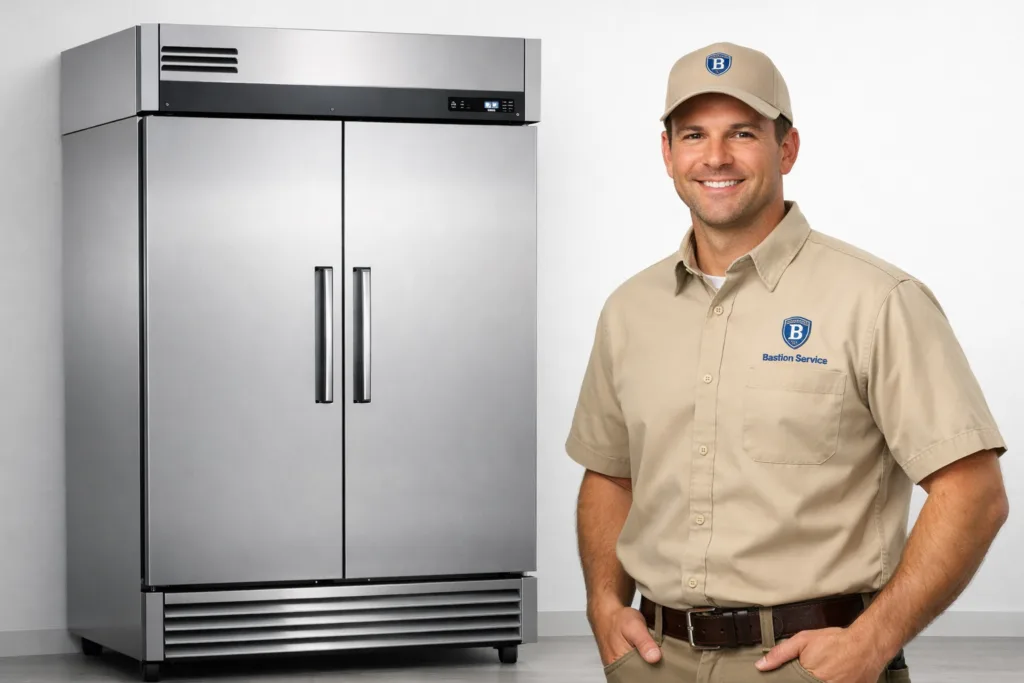
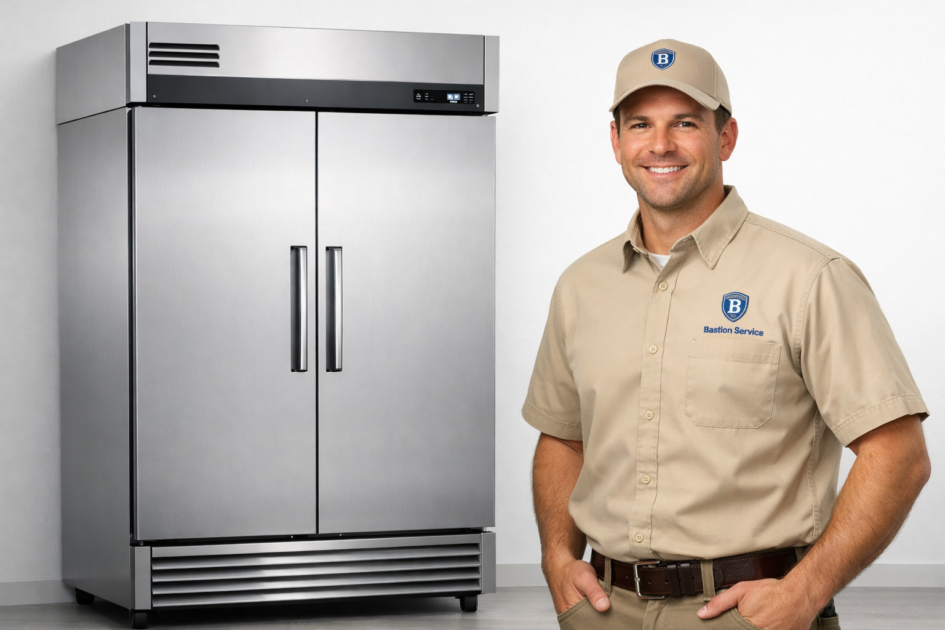
Bastion Service helps businesses in Century City evaluate True freezer issues based on how the unit is actually failing in operation. That may include checking temperature performance, airflow, evaporator condition, fan operation, defrost function, door sealing, and control response so the next step is based on the fault itself rather than guesswork.
What common True freezer symptoms may indicate
Freezer not staying cold enough
If product is softening or cabinet temperature is drifting upward, several issues may be involved. Common causes include a dirty condenser, restricted airflow, evaporator frost buildup, weak fan motors, sensor errors, control faults, or refrigeration-system trouble. A freezer that still cools somewhat but no longer reaches or holds target temperature should be checked quickly because the compressor may be running harder for less result.
Frost buildup on shelves, walls, or the evaporator area
Heavy frost often points to warm air entering the cabinet or a defrost problem that is allowing ice to accumulate. Worn door gaskets, doors not closing tightly, repeated loading, or failed defrost components can all create this pattern. As frost thickens, airflow drops, cooling performance falls off, and recovery after door openings slows down.
Freezer runs all the time
A True freezer that rarely cycles off may be struggling with heat gain, condenser blockage, airflow restrictions, sensor issues, or low refrigeration performance. Constant operation is a warning sign because it can increase wear on the compressor and still leave the cabinet warmer than it should be.
Clicking, buzzing, rattling, or fan noise
Noise changes can come from fan blade interference, ice contact, loose panels, motor wear, or compressor stress. If the sound is new, getting louder, or happening alongside poor cooling, it is worth scheduling service before a smaller mechanical issue turns into a shutdown.
Water leaks or sheets of ice
Water around the unit may be tied to a blocked drain, a defrost issue, door leakage, or freezing patterns caused by poor airflow. Inside the cabinet, ice sheets can signal moisture intrusion or uneven air movement. In a busy kitchen or storage area, leaks and ice should be addressed promptly because they affect both sanitation and safe operation.
Why similar freezer symptoms can have very different causes
One of the most important parts of True freezer repair is separating symptoms from root causes. A warm cabinet can be caused by a failed evaporator fan motor, a sensor reading problem, a control issue, a defrost failure, or a sealed-system fault. Each of those problems calls for a different repair path, a different urgency level, and a different expectation for recovery.
The same is true with frost. A freezer that ices up may need a gasket replacement, a defrost component repair, or correction of an airflow issue. Replacing the wrong part may not improve temperature stability, which is why testing matters before decisions are made about parts, downtime, or replacement.
Signs the problem is getting more serious
Some symptoms suggest the unit should be inspected as soon as possible rather than monitored for a few more days. These include:
- Repeated temperature alarms
- Product softening or inconsistent freezing
- Frost returning soon after manual clearing
- Long recovery after door openings
- Fans that stop intermittently or sound strained
- Compressor area running unusually hot
- Visible water leakage near the cabinet
- Freezer temperature changing throughout the day without a clear loading cause
When these patterns appear together, the issue is often more than a minor adjustment. Continued operation may increase strain on major components and raise the risk of product loss.
How door gasket and airflow problems affect performance
Door sealing issues are easy to underestimate on a freezer. Even a small gap in the gasket can pull humid air into the cabinet, leading to frost, longer run times, and uneven temperatures. If the door is not closing cleanly, the freezer may appear to have a cooling problem when the real issue is warm air infiltration.
Airflow problems are also common in freezing failures. Blocked evaporator passages, fan motor problems, and ice restricting air circulation can leave one section of the cabinet colder than another. In practice, this often shows up as frozen product near one area and soft product elsewhere, or as a freezer that takes too long to recover after routine access.
When to stop using the freezer and schedule repair
If the cabinet is clearly out of range, the evaporator is heavily iced, the compressor is overheating, or stored product is no longer holding safely frozen condition, it is usually best to stop relying on the unit until it has been checked. If the freezer is still partially cooling but struggling, the decision may depend on the exact symptom pattern, the condition of stored inventory, and whether operation is likely to worsen the failure.
For many businesses in Century City, the most practical move is to schedule service when early symptoms appear rather than waiting for a complete cooling loss. Problems that begin as fan issues, gasket leaks, or defrost faults often become more disruptive when ignored.
Repair or replace?
That decision depends on the fault, the overall condition of the cabinet, the history of previous breakdowns, and how essential the unit is to current operations. Many True freezer issues remain strong repair candidates, especially when the cabinet is structurally sound and the problem involves fans, sensors, controls, gaskets, drains, or defrost components.
Replacement becomes more worth considering when the freezer has repeated major breakdowns, poor overall reliability, or a refrigeration-system problem that no longer makes sense relative to the unit’s condition and role in the business. The best choice usually comes after diagnosis, because symptom severity alone does not always reveal repair value.
What to have ready before a service visit
To speed up diagnosis, it helps to note:
- Whether the freezer is warm all the time or only during certain periods
- If frost appears in one area or throughout the cabinet
- Any recent alarms, shutdowns, or unusual noises
- Whether the door is sealing tightly
- If the unit has been manually defrosted recently
- How long the issue has been happening
These details can help narrow down whether the problem is more likely tied to airflow, defrost, controls, door sealing, or the refrigeration side of the system.
Service-focused support for businesses in Century City
True freezer repair is most effective when the goal is not just getting the cabinet to run again, but restoring stable freezing performance with the least unnecessary downtime. For businesses in Century City, that means responding to temperature changes, frost buildup, leaks, and abnormal noise early, arranging diagnosis around the actual symptoms, and making a repair decision that fits day-to-day operating needs.


