
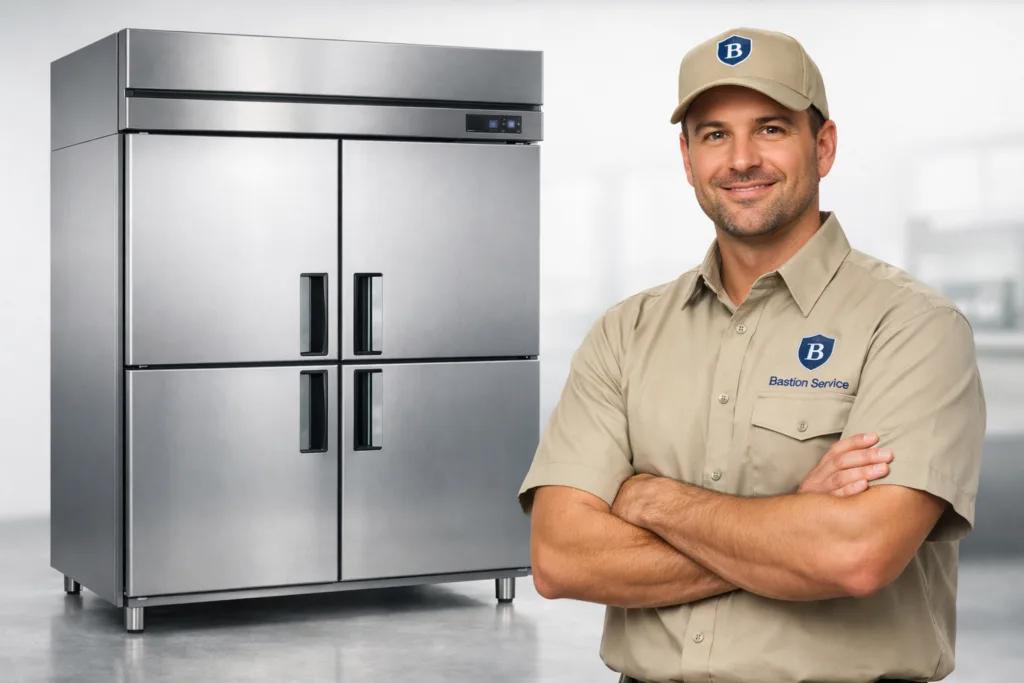




Freezer trouble usually shows up as a workflow problem before it becomes a full equipment failure. When a Turbo Air unit starts running warm, icing over, leaking, or making new noise, the right response is to identify the fault pattern quickly, protect stored product, and schedule service based on how the freezer is behaving under normal use. Bastion Service works with businesses in Century City to diagnose Turbo Air freezer issues that interrupt storage reliability, slow prep and service, or create unnecessary risk around temperature-sensitive inventory.
Related commercial service paths in Century City include Turbo Air Commercial Repair in Century City, Commercial Freezer Repair in Century City, and Turbo Air Refrigerator Repair in Century City.
Symptoms that usually point to a repair need
Most Turbo Air freezer calls begin with one noticeable change: the cabinet no longer feels as cold, frost starts building faster than usual, the door does not seal tightly, or the unit sounds different during operation. Those symptoms can come from several systems, so the useful next step is matching what staff are seeing to the components most likely involved.
Not freezing hard enough
If product is softening, temperatures are drifting, or recovery after door openings is taking too long, the issue may involve restricted condenser airflow, evaporator frost, weak fan performance, control or sensor problems, door gasket leakage, or a refrigeration-system problem. A freezer that is still cooling somewhat can be easy to underestimate, but partial cooling often means the unit is already under strain and may not keep up during busy periods.
Frost buildup inside the cabinet
Heavy frost often points to air getting into the cabinet where it should not, or to a defrost-related problem that is allowing ice to accumulate. Worn gaskets, misaligned doors, doors left slightly open, failed defrost components, and circulation issues can all produce similar results. As frost thickens, airflow drops and temperatures become less stable, which can push the freezer into longer run times and uneven storage conditions.
Water leaks or moisture around the unit
Water on the floor or moisture inside the cabinet can come from drainage issues, defrost problems, excess condensation caused by poor sealing, or ice melting in areas where airflow is compromised. Even when the leak seems minor, it often signals a larger cooling or defrost issue that should be checked before it affects temperature performance or daily operations.
Fan noise, buzzing, or vibration
Scraping, rattling, buzzing, or intermittent fan noise may indicate ice contacting a fan blade, worn fan motors, loose hardware, panel vibration, or compressor-related stress. Noise complaints matter because they are often early signs of a condition that will eventually affect airflow and temperature control.
Constant running or repeated cycling
A freezer that runs for long periods without reaching set temperature may be fighting dirty coils, poor ventilation, frost restriction, weak cooling output, or control issues. Short cycling can suggest different faults, including electrical problems, overheating protection, or unstable control response. Either pattern deserves attention because prolonged operation in that state can increase wear on major components.
Why one symptom can have several different causes
Turbo Air freezer problems are not always obvious from the complaint alone. A warm cabinet might be caused by a failing evaporator fan, a door not sealing, a bad sensor, or loss of refrigeration performance. Frost buildup may come from a gasket issue, but it can also point to defrost failure or an airflow imbalance. That is why effective service should begin with testing and inspection rather than guessing at parts.
For businesses in Century City, this matters because downtime decisions often have to be made quickly. If the freezer is tied to prep schedules, receiving, storage rotation, or daily production, the goal is to determine whether the issue is isolated and repairable now, whether continued use will worsen it, and whether temporary product relocation is the safer move.
Common problem areas on a Turbo Air freezer
During diagnosis, a technician will usually focus on the systems that most directly affect freezing performance and recovery time.
- Door gaskets and hinges: Air leaks can lead to frost, moisture, and poor temperature holding.
- Evaporator section: Ice buildup, weak fans, or blocked airflow can reduce cabinet circulation.
- Defrost components: Heaters, sensors, timers, and related controls can fail in ways that produce recurring frost.
- Condenser airflow: Dirty coils, blocked clearance, or weak condenser fans can reduce heat removal.
- Temperature controls and sensors: Incorrect readings can cause erratic cycling or unstable cabinet temperature.
- Compressor and refrigeration circuit: Reduced cooling output or hard-start behavior may point to a deeper system issue.
Looking at these areas together helps explain whether the symptom is likely to stay manageable for a short time or whether the unit is close to a more serious interruption.
When service should be scheduled right away
Some conditions should not wait for a convenient opening in the schedule. Prompt repair is recommended if the freezer is showing any of the following:
- Cabinet temperature rising above normal holding range
- Product softening or signs of partial thawing
- Frost returning quickly after it is cleared
- Weak airflow or fans that are not running normally
- Repeated alarms, resets, or unexplained control changes
- Water accumulation tied to defrost or drainage problems
- New loud noise, hard starts, or repeated shutdowns
In a business setting, these are not just maintenance issues. They affect inventory confidence, labor planning, and whether the freezer can be trusted through the next shift.
What businesses can note before a service visit
Good symptom details can speed up diagnosis. Before the appointment, it helps to note when the problem started, whether it is getting worse, whether the freezer still pulls down overnight, and whether the issue appears after frequent door use or during heavier loading. Staff can also look for visible frost location, standing water, door closing problems, unusual noise timing, and whether the display temperature matches actual cabinet conditions.
This kind of information helps separate a continuous fault from an intermittent one and can make repair planning more accurate once the unit is inspected.
Repair or replacement depends on fault, condition, and downtime risk
Many Turbo Air freezer issues are repairable, especially when the problem is tied to controls, fan motors, gaskets, drainage, defrost components, or airflow restrictions. Repair usually makes sense when the cabinet is structurally sound, the fault can be isolated, and the freezer still supports the operation well once corrected.
Replacement becomes more likely when the unit has recurring breakdowns, major refrigeration-system failure, escalating repair history, or reliability problems that continue to disrupt the business. The right choice depends on the severity of the current issue, the overall condition of the freezer, and how costly further downtime would be for the operation in Century City.
What a service visit should accomplish
A productive visit should do more than confirm that the freezer is not working properly. It should identify which system is causing the temperature or frost problem, determine how urgent the repair is, and clarify whether the unit can remain in limited use or should be taken out of service until repairs are completed. That often includes checking temperature performance, airflow, fan operation, frost pattern, gasket condition, drain function, controls, and electrical response.
If your Turbo Air freezer is struggling to hold temperature, building ice, leaking, or making unusual noise, the best next step is to arrange service before the problem spreads into inventory loss or a full shutdown. For businesses in Century City, timely diagnosis and repair scheduling can reduce disruption, narrow the repair scope, and get the freezer back to reliable operation with fewer surprises.





