
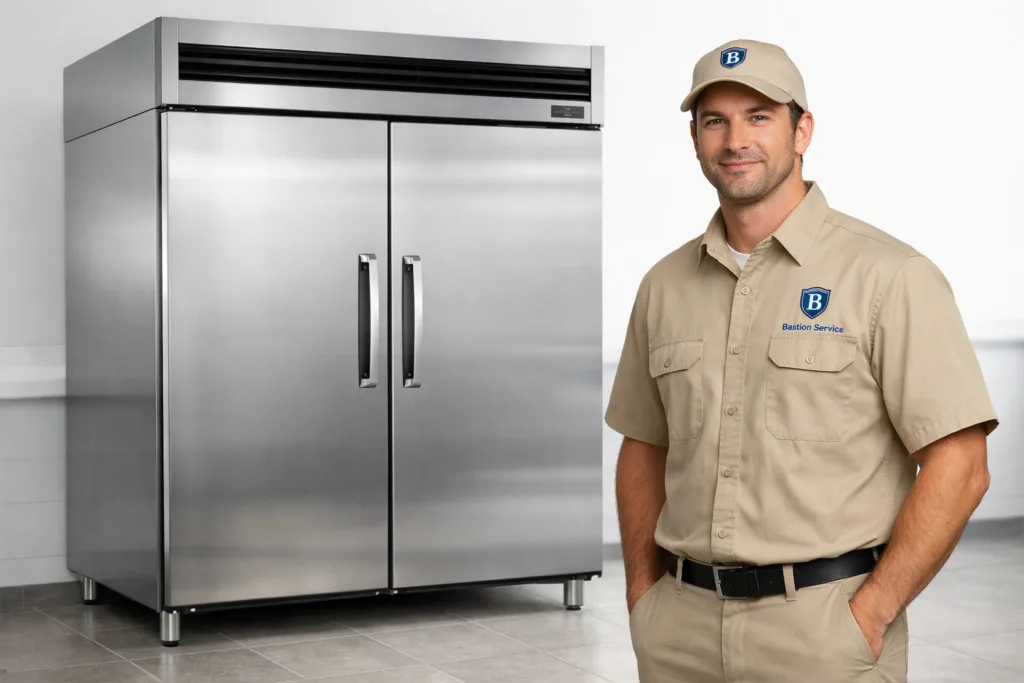




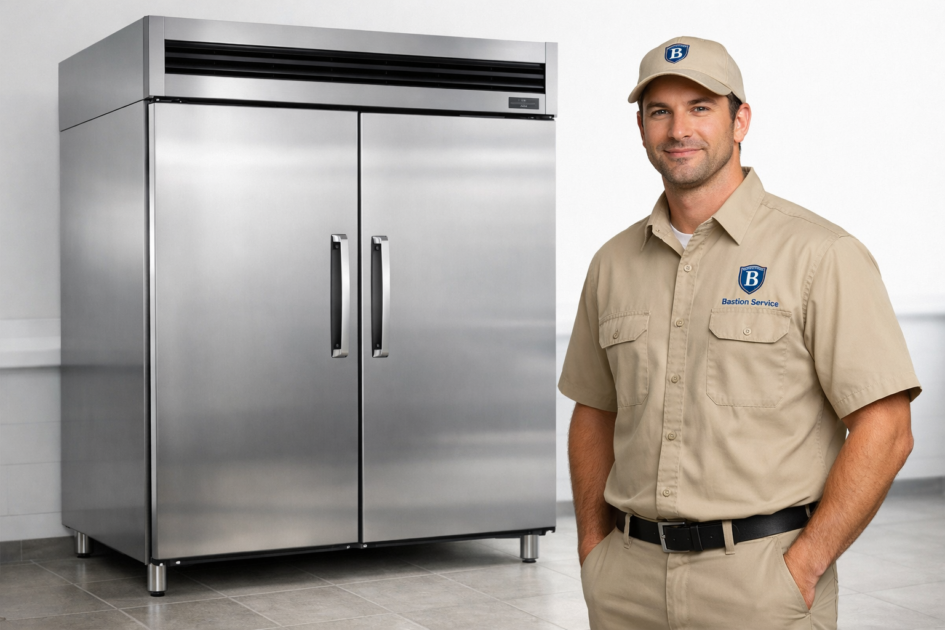
When True refrigeration equipment starts slipping in performance, the right response is a service-focused evaluation that matches the symptom to the likely failure point and the urgency of the situation. For Beverly Hills businesses, that often means deciding quickly whether a refrigerator or freezer can stay in use, whether product should be moved, and how soon repair should be scheduled to avoid a larger interruption. Bastion Service works with local operators who need diagnosis tied to real operating conditions, not guesswork.
For specific equipment paths in Beverly Hills, review True Refrigerator Repair in Beverly Hills, True Freezer Repair in Beverly Hills, and Commercial Appliance Repair in Beverly Hills.
What True refrigeration equipment problems do you troubleshoot?
True refrigerator and freezer issues often start with a small change in performance before turning into a larger storage problem. Common service calls involve warm cabinets, inconsistent temperatures, poor airflow, frost buildup, water around the unit, long run times, noisy operation, and freezer recovery problems after doors are opened during busy periods. Because several different faults can create similar symptoms, the most useful starting point is checking how the equipment is cooling, cycling, moving air, and managing moisture under normal business use.
That matters in kitchens, prep areas, back-of-house storage, and other business settings where refrigeration equipment supports daily operations. A unit may still be running while no longer holding reliable temperatures, and that gap between “running” and “working properly” is usually where repair decisions become time-sensitive.
Refrigerator symptoms that usually need service
Warm cabinet temperatures
If a refrigerator is reading higher than normal or product is not staying consistently cold, the issue may involve condenser coil contamination, evaporator airflow problems, a failing fan motor, door gasket leakage, sensor or control trouble, or a refrigeration-system fault. In business use, a refrigerator that drifts warm is more than an inconvenience; it can affect inventory quality, prep flow, and staff confidence in the equipment.
Uneven cooling from shelf to shelf
When one section stays colder than another, air movement is often part of the problem. Blocked air paths, evaporator fan issues, frost interference, loading patterns, or control-related problems can all produce hot and cold zones inside the cabinet. This is especially important when the unit appears fine at a quick glance but cannot maintain consistent conditions throughout the interior.
Running too long or cycling oddly
A refrigerator that seems to run constantly, shuts off at unusual times, or struggles to recover after the door opens may be compensating for another fault. Heat transfer problems, control issues, door seal failure, or refrigerant-related trouble can all change the unit’s normal cycle pattern. Longer run times also increase wear and can turn a manageable repair into downtime if left unresolved.
Freezer symptoms that call for closer diagnosis
Soft product or slow temperature recovery
Freezers that cannot pull temperature down efficiently after loading or repeated door openings may have airflow restrictions, fan problems, frost accumulation, defrost trouble, or cooling-system issues. In a busy operation, slow recovery is one of the clearest signs that the equipment is no longer performing with the reserve capacity it should have.
Heavy frost or interior ice formation
Frost buildup inside a freezer often points to a problem with defrost operation, moisture intrusion, poor sealing, or reduced airflow across the evaporator area. Excess frost does not just take up space. It can interfere with cooling performance, strain fan components, and make temperature control less predictable over time.
Freezer door and sealing problems
If frost forms near the door, around the opening, or in patterns that keep returning after cleanup, the freezer may be pulling in warm, moist air during operation. Door gaskets, alignment, closing issues, and repeated traffic patterns can all contribute. In many cases, what looks like a simple frost complaint is actually a sign of a broader operating problem that should be checked before it affects stored product.
Airflow, leaks, and moisture issues across refrigerators and freezers
Airflow and moisture complaints are often connected. Weak circulation can lead to warm spots, frost, condensation, and longer run times. Water on the floor may come from drain issues, condensation management problems, gasket failure, or ice that forms where it should not and later melts. Not every leak has the same cause, and not every moisture issue is harmless.
If you are seeing repeated puddling, visible interior ice, or signs that moisture returns shortly after cleanup, service is worth scheduling before staff begin working around the problem as if it were normal. Temporary workarounds may reduce the mess, but they do not address the reason the unit is collecting water or losing cooling efficiency.
How symptom patterns help guide repair decisions
One of the biggest mistakes with refrigeration equipment is treating all cooling complaints the same. A unit that is slightly warm but otherwise stable presents a different decision than a freezer with spreading frost, erratic temperature swings, and signs of poor recovery during peak use. Looking at the full pattern helps determine whether the issue is tied to maintenance conditions, a failed component, control behavior, or a deeper refrigeration problem.
- Stable but weak cooling may suggest airflow restriction, coil issues, or fan-related faults.
- Cooling loss with frost buildup often points toward defrost, airflow, or sealing problems.
- Temperature swings with unusual cycling can indicate control, sensor, or system-performance trouble.
- Leaks combined with warm performance usually need prompt evaluation to determine whether moisture and cooling issues are connected.
This kind of symptom-based review helps business operators decide whether to keep the unit in limited use, reduce loading, move product, or plan for immediate repair.
When a service call should move up in priority
Some issues can wait for a scheduled appointment. Others should be treated as higher priority because the risk of product loss or equipment failure is rising. A service visit should move up the list when a refrigerator or freezer cannot hold set temperature, frost is expanding quickly, the cabinet is noticeably warmer during normal use, water is repeatedly collecting around the unit, or operating noise changes suddenly along with cooling performance.
It is also smart to schedule service sooner when staff are adjusting around the problem every day, such as opening the unit less often, relocating product away from warmer sections, wiping up repeat moisture, or manually monitoring temperatures because the equipment no longer feels trustworthy. Those are signs that the equipment problem is already affecting workflow.
What a repair visit typically helps clarify
A service appointment is not just about naming a broken part. It helps establish whether the refrigerator or freezer is safe to keep using in the short term, what condition is driving the symptom, and whether the likely repair path fits the age and overall condition of the equipment. That is especially important for operators trying to balance uptime, inventory protection, and scheduling around active business hours.
During diagnosis, reported symptoms such as warm cabinets, weak airflow, frost, moisture, recovery delays, and abnormal cycling are reviewed as part of the same operating picture. That allows the repair plan to reflect what the equipment is actually doing on site rather than what one isolated symptom suggests by itself.
Repair versus replacement considerations
Not every service call points in the same direction. Repair is often the sensible path when the problem is isolated, cabinet condition remains solid, and the equipment has otherwise been dependable. Replacement becomes a stronger consideration when there are repeated failures, significant performance decline, major cooling-system concerns, or costs that no longer make sense relative to the condition of the unit.
The benefit of a proper diagnosis is that it gives you a basis for action. Instead of guessing under pressure, you can make a decision based on how severe the fault appears, how urgently the equipment is needed, and whether the unit is likely to return to stable operation after repair.
If your True refrigerator or freezer in Beverly Hills is showing temperature instability, airflow problems, frost buildup, leaks, or slower recovery than normal, the next step is to schedule service before the issue affects more of your operation. A focused repair visit can help define the fault, set realistic expectations for downtime, and give your team a practical path forward based on the actual condition of the equipment.


