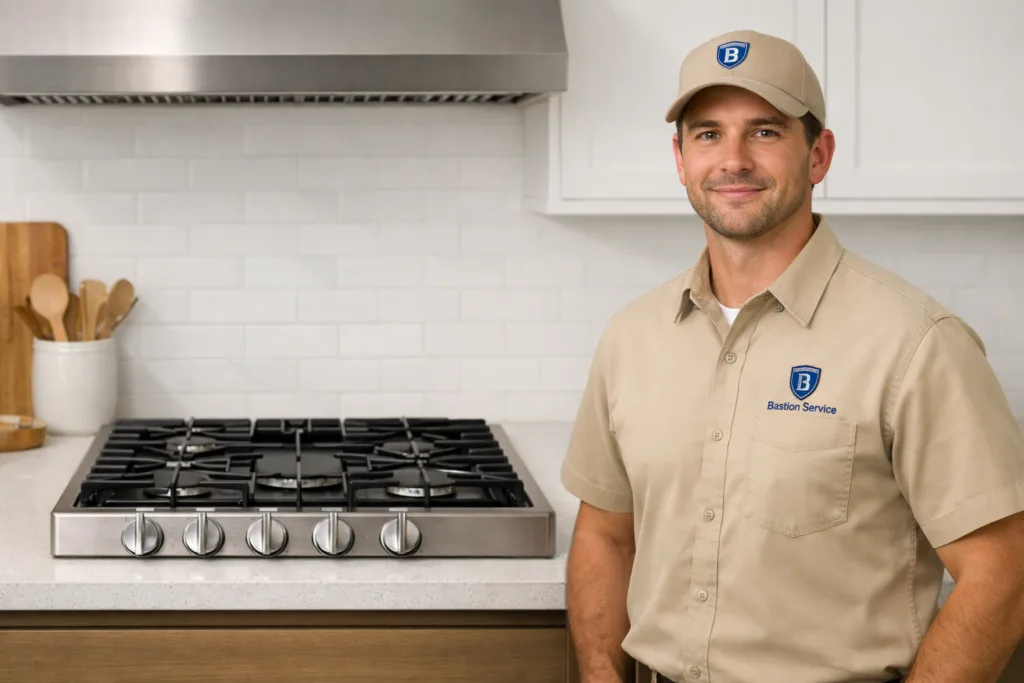
Cooktop problems are often easy to notice but not always easy to interpret. One burner may stop heating, another may click constantly, or the controls may seem to work only part of the time. On a Kenmore cooktop, those symptoms can trace back to different parts of the system, including the element, ignition components, switch, wiring, or control assembly. Identifying the actual source matters because the right repair depends on whether the issue is isolated or part of a broader failure.
Common Kenmore cooktop symptoms and what they can mean
Burner will not heat on an electric cooktop
If an electric burner stays cold, the problem may be with the surface element itself, the burner receptacle, the control switch, or the wiring leading to that circuit. Sometimes the burner appears to work intermittently before failing completely, which can point to a loose connection or a switch beginning to wear out. If only one burner is affected, the issue is often more contained than if multiple burners stop working at once.
Gas burner will not ignite
On a gas Kenmore cooktop, a burner that will not light may have clogged ports, a misaligned burner cap, moisture near the igniter, or a failing spark ignition component. If you hear clicking but do not get ignition, that usually means the system is trying to light but something is preventing a proper flame. If there is a strong or persistent gas smell, stop using the appliance and treat that as a safety issue first.
Burner heats unevenly or takes too long
Uneven heating is a common complaint because it affects everyday cooking right away. Electric models may develop weak spots in the element or inconsistent power delivery from the switch. Gas models may show an uneven flame pattern when burner openings are blocked or when the cap is not seated correctly. Symptoms like these can lead to scorched food on one side of the pan and undercooked food on the other.
Cooktop keeps clicking
Continuous clicking on a gas cooktop can happen after cleaning, after a spill, or when ignition parts begin to fail. In some cases, the clicking stops once moisture dries out. In others, it continues because a switch is sticking or the ignition system is misfiring. If the clicking happens repeatedly during normal use, it is worth having the cooktop checked before the problem becomes more disruptive.
Burner gets too hot or does not adjust properly
When a burner stays on high or does not respond well to temperature changes, the cause is often a faulty control switch on electric models. That kind of symptom should not be ignored. A burner that does not regulate correctly can overheat cookware, damage pans, and place more stress on surrounding components.
Cracked glass or damaged controls
Visible damage changes the repair discussion. A cracked glass surface, broken knob stem, or touch panel that no longer responds may affect both safe operation and repair value. Some damaged parts can be replaced individually, while others make less sense to repair depending on the age and overall condition of the unit.
Why the same symptom can have different causes
Cooktops are compact appliances, which means heat, controls, wiring, and ignition parts are all working in a small space. A single symptom can overlap with several possible faults. For example, a burner that will not turn on may look like a bad element but actually be caused by a failed switch. A burner that lights poorly may seem like a cleaning issue but turn out to be an ignition problem.
That is why symptom-based service is more useful than replacing parts by guesswork. A proper inspection helps determine whether the repair is limited to one component or whether additional wear is already present elsewhere in the cooktop.
Signs the problem should be checked soon
Some cooktop issues can wait a short time, but others should be addressed sooner rather than later. It is smart to schedule service if you notice:
- A burner that no longer works at all
- Repeated clicking on a gas burner
- Heating that is inconsistent or noticeably weaker than before
- A burner that will not lower from high heat
- Controls that feel loose, stick, or fail to respond
- Visible cracks or damage on the cooking surface
- Intermittent operation that comes and goes without a clear reason
Intermittent problems are especially important to catch early. They often become more frequent over time, and continued use can strain related parts that were not originally failing.
When continued use may make the repair worse
Using a cooktop while a component is malfunctioning can sometimes turn a smaller repair into a larger one. On electric models, a failing switch or bad connection can create excess heat where it should not. On gas models, repeated failed ignition can lead to unreliable starts and frustration every time the cooktop is used. If a burner behaves unpredictably, the safest approach is usually to limit use until the issue is identified.
This is especially true if the appliance trips a breaker, sparks abnormally, keeps clicking after ignition, or shows surface damage around the burner area.
Repair or replace a Kenmore cooktop?
For many homeowners in Manhattan Beach, the better choice depends on the failed part, the age of the cooktop, and how the rest of the appliance is holding up. Repair is often reasonable when the problem is isolated to an igniter, switch, element, burner component, or control-related part and the cooktop is otherwise in good condition.
Replacement becomes more likely when there is major glass damage, repeated control failures, multiple burner issues at the same time, or general wear that suggests the appliance is nearing the end of its useful life. The goal is not just to get it running again for the moment, but to decide whether the repair offers solid value for the household.
What Manhattan Beach homeowners should pay attention to before service
Before a service visit, it helps to note exactly what the cooktop is doing. Try to identify whether the issue affects one burner or several, whether it happens every time or only occasionally, and whether it began after cleaning, a spill, or a power interruption. Those details can make diagnosis faster and more accurate.
It is also helpful to pay attention to pattern changes. A burner that first became slow and then stopped altogether tells a different story than a burner that failed suddenly. The more specific the symptom pattern, the easier it is to evaluate the likely repair path.
Focused help for residential cooktop problems
In a busy household, a faulty cooktop can disrupt far more than one meal. Bastion Service helps Manhattan Beach homeowners evaluate Kenmore cooktop problems based on the actual symptom, appliance condition, and expected repair value. Whether the issue involves ignition trouble, uneven heat, clicking, broken controls, or a burner that will not work, the next step should be based on what the cooktop is actually doing rather than trial and error.