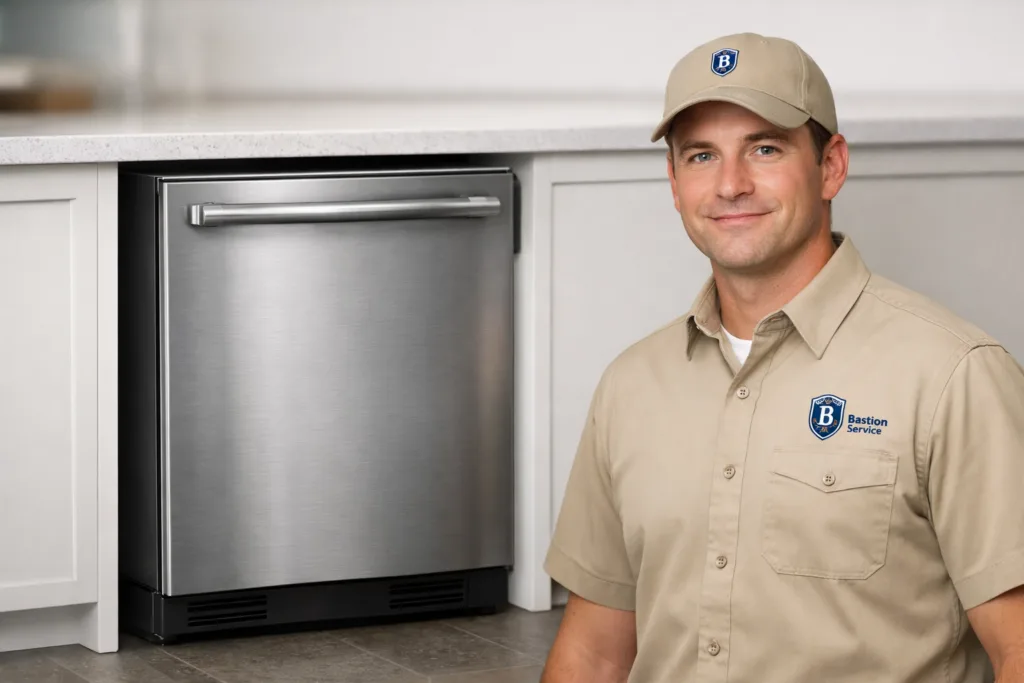
Ice maker failures often follow a pattern. A Perlick unit may still run while producing fewer cubes, dropping soft ice, overfilling, or leaving water under the cabinet. Those details matter because they help narrow the cause to water delivery, freezing performance, drainage, scale buildup, or a control-related fault rather than treating every no-ice complaint the same way.
Common Perlick Ice Maker Problems in El Segundo Homes
Residential ice makers are compact systems, but they rely on several stages working in order: fill, freeze, harvest, and drain. When one stage falls behind, the symptom usually shows up in the bin first.
No ice or very low ice production
If the bin stays empty or takes too long to refill, the issue may be tied to a restricted water supply, inlet valve trouble, low temperatures not being reached, or a sensor or control problem that interrupts the cycle. In some cases, the machine starts normally but never moves cleanly into harvest, so it appears to be making ice slowly when it is really getting stuck mid-process.
Small, thin, cloudy, or clumped ice
Cube quality can reveal a lot. Small or hollow cubes often point to fill problems or reduced water flow. Cloudy or wet ice may suggest inconsistent freezing or mineral buildup affecting normal operation. Clumping in the bin can happen when batches are not freezing evenly or when partial melting occurs before the next cycle.
Water leaking around the unit
Leaks should be addressed quickly, especially in finished kitchens, bars, or built-in cabinet spaces. Water around a Perlick ice maker can come from a blocked drain, a loose fitting, an overfill condition, or a problem during harvest. Even a minor leak can damage flooring and surrounding materials if the machine continues to run.
Odd noises or repeated cycling
Buzzing, clicking, humming that lasts too long, or frequent restart attempts can indicate a pump, motor, valve, or control issue. A unit that sounds busy but does not complete a normal batch often needs direct testing to determine where the sequence is failing.
What Specific Symptoms Often Mean
Homeowners usually notice the result before the cause. Looking at the symptom pattern can make the service visit more efficient and help set expectations for repair.
If the ice maker is running but not filling correctly
A machine that powers on but produces partial batches may have low incoming water flow, a restricted filter path if one is present in the setup, mineral buildup at the fill area, or a valve that is no longer opening consistently. The result is often smaller cubes, incomplete sheets, or skipped cycles.
If the unit freezes but does not harvest properly
When ice forms but does not release as expected, the problem may involve temperature sensing, control timing, or a component that should advance the machine into harvest. This can leave the unit appearing frozen up, stalled, or stuck making the same unsuccessful attempt over and over.
If the ice tastes off or looks dirty
Bad-tasting or discolored ice can point to stale water, internal buildup, or contamination introduced somewhere in the water path. If appearance and taste changed gradually rather than all at once, cleaning and inspection are often part of the repair decision.
Why Perlick Ice Maker Diagnosis Should Be Symptom-Based
Perlick products are known for premium refrigeration design, but that does not make diagnosis simple. Similar complaints can come from very different causes. “Not making ice” might mean no water is entering, the unit is not reaching the correct temperature, the harvest sequence is failing, or a sensor is giving bad information to the control system.
That is why replacing parts based only on the visible symptom can waste time and money. The better approach is to check how the machine is filling, freezing, releasing ice, and draining, then confirm which part of the sequence is actually breaking down.
When Waiting Usually Makes the Problem Worse
Some ice maker issues are easy to put off because the appliance may still produce a little ice. But a unit that leaks, overfills, struggles through cycles, or creates poor-quality batches can worsen with continued use.
- Leaks can spread beyond the appliance and affect flooring or cabinetry.
- Repeated failed cycles can put extra strain on valves, pumps, and controls.
- Mineral buildup tends to become harder to remove the longer it is ignored.
- Slow production can become complete no-ice failure without much warning.
If the machine is no longer keeping up with normal household use in El Segundo, it is usually better to inspect the cause before the problem expands into a larger repair.
Repair or Replace?
Whether repair makes sense depends on the condition of the appliance as a whole, not just the current symptom. A single failed component in an otherwise healthy Perlick ice maker may be worth repairing. If the unit has recurring problems, heavy internal buildup, multiple worn parts, or signs of broader refrigeration trouble, replacement may be the more practical long-term option.
Useful factors to consider include:
- How old the ice maker is
- Whether the issue is isolated or recurring
- The condition of internal components and water paths
- Evidence of scale, corrosion, or ongoing leaks
- How reliably the unit has been meeting household demand
What a Service Visit Should Focus On
For a residential Perlick ice maker, the goal is not just to confirm that it is malfunctioning, but to identify where the cycle is failing and whether the repair path is reasonable. That may include checking water intake, inspecting for buildup or drain restriction, verifying temperature behavior, and testing the components responsible for filling, freezing, and harvest.
This kind of symptom-based evaluation is especially helpful when the machine still works intermittently. Intermittent problems can be easy to dismiss day to day, but they often point to a developing failure that will not correct itself.
Practical Guidance for El Segundo Homeowners
If your Perlick ice maker is making less ice than usual, producing misshapen cubes, leaking, or cycling without finishing a batch, it helps to note exactly what changed first. Did production slow down gradually? Did the leak begin after a cleaning cycle? Is the machine making noise at the same point each time? Those small observations can help separate a water issue from a freezing or control issue.
For many households in El Segundo, the most useful next step is a clear diagnosis and a repair recommendation based on the appliance’s actual condition. That makes it easier to decide whether the unit is a good candidate for repair or whether replacement should be considered instead.