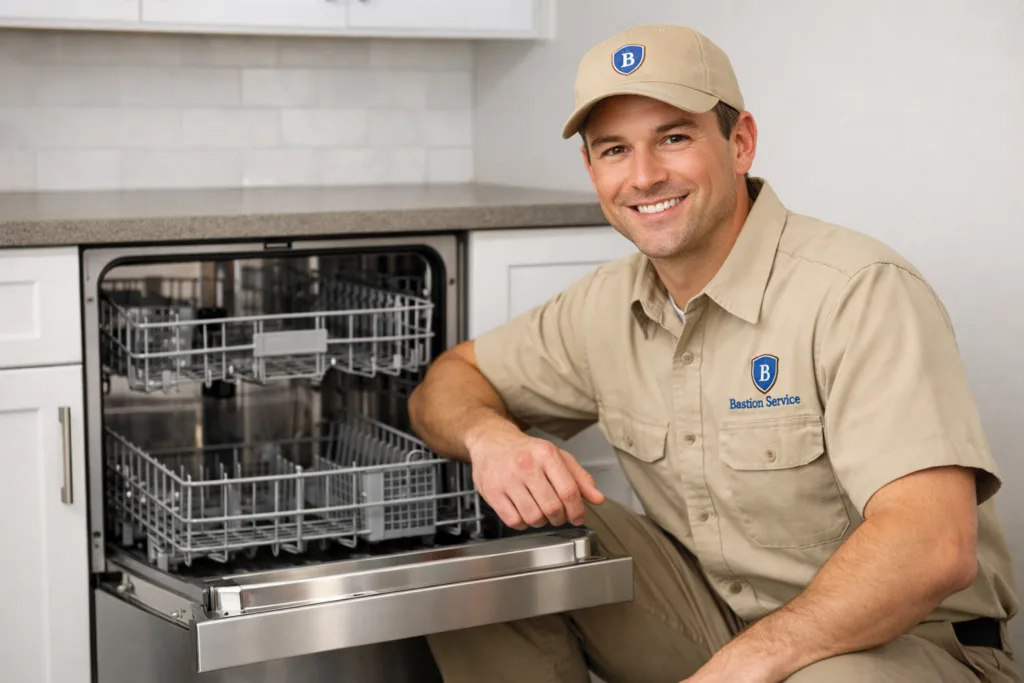
Common Summit dishwasher problems in Mid-City homes

Most dishwasher failures follow a symptom pattern. Paying attention to what the machine is doing at each stage of the cycle can help narrow the problem faster and prevent avoidable damage from continued use.
Standing water after the cycle ends
If a Summit dishwasher finishes with water still sitting in the tub, the problem may involve the filter area, a blocked drain path, a kinked hose, a weak drain pump, or a control issue that prevents the drain portion of the cycle from completing correctly. Even when the dishwasher sounds like it is running normally, poor drainage can leave behind odor, residue, and extra moisture that affects future loads.
This symptom is worth addressing early. Water that stays in the machine can make it harder to tell whether the next problem is caused by a new failure or by buildup from repeated incomplete draining.
Cloudy glasses, residue, or poor cleaning
When dishes come out dirty, the cause is not always detergent. Poor wash results can point to blocked spray arms, circulation trouble, low water fill, temperature issues, or a cycle that is not advancing the way it should. Some households first notice the problem on cookware or glasses, while others see food debris left on plates after a full run.
If cleaning performance has been getting worse gradually, that often suggests restriction, wear, or a developing pump problem rather than a sudden electrical failure.
Leaks around the door or underneath the unit
A leaking dishwasher should never be treated as minor. Water on the floor may come from the door seal, spray arm pattern, pump seal, hose connection, or overfilling condition. In some cases, the leak appears only during certain parts of the cycle, which can help identify whether the issue is tied to wash pressure, filling, or draining.
Because even a small leak can affect flooring and adjacent cabinet surfaces, it is usually best to stop using the dishwasher until the source is identified.
Won’t start or stops mid-cycle
If the dishwasher does not respond at all, the issue may involve power supply, door latch function, controls, or interface failure. If it starts and then shuts down before finishing, that can point to draining trouble, heating problems, fill issues, or a fault in the control system.
These symptoms often look similar from the outside, which is why replacing one visible part without testing can lead to repeat service calls.
Grinding, humming, or unusually loud operation
New noise is one of the more useful clues in dishwasher diagnosis. Grinding can suggest debris in the pump area. A loud hum may indicate a pump trying to run under strain. Rattling may come from spray arm interference or loose internal items, but if the sound continues with an empty machine, the issue is more likely internal.
Noise becomes more significant when it appears together with poor cleaning or bad drainage, since that combination often points to a circulation or pump-related problem.
Why the symptom matters more than the guess
Two Summit dishwashers can show the same complaint and need entirely different repairs. A front-edge leak may look like a worn gasket but actually be caused by a spray arm sending water where it should not. Standing water may seem like a bad drain pump when the real problem is an obstruction or a cycle-control fault.
That is why the most useful repair path starts with the actual behavior of the machine: when the problem happens, whether it happens every cycle, and whether other symptoms show up at the same time. A proper diagnosis helps avoid unnecessary parts replacement and gives homeowners a more realistic idea of whether repair is practical.
Signs the dishwasher should not keep running
Some dishwasher issues can wait a short time. Others should be addressed before the next load. It makes sense to schedule service promptly when:
- Water leaks onto the floor or into the cabinet opening.
- The dishwasher leaves standing water after each cycle.
- The unit trips power, loses response, or stops before finishing.
- A burning smell, overheating, or visible electrical concern appears.
- Noise becomes much louder and washing or draining performance also drops.
Continuing to use the dishwasher under these conditions can turn a contained appliance problem into damage involving flooring, cabinetry, or electrical components.
Repair or replace a Summit dishwasher?
For many Mid-City households, the better choice depends on the overall condition of the machine, not just its age. If the dishwasher has one isolated failure and has otherwise been working well, repair may be a reasonable option. If it has a pattern of leaks, repeated performance issues, visible wear, or more than one system acting up at once, replacement may deserve stronger consideration.
It also helps to think about how the dishwasher has been performing over time. A unit that suddenly develops one specific fault is different from a unit that has been washing poorly, draining inconsistently, and getting noisier for months. In the second case, fixing one part may not restore dependable daily use.
Helpful details to note before service
Before scheduling service, it helps to keep track of a few observations:
- Does the dishwasher fill with water?
- Does it drain completely at the end?
- Is the problem happening on every cycle or only sometimes?
- Do you see water under the machine or at the door?
- Did the issue begin suddenly, or has it been getting worse over time?
These details can make the visit more efficient and help identify whether the problem points to drainage, circulation, control, heating, or leak-related failure.
What Mid-City homeowners can expect from a repair decision
The goal is not just to get the dishwasher running for one cycle. The better outcome is understanding what failed, whether the repair addresses the root cause, and whether the appliance is likely to return to normal household use without ongoing issues.
For homeowners in Mid-City, Summit dishwasher repair is usually most worthwhile when the symptom pattern leads to a focused fix rather than guesswork. That approach helps protect the kitchen, control costs, and make the next step easier to decide with confidence.