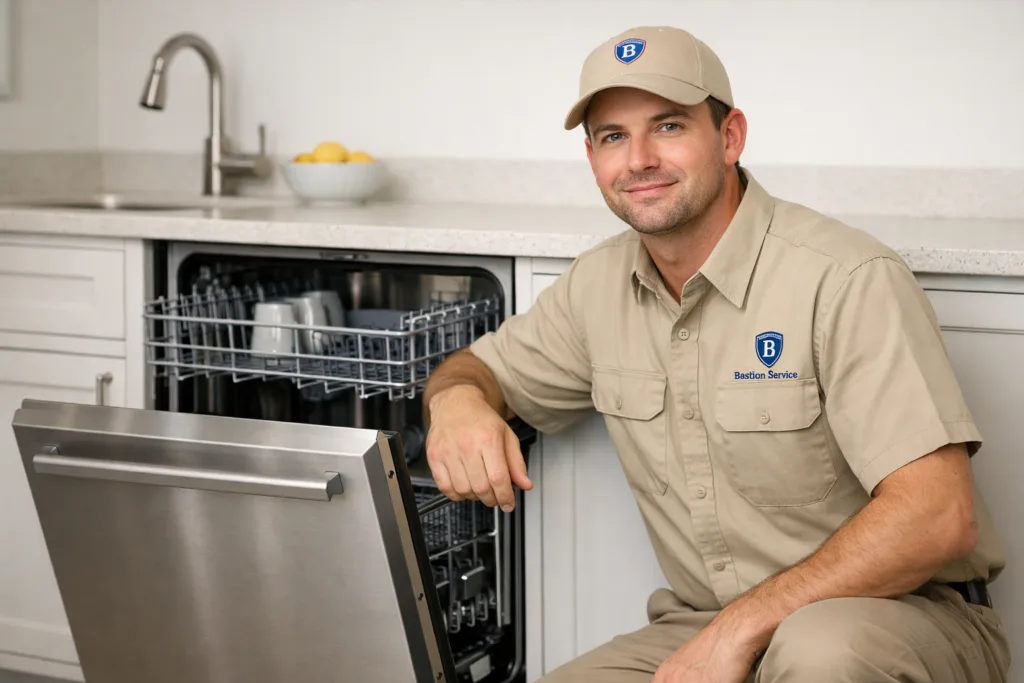
A dishwasher problem is easier to solve when the symptom is narrowed down before parts are considered. On Summit models, the same complaint can come from very different failures. Water left in the tub may be a drain pump issue, but it can also point to a blockage, hose problem, or a condition that prevents the machine from completing the drain portion of the cycle.
For Beverly Hills homeowners, the most useful approach is to look at what the dishwasher does from start to finish: whether it fills normally, sprays with enough force, heats as expected, drains fully, and completes the cycle without interruption. That symptom pattern usually says more than any single noise or warning light by itself.
Common Summit dishwasher symptoms and what they often indicate
Standing water after the cycle
If water remains at the bottom after the cycle ends, the problem may involve a restricted drain path, a weak or failed drain pump, a kinked hose, or a check-valve issue. Sometimes the dishwasher appears to finish normally but never truly clears the tub. If the water is dirty or has a strong odor, that usually means the machine has been unable to drain completely for more than one cycle.
This is not a symptom to ignore. Repeated incomplete draining can lead to odors, residue buildup, and additional strain on the pump system.
Dishes come out dirty, gritty, or cloudy
Poor wash results often trace back to weak circulation, blocked spray arms, detergent dispenser problems, low water temperature, or a problem with how water is being distributed inside the tub. Cloudy glasses and food left on plates do not always mean the dishwasher itself has a major failure, but when the issue continues across multiple loads, internal components should be checked.
If one rack cleans better than the other, that can be an important clue. Uneven results often suggest a spray arm, wash motor, or water delivery problem rather than a general performance complaint.
Leak under the door or beneath the unit
Leaks may come from the door gasket, lower spray arm, pump housing, fill valve area, drain connection, or excessive sudsing that forces water where it should not go. Water appearing only during certain portions of the cycle can help narrow the fault. A leak during filling points in a different direction than a leak during wash or drain.
Even a small recurring leak should be addressed quickly. Moisture under a dishwasher can affect nearby cabinetry, flooring, and hidden surfaces long before the amount of water seems serious.
Dishwasher will not start
When a Summit dishwasher will not begin a cycle, likely causes include power supply issues, a failed door latch, a user interface problem, or a control fault. In some cases, the machine has power but will not respond because the latch is not being recognized as closed. In others, the panel may light up but the unit never moves into the fill or wash sequence.
Cycle starts and then stops mid-way
A dishwasher that shuts down partway through may be dealing with a drain problem, heating fault, control issue, or intermittent electrical failure. If the machine stops at roughly the same point each time, that can help identify which stage of operation is failing. Mid-cycle stoppages are often more revealing than a complete no-start condition because they show which systems are still working and which are not.
Grinding, buzzing, or louder-than-normal operation
Unusual noise may come from debris in the pump area, a worn circulation motor, spray arm interference, or internal components beginning to fail under load. Not every sound means a major repair, but a new grinding or persistent buzzing noise usually deserves attention before the dishwasher is used repeatedly.
Dishwasher runs but does not dry well
Low rinse temperature, heater-related faults, rinse aid issues, or cycle interruption can all affect drying. If dishes are consistently wet at the end of the cycle, especially when that was not the case before, the problem may involve more than normal moisture left on plastics. Weak drying often appears together with poor cleaning or incomplete cycle complaints.
Why symptom patterns matter on Summit dishwashers
Dishwashers rely on several systems working in sequence. The unit must fill to the correct level, circulate water with enough pressure, heat when required, drain reliably, and respond properly to door and control inputs. When one part of that chain fails, the visible symptom can be misleading.
For example, dishes that are still dirty may seem like a detergent issue, but the real fault could be a weak wash motor. A machine that does not dry may look like a heater problem, yet the underlying cause could be a cycle that never reaches the proper stage. This is why clear diagnosis matters before repair decisions are made.
Signs the problem is becoming more serious
Some dishwasher issues stay minor for a while, but others tend to worsen quickly. A Summit dishwasher should be checked sooner rather than later when you notice any of the following:
- Water repeatedly left in the tub after use
- Leaks appearing more than once
- New grinding, humming, or rattling sounds
- Cycles that stop before completion
- Wash performance dropping across several loads
- Controls responding inconsistently
- Signs of low rinse temperature or poor drying that continue despite normal use
These symptoms often point to a problem that can spread from one component to another if the appliance keeps running in the same condition.
When it is best to stop using the dishwasher
Continued use is risky when the machine is leaking, tripping power, failing to drain, or making harsh mechanical noises. A leak can cause hidden water damage. A drainage failure can leave stagnant water and put extra strain on the pump. Electrical irregularities or repeated shutdowns should also be taken seriously, especially if the dishwasher becomes unresponsive or behaves differently from one cycle to the next.
If the dishwasher is simply not cleaning as well as before, use may still be possible for a short time, but repeated operation can make buildup, odor, and component wear worse when the root cause is not corrected.
Helpful checks homeowners can make first
Before assuming a major repair is needed, a few basic observations can help clarify the problem:
- Check whether the filter area has visible debris buildup
- Look for spray arms that are blocked or not turning freely
- Confirm that the dishwasher door closes and latches firmly
- Note whether the problem happens on every cycle or only certain settings
- Pay attention to when a leak appears: fill, wash, or drain
- Notice whether the unit sounds like it is washing with normal spray force
These checks do not replace service, but they can make the symptom easier to describe and help separate routine maintenance concerns from a likely component failure.
Repair versus replacement considerations
Many Summit dishwasher issues are repairable when the failure is limited to a pump, valve, latch, seal, control-related part, or wash system component. Replacement becomes a stronger consideration when the dishwasher has multiple major faults at the same time, ongoing leak-related damage, or a history of repeated breakdowns that suggests broader wear.
The decision should be based on the appliance’s overall condition, not just the current complaint. A single targeted failure is very different from a machine with several systems deteriorating at once. For most households in Beverly Hills, the question is not simply whether the dishwasher can be repaired, but whether the repair is likely to restore reliable daily use.
What a useful service recommendation should answer
When a Summit dishwasher is not working properly, homeowners usually want straightforward answers to a few practical questions:
- What is actually causing the symptom?
- Is it safe to keep using the dishwasher for now?
- Is the problem isolated or part of a larger pattern?
- Is repair likely to restore normal performance?
- Would replacement make more sense based on the machine’s condition?
A good repair recommendation should connect the symptom to the failed system, explain the risk of continued use, and make it easier to decide on the next step without guesswork.
Summit dishwasher repair in Beverly Hills for everyday household problems
Most residential dishwasher calls come down to a short list of real-life frustrations: dishes not getting clean, water staying behind, a leak appearing near the toe kick, cycles stopping half-finished, or the machine running with an unusual sound. In each case, the right fix depends on how the dishwasher behaves through the full cycle, not on replacing parts at random.
For households in Beverly Hills, that symptom-based approach is the best way to judge whether a Summit dishwasher repair is straightforward, urgent, or no longer practical compared with replacement.