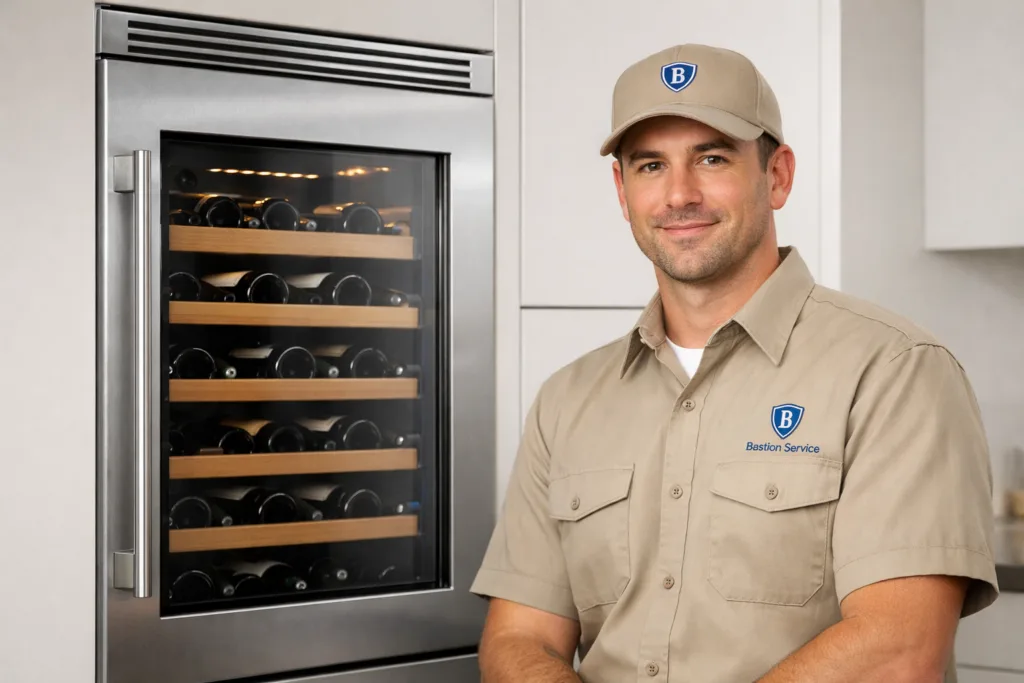
Stable storage matters more than whether the cabinet feels somewhat cool when the door opens. A Sub-Zero wine cooler can still run, light up, and appear normal while quietly drifting out of range. In Venice homes, that often shows up first as warmer bottles, damp labels, intermittent condensation, or a unit that seems to run longer than it used to.
The most useful first step is to match the symptom pattern to the likely failure area. That helps separate issues like airflow restriction or a door seal leak from deeper faults involving controls, fans, or the refrigeration system.
Common Sub-Zero wine cooler problems and what they often mean
The cooler is running warm
If the cabinet no longer holds the selected temperature, the cause may be as simple as poor condenser airflow or as serious as a compressor or sealed-system problem. Other possibilities include a faulty temperature sensor, a control issue, evaporator frost buildup, or a fan that is no longer circulating air correctly. When cooling is inconsistent rather than completely absent, the problem is often already progressing.
The temperature keeps swinging
Wine storage depends on stability. If the unit alternates between too warm and too cold, the issue may involve the thermistor, electronic controls, airflow imbalance, or a door that is not sealing tightly. Repeated fluctuations can also happen when the unit is running but not moving air evenly through the cabinet.
There is condensation, moisture, or frost inside
Moisture on shelves, fogging on the glass, or frost near the evaporator area usually points to warm air entering the cabinet, drainage trouble, gasket wear, or restricted airflow. This can start as a mild nuisance and turn into poor temperature control, odor, or heavier ice buildup if the source is left unresolved.
The wine cooler is noisy or seems to run nonstop
A new hum, clicking sound, rattling fan noise, or unusually long run cycles can signal that the unit is working harder to maintain temperature. Fan motor wear, condenser buildup, vibration from mounting or panels, and compressor stress are all possible causes. A wine cooler that rarely cycles off should be checked before excess strain leads to a larger repair.
Why symptom-based diagnosis matters
Many wine cooler complaints look similar at first. “Not cooling” can come from dirty coils, a failed fan, a bad sensor, a control problem, frost blocking airflow, or a refrigerant-related fault. Replacing parts based only on the most visible symptom can lead to unnecessary cost and delay.
A good diagnosis usually answers a few basic questions in order:
- Is the displayed temperature accurate?
- Is air moving through the cabinet the way it should?
- Are the condenser and evaporator sections operating normally?
- Is the door sealing well enough to keep warm air out?
- Is the compressor starting, running, and cycling correctly?
Those checks help determine whether the problem is minor and isolated or part of a larger performance decline.
Signs the issue is becoming more urgent
Some problems can wait a short time for service scheduling, while others should be addressed quickly. It is smart to stop treating the issue as routine when you notice any of the following:
- The cabinet never returns to the set temperature after normal use
- Condensation keeps coming back even when the door is not opened often
- Frost buildup is getting heavier
- The cooler is running nearly all the time
- The interior is warmer at some shelves than others
- New noises appear along with weaker cooling
These symptoms often mean the appliance is compensating for an underlying fault rather than simply recovering from door openings or ambient room changes.
When continued use can make the repair worse
Wine coolers do not always fail all at once. They often keep operating in a weakened state, which can place extra stress on other components. A clogged condenser can overheat the compressor. Poor airflow can create frost that further blocks cooling. A worn door gasket can increase run time and moisture at the same time.
If your Sub-Zero wine cooler in Venice is no longer protecting a consistent storage environment, reducing door openings and arranging service sooner rather than later is usually the safer move for both the appliance and the collection inside.
What can often be repaired
Not every wine cooler problem points to replacement. Many service calls involve correctable faults such as:
- Condenser cleaning and airflow restoration
- Fan motor replacement
- Temperature sensor or thermostat issues
- Drain-related moisture problems
- Door gasket wear or sealing problems
- Electronic control malfunctions
More complex cases may involve the compressor or sealed system, which require closer evaluation. The right repair decision depends on the exact failure, the age of the unit, its overall condition, and whether performance has been steadily declining over time.
Repair versus replacement for a Sub-Zero wine cooler
For many Venice homeowners, the real question is not just whether the unit can be repaired, but whether the repair makes sense. Built-in premium appliances often justify repair when the cabinet, fit, and overall refrigeration platform are still in solid condition. On the other hand, replacement becomes a more serious consideration when multiple major components are worn, cooling problems have been recurring for a long time, or the cost of restoring reliability approaches the value of the appliance.
That decision is best made after the actual fault is confirmed. A single failed fan or sensor is very different from a unit with broad wear and deeper cooling-system trouble.
Helpful details to note before service
If you are preparing for Sub-Zero wine cooler repair in Venice, a few observations can make the service visit more productive. Try to note:
- Whether the temperature is always off or only at certain times of day
- Whether moisture appears on the glass, shelves, or around the door
- Whether the sound changed suddenly or gradually
- Whether the problem began after cleaning, power interruption, or heavier use
- Whether some sections of the cabinet are cooler than others
That symptom history often helps narrow the diagnosis faster than a general report of “not cooling.”
What Venice homeowners should do next
If the unit is warm, unstable, noisy, or collecting moisture, it usually makes sense to have the cooling performance, controls, airflow, and seal condition checked before the issue spreads. A targeted diagnosis gives you a clearer answer on what failed, whether repair is practical, and how urgent the situation really is.
For households that rely on a built-in Sub-Zero wine cooler, early attention usually protects both the appliance and the wine better than repeated resets or lowering the temperature setting in hopes that the problem will clear on its own.