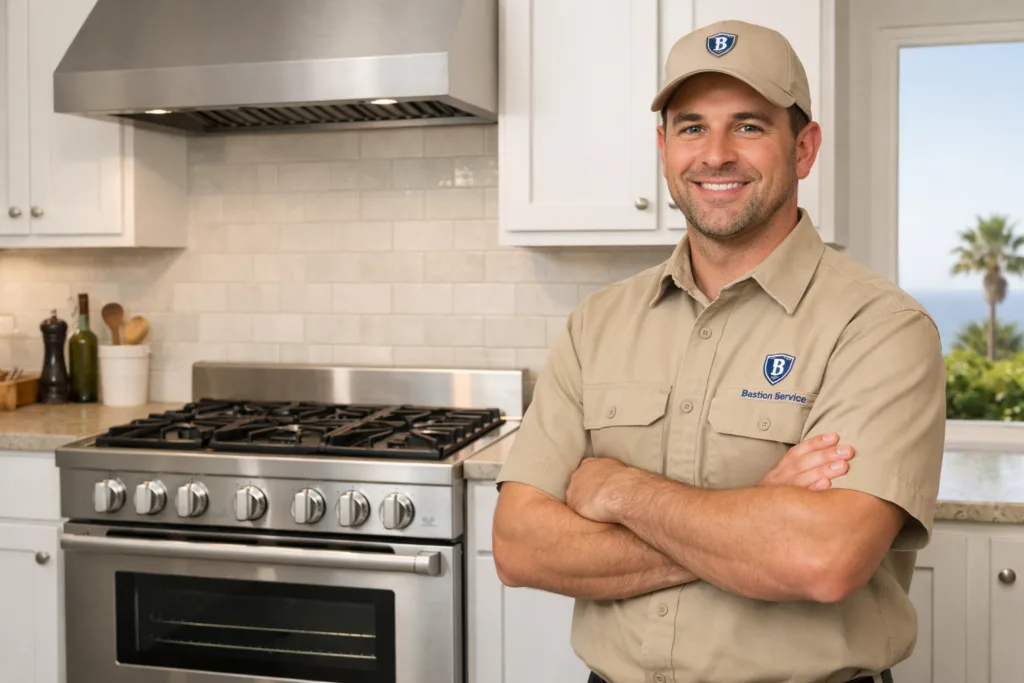
Stove problems often show up in small but disruptive ways: one burner takes too long to heat, a flame clicks before it lights, or a control suddenly stops responding the way it used to. Those symptoms can come from very different causes, so it helps to look at how the appliance is failing before assuming a part needs to be replaced.
Common stove symptoms and what they may mean
On electric stoves, homeowners often notice a burner that will not turn on, an element that heats unevenly, or a surface unit that gets too hot and will not regulate properly. These issues may involve the burner element, receptacle, infinite switch, internal wiring, or a control problem behind the panel.
On gas stoves, the first signs are often delayed ignition, weak flame, repeated clicking, or a burner that lights only partway around. In many cases, the cause may be a dirty burner head, misaligned cap, ignition fault, or a component affecting spark or gas delivery. Because several parts can produce similar symptoms, the pattern matters as much as the symptom itself.
Some warning signs should be taken more seriously right away. A burner that will not shut off, visible sparking, tripped breakers, or the smell of gas are not issues to keep testing through normal cooking. If the appliance shows any of those conditions, stopping use of the affected section is usually the safest move until the problem is identified.
Why the diagnosis matters
A stove repair is not always about the first part that seems most likely. The important question is whether the failure is isolated to one burner, tied to a control issue, or part of broader wear inside the appliance. That distinction helps determine whether the repair is likely to be straightforward or whether the stove is showing signs of multiple aging components.
For example, one bad switch or igniter is often a focused repair. By contrast, a stove with recurring burner failures, damaged wiring, and inconsistent controls may require a larger conversation about overall condition. The value of diagnosis is that it keeps homeowners from spending money based on guesswork.
When repair is often worth it
Repair usually makes sense when the stove has one clear symptom and the rest of the appliance still performs normally. A single failed surface element, a worn burner connection, a faulty igniter, or one bad control switch are all examples where a targeted repair can restore normal cooking without replacing the whole unit.
When replacement becomes part of the discussion
Replacement may be more practical when multiple burners are failing, controls respond unpredictably, or there is visible heat damage around terminals and wiring. If the stove is older and more than one major component is involved, comparing repair scope against replacement cost becomes reasonable. That decision is easier to make when the actual fault has been confirmed.
Burner heat problems homeowners notice first
Weak heat, uneven heat, and burners that cycle strangely are among the most common complaints in Palos Verdes Estates homes. Electric burners may seem slow because the element is failing internally or because the connection point is damaged and no longer delivering steady power. Gas burners may cook unevenly when flame ports are blocked or the burner assembly is not seated correctly.
If the issue is limited to a dedicated surface unit with no oven below it, Cooktop Repair in Palos Verdes Estates may be the better service path. That distinction helps when the problem involves burner performance only, rather than the full cooking appliance.
Ignition, clicking, and gas burner concerns
Clicking on a gas stove is not always a major failure, but persistent clicking usually means something is interfering with ignition. Moisture after cleaning, food debris around the igniter, burner cap alignment problems, or a worn spark component can all keep ignition from working normally. If a burner lights inconsistently or takes several tries, continued use may worsen wear on the ignition system.
A strong gas odor is different from a brief smell during ignition and should always be treated as a safety issue first. In that situation, the goal is not troubleshooting by repeated attempts to light the burner, but stopping use and addressing the condition appropriately before service is scheduled.
Control failures and overheating burners
When a burner stays on high no matter where the knob is set, the problem is often related to the control side of the stove rather than the burner itself. On electric units, a failed switch can send continuous power to the element. On gas units, poor flame control may point to valve or regulator-related issues that need proper inspection.
Overheating burners should not be ignored, even if they seem to work intermittently. Excess heat can damage cookware, stress surrounding components, and create a larger repair than the original part failure would have caused. If a burner does not respond correctly to temperature adjustments, limiting use until it is checked is usually the wiser choice.
When the problem may not be the stove alone
Cooking appliances are not always configured the same way, and that matters when symptoms overlap. If the main complaint is poor baking, failed preheat, or temperature problems inside the oven cavity while the top burners still work normally, Oven Repair in Palos Verdes Estates may be more relevant.
In some kitchens, the surface burners and oven are part of the same appliance, and both start showing heat or control problems together. If burner performance and oven temperature are both affected, Range Repair in Palos Verdes Estates may be the better fit for that combination setup.
Built-in layouts can also change the right repair path. If the cooking surface is separate and the heating issue is centered in a built-in unit installed at cabinet height, Wall Oven Repair in Palos Verdes Estates is often the more accurate match.
What to note before service
Helpful details can make diagnosis faster and more precise. It is useful to note which burner is affected, whether the problem is constant or intermittent, and what happens when the control is adjusted. Sounds, smells, breaker trips, delayed ignition, visible sparking, and temperature inconsistency are all relevant clues.
It also helps to know whether the symptom appeared suddenly or developed over time. A sudden failure can point to one component giving out, while gradually worsening performance may suggest wear, heat damage, or buildup affecting operation. The more specific the pattern, the easier it is to narrow down likely causes.
Local help for household cooking problems
For homeowners in Palos Verdes Estates, the main goal is usually simple: get the stove working safely and predictably again without replacing parts unnecessarily. Whether the issue is weak burner heat, constant clicking, ignition trouble, or a control that no longer regulates properly, the most useful next step is identifying exactly where the failure starts and what repair makes the most sense for the appliance you have.