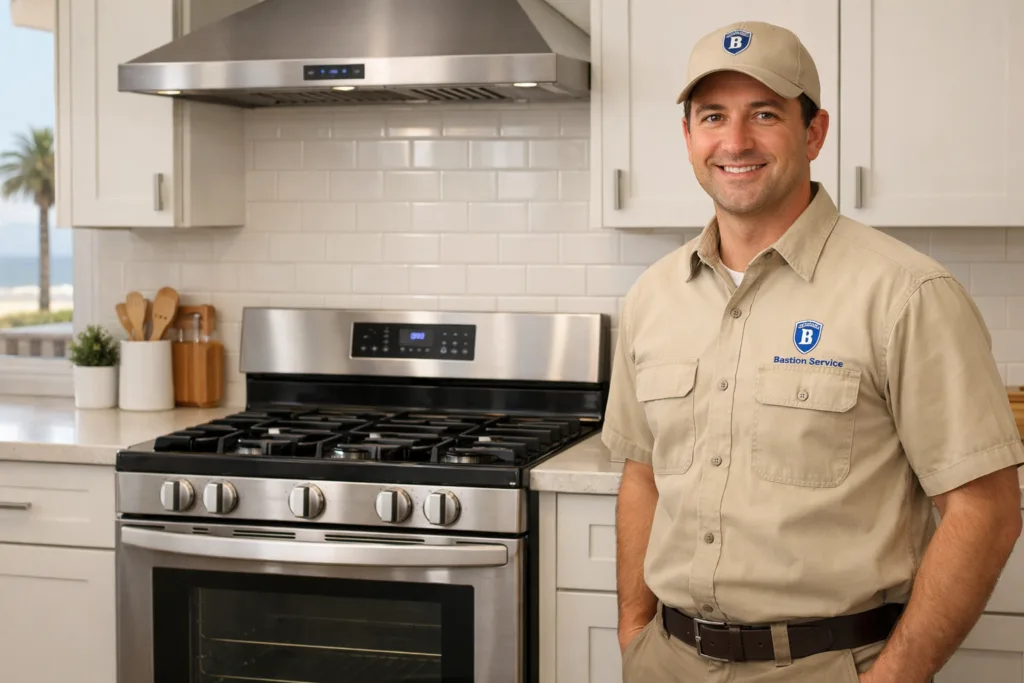
Surface-burner problems tend to show up in the middle of everyday routines: water takes too long to boil, one burner clicks over and over, or a control no longer matches the heat you expect. The first step is sorting out whether the trouble is limited to a single burner assembly, tied to a switch or ignition part, or connected to a larger electrical or gas-delivery issue. That distinction matters because similar symptoms can come from very different causes.
Common stove symptoms homeowners notice first
Most service calls begin with one clear complaint. Gas burners may click continuously, fail to light, or produce an uneven flame. Electric burners may stay cold, heat only partway, or cycle so inconsistently that cooking becomes frustrating. Some stoves also develop control problems, such as knobs that slip, switches that stop responding normally, or burner settings that no longer line up with actual cooking performance.
Other signs are more subtle but still worth attention: longer boil times, one burner acting differently from the others, a hot smell during use, or a burner that seems slow to react when turned up or down. These symptoms often point to wear in ignition parts, burner components, switches, receptacles, terminals, or internal wiring.
What different symptom patterns can mean
Burner will not ignite or heat
If a gas burner clicks without lighting, the problem may involve the igniter, burner cap alignment, moisture, residue buildup, or an issue affecting gas flow at that burner. If an electric burner does not heat, the fault may be the element, its receptacle, the infinite switch, or the wiring behind the control panel. When the issue is isolated to a separate surface unit rather than a full stove, Cooktop Repair in Hermosa Beach may be the more appropriate service path.
Weak heat or uneven cooking results
A stove can still turn on and yet perform poorly. Weak flame, slow heating, or an element that cycles erratically can make ordinary cooking unpredictable. This often happens when a component is partly failing rather than fully dead. In Hermosa Beach homes, that can mean dinner takes longer, pans heat unevenly, and familiar burner settings no longer produce the same results.
Burner stays too hot or does not respond to adjustment
A burner that remains on high, overheats, or does not reduce heat correctly should be addressed promptly. On electric models, this can point to a failing switch or damaged control circuit. On gas models, control and valve problems can also affect safe operation. Continued use may put added stress on wiring and surrounding parts.
Clicking, odors, sparking, or visible damage
Repeated clicking after ignition, a burning smell, sparking, scorch marks, or cracking around a burner area are all signs to stop using that section of the appliance until it is inspected. What looks like a minor burner problem can sometimes involve overheated connections or damage beneath the surface.
When to stop using the stove and schedule service
Some issues are inconvenient but manageable for a short time, such as one burner heating a little slower than normal. Others should be treated as stop-use conditions. These include uncontrolled heat, sparking, repeated ignition failure, visible damage, or any odor that suggests overheating. If the appliance trips a breaker, shows scorch marks, or continues clicking without lighting properly, it is best not to keep testing it.
It also makes sense to schedule repair when a problem starts spreading beyond one burner. A single weak burner may be one component. Multiple burners acting irregularly can point to a broader control, wiring, or power-related issue.
How stove problems differ from oven and range issues
Homeowners are not always sure whether the problem belongs under stove service or another cooking-appliance category. If the main complaint is poor preheating, inaccurate baking temperature, or a cavity that will not reach the selected heat, Oven Repair in Hermosa Beach is usually the better match.
If the appliance combines surface burners and an oven in one freestanding unit and symptoms affect both cooking zones, Range Repair in Hermosa Beach may fit better than burner-only stove service.
For built-in cooking setups, where the appliance is installed into cabinetry rather than standing alone, Wall Oven Repair in Hermosa Beach is typically the relevant option when the heating problem is in the upper built-in unit rather than the surface burners.
Repair versus replacement considerations
Not every stove problem calls for replacement. If the issue is limited to an igniter, burner assembly, switch, receptacle, or accessible wiring repair, fixing the appliance is often the practical option. Replacement becomes more likely when there are multiple failing systems, severe heat damage, repeated control failures, or signs that the overall unit is nearing the end of reliable daily use.
Age matters, but condition matters more. A newer stove with burnt terminals or a failed switch may still be worth repairing. An older unit with multiple ongoing faults may not be. The most useful decision comes after determining whether the failure is isolated or part of a larger pattern.
What a useful stove diagnosis should cover
A solid diagnosis should look beyond the first symptom. That means checking how the burner behaves under normal load, whether controls regulate properly, whether the problem is confined to one burner or shared across the appliance, and whether continued use could cause more damage. It should also separate surface-heating issues from oven-related problems so the repair plan matches the actual appliance and fault.
For households in Hermosa Beach, the goal is simple: restore safe, predictable cooking without guesswork. When the source of the problem is identified clearly, it is much easier to decide whether the stove needs a targeted repair, additional electrical correction, or a broader replacement discussion.