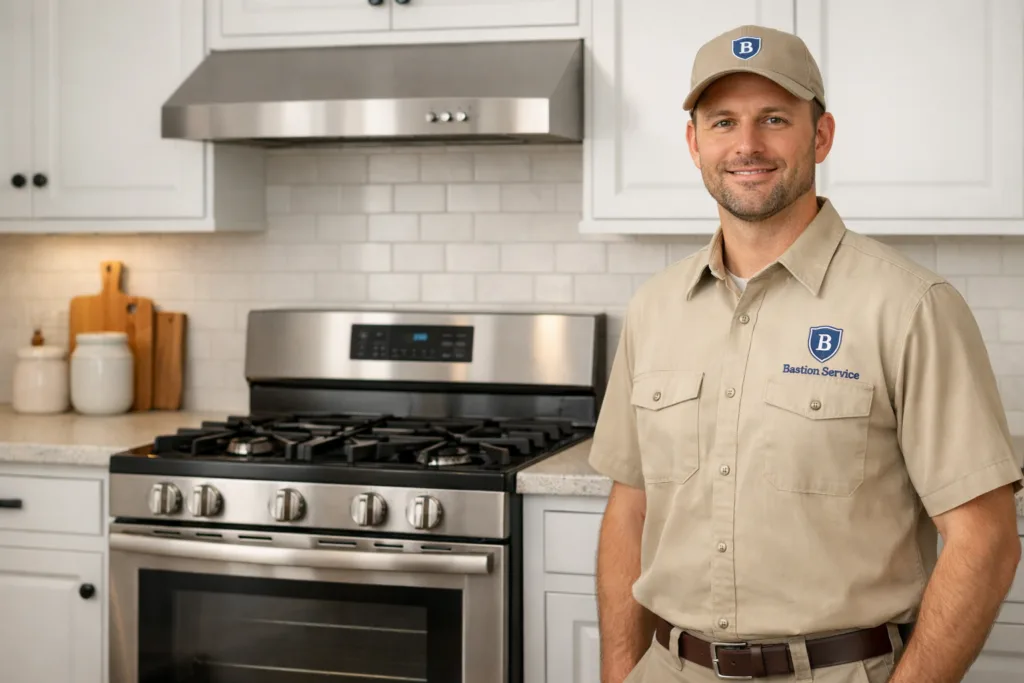
Surface cooking problems can show up in different ways: a burner that stays cold, an igniter that clicks without lighting, a control that feels inconsistent, or heat that no longer matches the setting on the knob. The most useful first step is identifying whether the failure is isolated to one part of the stovetop or points to a larger electrical, ignition, or control issue affecting the appliance as a whole.
Common stove problems homeowners notice first
Electric stoves often develop burner issues that seem simple at first but can come from several different components. A surface element that will not heat may be caused by a failed burner, a bad switch, a loose connection, or damaged wiring beneath the top. If a burner only works on high, cycles poorly, or gets hotter than expected, the control behind that burner is often part of the diagnosis.
Gas stoves tend to show symptoms through ignition and flame behavior. Repeated clicking, delayed lighting, weak flames, uneven heating, or a burner that goes out unexpectedly can all point to different causes. Sometimes food residue or moisture interferes with normal ignition. In other cases, the issue involves the spark electrode, valve response, or power to the ignition system. If the problem is limited to the surface burners on a separate cooking top, Cooktop Repair in El Segundo may be the more accurate service path.
Signs the issue may involve more than one burner
When several burners stop working at once, the cause is often not the burners themselves. A shared power supply problem, terminal block issue, failed control, or internal wiring fault can affect multiple elements together. On gas models, a broader ignition problem may prevent more than one burner from lighting properly. These symptoms usually need more than a quick part swap, because the visible failure is not always where the actual fault begins.
A stove that trips the breaker, loses power during cooking, shows intermittent operation, or produces a burning smell should not be treated as a minor inconvenience. Heat and electricity in the same appliance can damage surrounding components once a fault starts spreading, and continued use may turn a single repair into a larger one.
Why symptom-based diagnosis matters
Two stoves can appear to have the same problem while needing completely different repairs. Slow heating may come from a weak element, poor voltage, a failing switch, or a connection problem. A gas burner that lights inconsistently may be dealing with clogged ports, ignition weakness, or poor flame carryover. Looking at when the symptom happens, whether it affects one burner or all, and how the controls respond helps narrow down the real cause before parts are replaced.
That approach also matters when the complaint seems like a stovetop problem but the heat issue is actually centered in the lower cooking cavity. If preheat is slow, temperature swings are affecting meals, or the problem only appears when baking or roasting, Oven Repair in El Segundo may fit the situation better than surface-burner service.
When to stop using the stove and schedule service
Some symptoms should be checked promptly rather than worked around. If you smell gas, see sparking, notice charring near controls, hear nonstop clicking, or find that a burner will not regulate heat correctly, it is best to stop using that part of the appliance. Unpredictable heating can damage cookware, affect nearby components, and create safety concerns in everyday household use.
Even when the stove still works partially, early service can prevent secondary damage. Many homeowners continue cooking on the remaining good burners after one component fails, but repeated strain on switches, igniters, and nearby wiring can cause additional wear. Addressing the original problem sooner is often the cleaner and more economical repair route.
Stove, range, oven, or wall oven: choosing the right repair path
Not every kitchen setup is the same, and the appliance type affects diagnosis. If the surface burners and oven are built into one freestanding unit, Range Repair in El Segundo may be the better fit because the controls, wiring, and heating complaints can overlap across the entire appliance. What seems like a burner issue can sometimes involve shared components within the full range assembly.
Likewise, if your kitchen has a separate built-in oven mounted into cabinetry and the temperature problem is happening there rather than on the stovetop, Wall Oven Repair in El Segundo is typically the more precise service category. Separating the symptom by appliance type helps avoid confusion and leads to a more efficient repair visit.
Repair or replace?
Whether repair makes sense depends on the age of the stove, overall condition, parts availability, and what failed. A single burner element, igniter, switch, or connection repair is often straightforward and worth doing when the appliance has otherwise been reliable. Replacement becomes more likely when there are multiple failing controls, recurring electrical faults, major heat damage, or repair costs that begin stacking up across several systems.
For households in El Segundo, the practical question is usually not just whether the stove can be repaired, but whether it can be repaired with confidence and used safely afterward. A careful diagnosis helps clarify that decision, sets realistic expectations for parts and labor, and makes it easier to know whether the current problem is isolated or part of a larger pattern.