
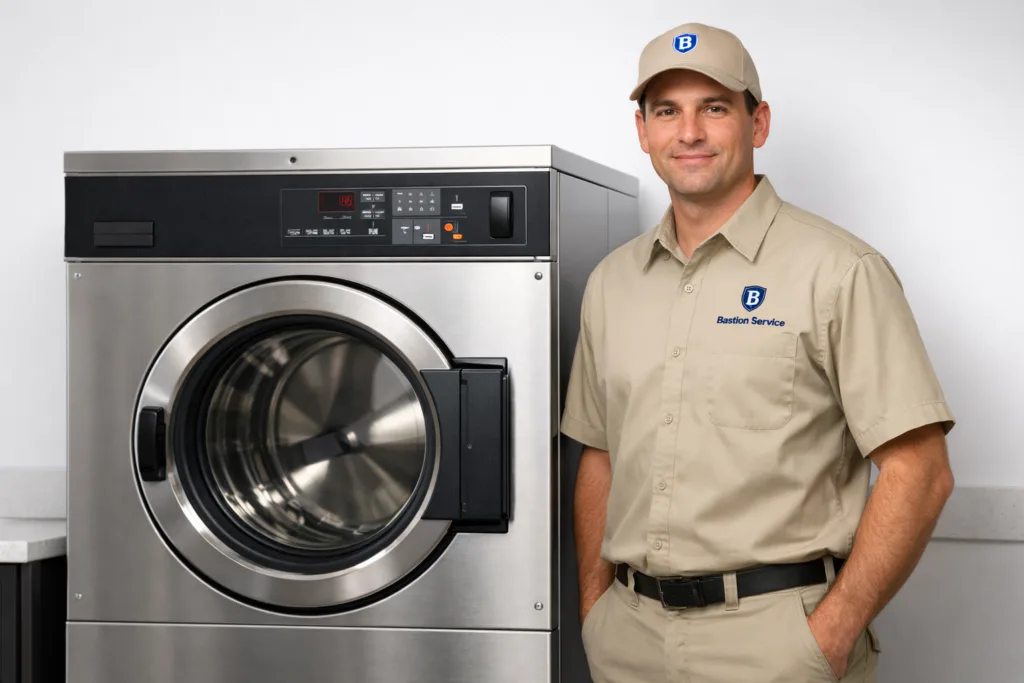




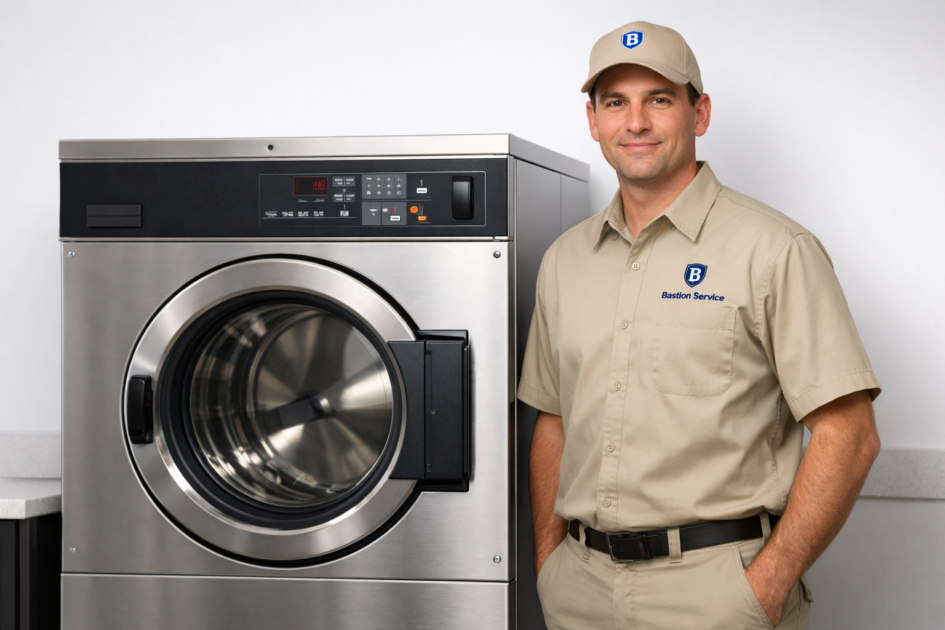
Equipment trouble usually shows up first as an operations issue: unfinished loads, delayed turnover, staff workarounds, or machines taken out of rotation during busy hours. For businesses in Playa Vista using Speed Queen laundry equipment, repair service is most useful when it starts with the symptom pattern, the urgency of the downtime, and whether the unit is still safe to operate. Bastion Service helps evaluate those conditions so repair scheduling is based on what the machine is actually doing, not on guesswork.
For specific equipment paths in Playa Vista, review Speed Queen Washer Repair in Playa Vista, Speed Queen Dryer Repair in Playa Vista, and Commercial Appliance Repair in Playa Vista.
That matters for both washers and dryers. A stop mid-cycle, a drainage failure, a no-heat complaint, or repeated vibration can all point to very different mechanical, electrical, airflow, or control-related faults. The right service approach is to isolate the cause, determine whether the machine should stay offline, and plan repair around business impact, parts needs, and expected return to service.
When to schedule service instead of watching the problem
Some issues develop gradually, but many laundry equipment failures become more expensive once the machine is pushed through repeated use. Service should be scheduled when a washer or dryer is interrupting workflow, producing inconsistent results, showing safety-related symptoms, or requiring staff to compensate for unreliable operation.
- Cycles are taking longer than normal
- Units stop, reset, or fail intermittently
- Water is leaking, not filling correctly, or not draining
- Drying performance has dropped or heat is inconsistent
- Noise, vibration, or burning odors are getting worse
- One machine is affecting capacity across the rest of the laundry room
In business settings, even a “still running” machine may already be costing time, labor, and throughput. Early diagnosis can prevent a manageable repair from turning into a larger outage.
Washer symptoms that often lead to repair
Washer will not start or stops before the cycle finishes
If a Speed Queen washer does not begin a cycle, pauses unexpectedly, or shuts down partway through operation, likely causes can include door or lid sensing issues, control faults, wiring problems, power-related interruptions, or drive system wear. From an operations standpoint, this kind of failure creates uncertainty around load timing and can force staff to reshuffle work around an unreliable machine.
Intermittent stoppages are especially important to diagnose while the symptom is still active. A unit that works for one load and fails on the next can be harder to evaluate later if the pattern is not documented and addressed promptly.
Slow fill, no fill, poor draining, or standing water
When water movement is not normal, the washer cannot deliver reliable results. Fill problems may relate to valve issues, supply restrictions, or controls. Drain complaints can point to pump failure, hose obstructions, blockages, or problems in how the machine is advancing through the cycle. Standing water at the end of a load should not be treated as a minor inconvenience, because it can interrupt turnover and increase the chance of additional component stress.
If the washer is failing to drain consistently, leaving loads unfinished, or requiring repeated attempts to complete a cycle, it makes sense to take the symptom seriously before it becomes a larger service interruption.
Excessive shaking, banging, or movement during spin
Strong vibration can come from suspension wear, mounting issues, drum-related problems, imbalance handling faults, or other mechanical wear that becomes more obvious under high-speed operation. In shared laundry rooms and high-use business settings, this symptom is more than a comfort issue. Repeated shaking can accelerate wear on surrounding components and make the machine less dependable from load to load.
If the unit is moving abnormally, producing impact noise, or repeatedly going off balance under normal use, inspection is the better choice than continued operation.
Leaks, odors, or poor wash performance
Leaks may be tied to hoses, seals, pumps, internal connections, or overflow-related issues. Odors can reflect standing water, incomplete draining, residue buildup, or a functional problem that is preventing normal wash performance. If loads are not coming out as expected, the problem may involve water level, agitation, draining, or cycle control rather than a simple cleaning issue.
These symptoms matter because they affect both output and confidence in the machine. A washer that leaves inconsistent results often creates repeat work and disrupts the overall laundry process.
Dryer symptoms that often need repair attention
Dryer runs but does not heat or takes too long to dry
A dryer that tumbles normally but fails to dry in expected time may have a heating failure, airflow restriction, sensor problem, control issue, or electrical supply concern. Long dry times are one of the most disruptive dryer complaints because they reduce throughput without always causing a complete shutdown. Staff may keep rerunning loads, which adds wear, labor, and scheduling pressure.
If drying time has noticeably increased, it is worth checking the machine before the issue progresses to repeated no-heat cycles or overheating behavior.
Dryer overheats or shuts off too soon
When a dryer gets excessively hot or stops before the load is dry, the fault may involve restricted airflow, thermostat issues, safety-limit activation, sensor misreadings, or related control problems. Overheating should not be ignored. Even if the dryer appears to recover temporarily, continued use in that condition can lead to more serious component damage and longer downtime.
A dryer that is shutting itself down may be protecting itself from a condition that needs service rather than simply “acting up.”
Squealing, thumping, scraping, or burning smells
Unusual dryer noise often points to worn rollers, idlers, belts, bearings, or drum support components. A burning smell raises a higher level of concern because it can indicate friction, lint-related heat buildup, motor strain, or other internal wear that should be evaluated before the unit is returned to normal use.
These symptoms rarely resolve on their own. If noise is getting louder or odors appear during operation, taking the dryer out of service is often the safer decision until the cause is identified.
What Speed Queen laundry equipment problems do you troubleshoot?
Service typically focuses on operational faults that interfere with washer and dryer performance, reliability, or safe use. That includes issues such as:
- Washer not starting, not spinning, or stopping mid-cycle
- Slow fill, no fill, drainage failure, or standing water
- Leaks, unusual vibration, banging, or off-balance operation
- Dryer no-heat, low heat, overheating, or long dry times
- Dryer shutdowns, cycle failures, unusual noises, or burning odors
- Intermittent operation, recurring error behavior, or inconsistent results
The main goal is to determine whether the problem is isolated, whether continued use is likely to worsen it, and what repair path best supports uptime.
How diagnosis affects repair decisions
Two machines can show the same visible symptom and still need completely different repairs. A washer that stops may have a sensor issue, a control issue, or a mechanical problem affecting drive function. A dryer with poor performance may have a failed heating component, an airflow problem, or a condition that is triggering safety shutdown. That is why service decisions should be based on fault isolation rather than replacing parts by assumption.
For businesses in Playa Vista, diagnosis also helps answer practical questions quickly: whether the unit should remain offline, whether parts are likely required, how urgent the repair is, and whether the machine appears to be a strong repair candidate or a weaker one due to broader wear.
When continued use can make the problem worse
Certain symptoms justify stopping operation until the machine is checked. That includes leaks, overheating, burning smells, severe vibration, repeated shutdowns, electrical interruption, and failure to drain properly. Running laundry equipment in those conditions can expand the repair scope and increase the chance of secondary damage.
Even when the symptom seems manageable, reduced performance can still create business problems. A dryer that takes too long or a washer that occasionally fails may seem usable in the short term, but those interruptions often spread into labor delays, lower capacity, and more difficult scheduling once the equipment finally stops completely.
Repair or replacement: what usually matters most
Not every service visit leads to the same recommendation. If the machine has a concentrated failure and the rest of the unit is in solid condition, repair is often the sensible option. If the equipment shows recurring issues, broad wear, multiple problem areas, or repeated downtime that keeps affecting operations, replacement planning may become the better business decision.
Important factors include machine age, overall condition, repeat service history, parts outlook, and how critical the equipment is to daily output. The useful question is not just whether the machine can be repaired, but whether the repair meaningfully restores reliable service.
Scheduling washer and dryer repair in Playa Vista
When a Speed Queen washer or dryer is disrupting operations, the best next step is to schedule service while the symptoms are still clear. It helps to note whether the issue is constant or intermittent, what part of the cycle is affected, whether the machine can still be used at all, and whether there are visible signs such as leaks, noise, heat issues, or standing water. That information makes repair planning more efficient and helps reduce avoidable downtime for Playa Vista businesses that depend on steady laundry equipment performance.


