
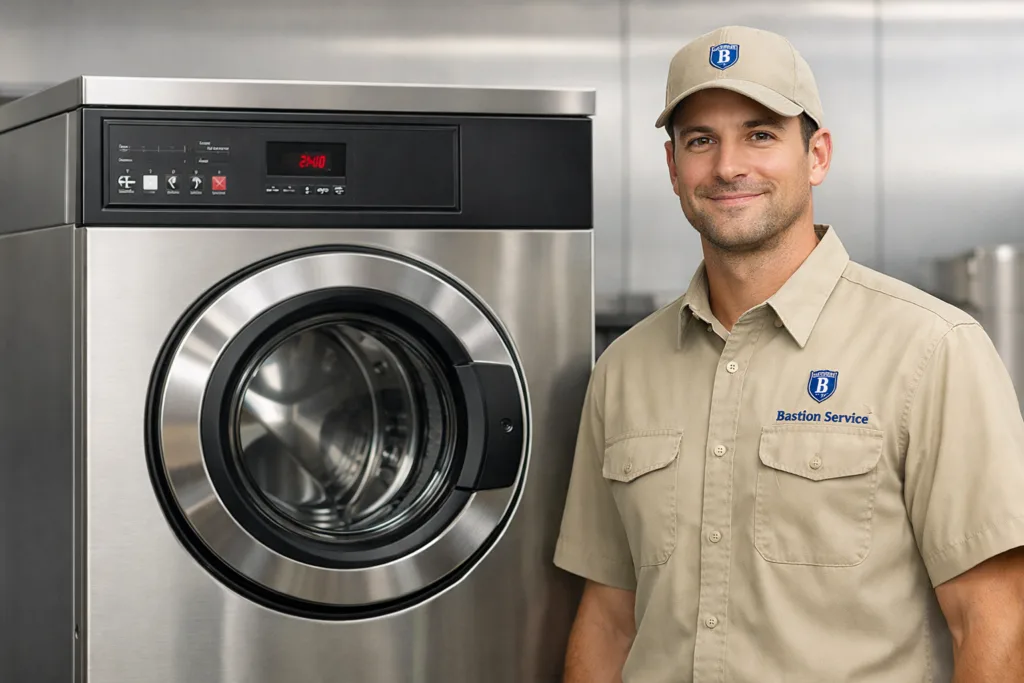




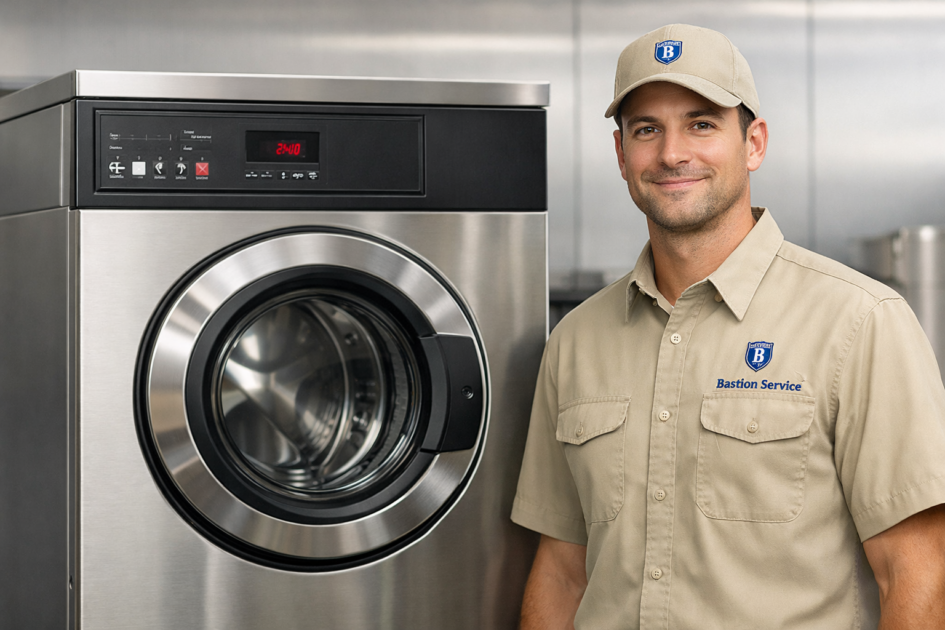
Washer downtime can disrupt staffing, delay linen or uniform turnover, and create avoidable rewash volume. When a Speed Queen washer begins stopping mid-cycle, failing to extract properly, leaking, or responding inconsistently, the most useful next step is service built around the actual symptom pattern. Bastion Service helps businesses in Palos Verdes Estates identify the fault, determine whether the issue is electrical, mechanical, drain-related, or control-related, and schedule repair based on the operational impact.
Related commercial service paths in Palos Verdes Estates include Speed Queen Repair in Palos Verdes Estates, Commercial Washer Repair in Palos Verdes Estates, and Speed Queen Dryer Repair in Palos Verdes Estates.
How Speed Queen washer problems affect daily operations
A washer does not have to be completely down to create a serious workflow problem. A unit that fills too slowly, drains poorly, spins weakly, or intermittently pauses can still consume staff time, reduce throughput, and shift pressure onto other equipment. In laundry rooms, hospitality settings, care environments, and other business operations, these partial failures often become full interruptions if they are ignored.
Service is most effective when the complaint is narrowed to what the machine is actually doing: whether it fails at start-up, during wash, at drain, or during final spin. That distinction matters because similar symptoms can come from very different causes.
Common Speed Queen washer symptoms and what they may indicate
Not starting or not completing the cycle
If the washer will not start, starts only sometimes, or stops before the cycle ends, the issue may involve door or lid sensing, control response, power supply problems, timer or board failure, or a motor-related fault. A machine that pauses at the same point in the cycle can provide useful diagnostic clues, but intermittent shutdowns usually need hands-on testing to confirm whether the problem is in the control path or a safety-related component.
Repeated restart attempts are usually not the best plan for a business environment. If the washer regularly fails before completion, it is already affecting labor and output.
Not draining or leaving standing water
Water left in the tub at the end of the cycle often points to a drain pump problem, blockage, hose restriction, slow discharge, or a control issue that prevents the unit from advancing properly. Slow draining can also interfere with spin performance, because many washers will not move into a full extraction stage if water removal is incomplete.
When loads remain submerged or overly wet, the machine should be checked before staff continue running it under the same conditions. Ongoing use can add strain to the pump and related components while delaying normal laundry flow.
Weak spin or saturated loads after the cycle
If laundry comes out heavier than expected, the cause may be unbalanced loads, suspension wear, drive issues, belt wear, motor trouble, or a sensing problem that keeps the washer from reaching proper spin speed. In some cases, this starts as an occasional issue and gradually becomes the normal result.
Weak extraction does more than leave water in fabrics. It increases dry times, affects energy use, and slows the rest of the laundry process. For businesses that depend on repeat turnover, that can become a same-day scheduling problem.
Leaks, overfilling, or low water levels
Water on the floor or unusual fill behavior should be addressed early. Leaks may come from hoses, valves, pump connections, tub seals, or drain-related problems. Incorrect water levels can point to inlet valve faults, pressure-sensing issues, or control failures that cause underfill, overfill, or erratic fill timing.
Even a small recurring leak can create risk for flooring, nearby equipment, and safe operation around the washer. Fill problems can also reduce wash quality, extend cycle time, or produce inconsistent results from load to load.
Excessive noise, vibration, or movement during spin
Bang, thump, scrape, or heavy vibration during operation can indicate suspension wear, mounting issues, basket or drive problems, or an out-of-balance condition that is no longer being managed correctly. A washer that shifts position or becomes unusually loud in spin should not be treated as normal wear.
These symptoms often worsen with continued use. Early inspection can help prevent a smaller repair from turning into broader mechanical damage.
Why symptom-based service matters
Visible symptoms do not always identify the failed part. A no-spin complaint could be caused by a drain problem, a lock issue, a drive fault, or a control failure. A cycle that stalls may be tied to water input, drain timing, a motor issue, or an electronic problem. A leak could be external and simple, or it could involve internal wear that changes the repair decision entirely.
That is why effective washer service begins with verification rather than assumption. For businesses in Palos Verdes Estates, this approach helps avoid unnecessary part replacement and supports faster decisions about approval, scheduling, and whether the machine remains a sound repair candidate.
When a Speed Queen washer should be serviced promptly
- The washer will not start consistently or shuts off during operation.
- Cycles are taking longer than normal or not finishing.
- Water remains in the tub after the cycle.
- Loads are coming out too wet for normal downstream handling.
- The machine is leaking, overfilling, or filling incorrectly.
- New grinding, banging, scraping, or heavy vibration has appeared.
- Staff are using workarounds to keep laundry moving.
Once staff start adjusting around the machine instead of relying on it, the issue is already affecting productivity. Prompt service is often the better business decision than waiting for a complete breakdown.
Preparing for a washer repair visit
A few details can make diagnosis faster and more accurate. It helps to note whether the problem happens on every load or only sometimes, whether the washer stops at the same stage each time, and whether any unusual sounds, odors, leaks, or vibration appear before shutdown. If the unit leaves loads wet, it is also useful to note whether the washer drained fully first.
Businesses in Palos Verdes Estates can also prepare by making the machine accessible, clearing the area around visible water or overflow if present, and identifying whether the issue affects one washer or several units. That information helps narrow whether the problem is isolated to the machine or connected to installation or utility conditions.
Repair or replacement: what usually drives the decision
Not every washer problem points toward replacement, and not every aging machine should automatically be repaired. The decision usually depends on the confirmed fault, overall machine condition, repeat failure history, and how important that unit is to the site’s daily output.
A targeted repair on an otherwise stable washer is very different from a machine with repeated interruptions, multiple worn systems, and declining performance across wash, drain, and spin. Diagnosis helps clarify whether the issue is contained or part of a broader reliability problem.
What good washer service should accomplish
Repair should do more than get the machine through a single test run. It should identify the source of the failure, verify that the washer can move through its operating stages correctly, and confirm whether it can return to regular use without ongoing guesswork. For a business setting, that means focusing on cycle completion, water handling, extraction, safety, and consistency under normal workload.
If your Speed Queen washer is affecting uptime in Palos Verdes Estates, the practical next step is to have the symptom evaluated, confirm the repair scope, and schedule service before the problem expands into longer downtime or added strain on the rest of the laundry operation.


