
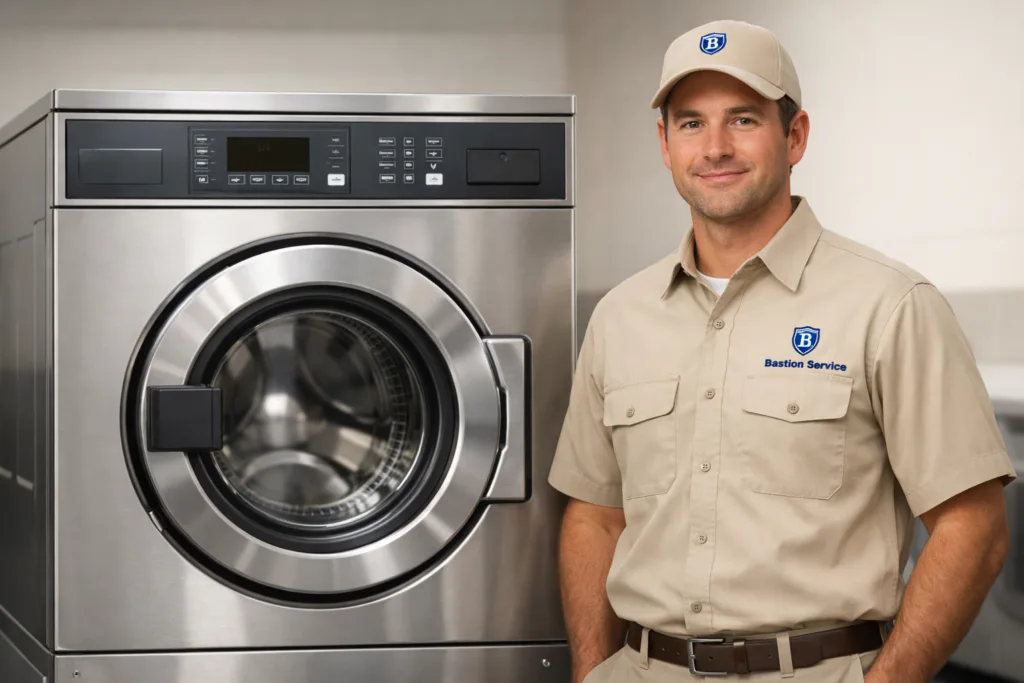




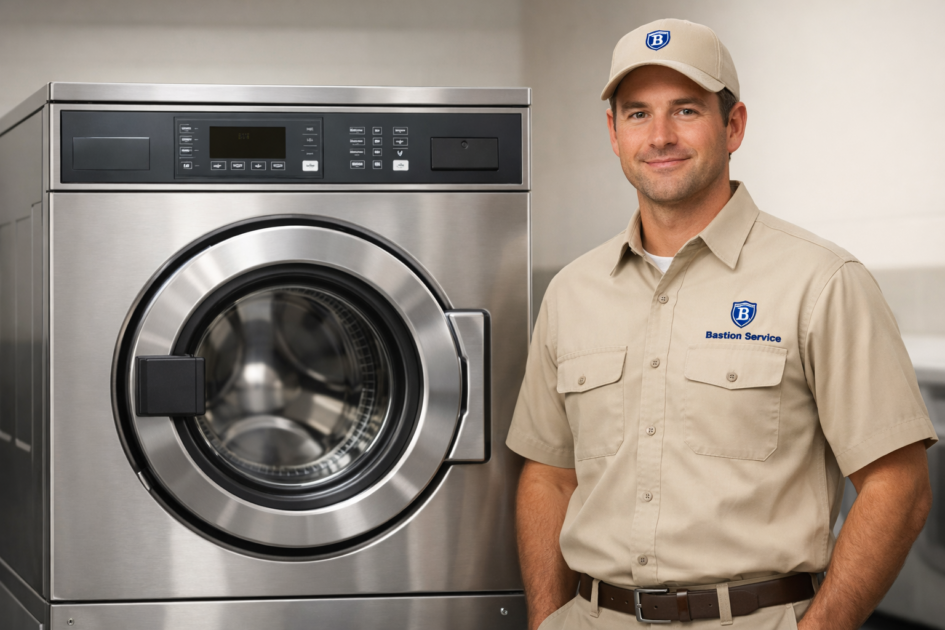
Wascomat washer problems can disrupt scheduling quickly when loads back up, extraction drops off, or a machine starts failing unpredictably during active use. For businesses in Palos Verdes Estates, service is most effective when the visit is built around the exact symptom pattern, the machine’s recent behavior, and how the issue is affecting daily workflow. Bastion Service handles Wascomat washer repair with a diagnosis-first approach so operators can understand whether the problem is isolated, recurring, or part of a larger wear condition that needs prompt attention.
Related commercial service paths in Palos Verdes Estates include Wascomat Repair in Palos Verdes Estates, Commercial Washer Repair in Palos Verdes Estates, and Wascomat Dryer Repair in Palos Verdes Estates.
Common Wascomat washer symptoms and what they may indicate
Washer not starting or not completing the cycle
If a Wascomat washer powers on but will not begin, locks up at the start, or stops before the cycle finishes, the cause may involve the door-lock system, control response, water fill timing, drainage confirmation, or a fault that prevents the next step from advancing. In some cases, staff may be able to restart the machine temporarily, but repeated interruptions usually point to a condition that needs testing rather than repeated resets.
Not draining or leaving loads too wet
Standing water in the basket, slow draining, or heavy wet loads at the end of the cycle often suggest a drain restriction, pump issue, sensor problem, or a spin system that is not reaching proper speed. This is one of the most disruptive washer complaints because it affects both turnaround time and downstream drying capacity. If operators are rerunning extraction or manually managing water left in the machine, service should be scheduled before the issue spreads into broader workflow delays.
Leaks during fill, wash, or drain
Water on the floor may come from hoses, pump connections, door area sealing problems, overfill behavior, internal tub-related issues, or drainage components under strain. Leaks are not all equal. A small drip during fill is different from active leaking during agitation or drain-out, and the timing of the leak helps narrow the source. Continued operation can raise the risk of nearby damage and can also hide a worsening internal failure.
Excessive vibration, banging, or movement in spin
Strong movement during extraction may be related to imbalance, suspension wear, mounting problems, bearing wear, or other spin-system faults. A washer that begins shaking harder than normal, striking internally, or shifting position should be checked before it stays in regular rotation. Vibration complaints often start as an annoyance and then become a more expensive repair if the machine keeps running under stress.
Poor wash results or inconsistent water fill
If loads are not coming out clean, cycles seem irregular, or the machine fills too slowly, too much, or not at all, the issue may involve inlet valves, water flow restrictions, pressure sensing, or controls that are not reading conditions correctly. In practice, these problems often show up as inconsistent results long before the washer stops completely.
Grinding, rumbling, or high-pitched noise
Noise that changes during wash or spin can point to bearing wear, drive-related component wear, foreign objects, pulley trouble, or internal mechanical strain. The sound profile matters. A rumble in spin suggests a different failure path than a scraping sound during rotation at lower speed. When operators can describe when the sound appears and whether it has become louder over time, that information is useful during diagnosis.
Why one symptom can have more than one cause
Washer complaints often overlap. A no-spin condition may actually begin with poor draining. A cycle that stops mid-program may be tied to lock status, fill problems, overheating, or control communication. A leak may look simple from the outside but still be connected to pressure issues, overfill behavior, or internal wear.
That is why repair decisions should not be based only on the visible symptom or the first fault code shown on the machine. Testing the operating sequence, confirming the failure point, and checking related components helps avoid replacing parts that are not actually causing the shutdown.
When service should be scheduled
Schedule service promptly if the washer is failing to start, aborting cycles, draining slowly, leaking, vibrating excessively, or producing unusual noise. It is also time to book repair when staff have started working around the machine by reducing load size, rerunning loads, pausing use during certain cycles, or taking the unit out of normal rotation. Those changes usually mean the washer is no longer operating consistently, even if it has not fully stopped.
Early service can also help prevent secondary damage. A drain issue can increase strain on the spin system. A vibration problem can affect surrounding components. A leak can turn into a larger interruption if the machine stays in use without identifying the source.
Signs the washer should not stay in operation
- Repeated breaker trips or power loss during operation
- Persistent leaking onto the floor
- Metal-on-metal, grinding, or severe rumbling noise
- Hard banging or aggressive movement during spin
- Burning odor or signs of overheating
- Door-lock problems that interrupt normal cycle progression
- Frequent cycle cancellations with no reliable restart
When these conditions are present, continued use can increase repair scope and create a longer outage than the original problem would have caused.
Preparing for a Wascomat washer repair visit
A few details from staff can make the service visit more productive. It helps to note whether the problem occurs on every load or only at certain points in the cycle, whether the machine is showing any code or message, whether the issue began suddenly or gradually, and whether there are visible signs such as leaking, odor, noise, or incomplete extraction. If the machine has already been removed from use, noting the last successful cycle can also help identify what changed.
For busy laundry operations, even small symptom details can matter. A washer that fills normally but fails at drain points to a different path than one that stalls before wash action begins. A unit that vibrates only with heavier loads may suggest something different from one that shakes on every extraction cycle.
Repair or replacement: how the decision is usually made
Repair is often the sensible option when the problem is limited to a pump, valve, latch, drain component, sensor, drive-related part, or another defined failure with the rest of the machine still in serviceable condition. Replacement becomes a more serious consideration when the washer has extensive bearing damage, multiple active failures, major structural wear, or a pattern of breakdowns that keeps interrupting operations.
For Palos Verdes Estates businesses, the decision is usually based on condition, downtime exposure, and whether the unit can return to steady service after the current repair. The goal is not just to get the washer running for one more cycle, but to restore dependable performance in a way that makes operational sense.
What a service-oriented repair process should accomplish
A useful repair visit should do more than identify a part number. It should connect the machine’s symptoms to the likely failure path, determine whether related components have been affected, and clarify the next step based on urgency and operating impact. That is especially important when the complaint involves more than one symptom, such as wet loads combined with long cycle times, or vibration combined with noise and intermittent shutdowns.
If your Wascomat washer in Palos Verdes Estates is affecting output, delaying staff, or showing signs of a worsening mechanical or control problem, scheduling service early is usually the best next step. A focused diagnosis can narrow the issue, reduce avoidable downtime, and help your operation move forward with a repair plan that fits the actual condition of the machine.


