
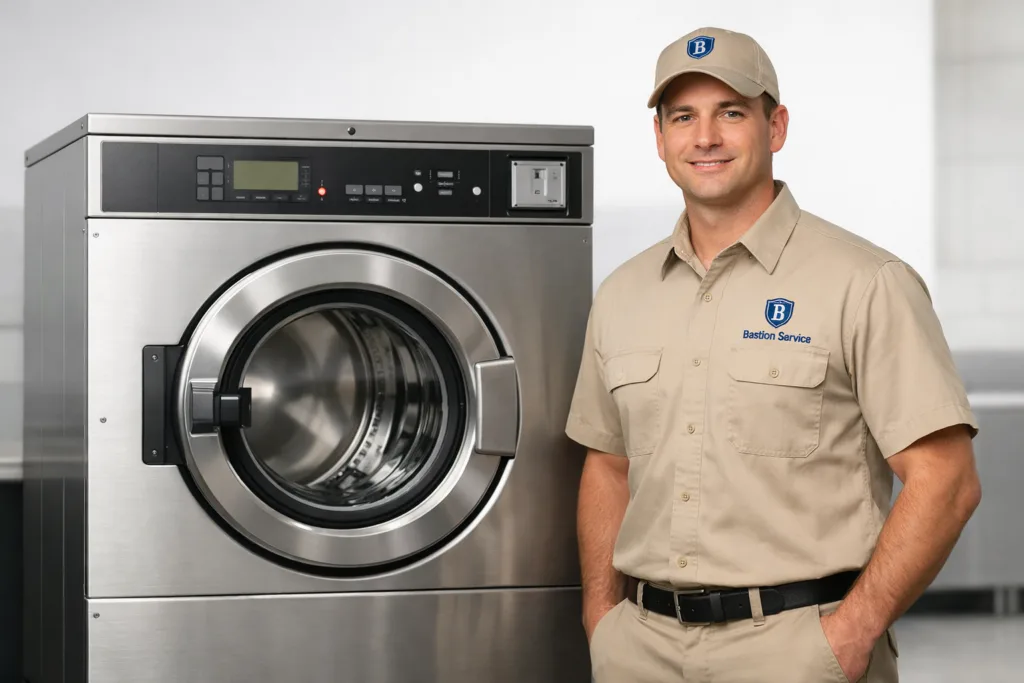




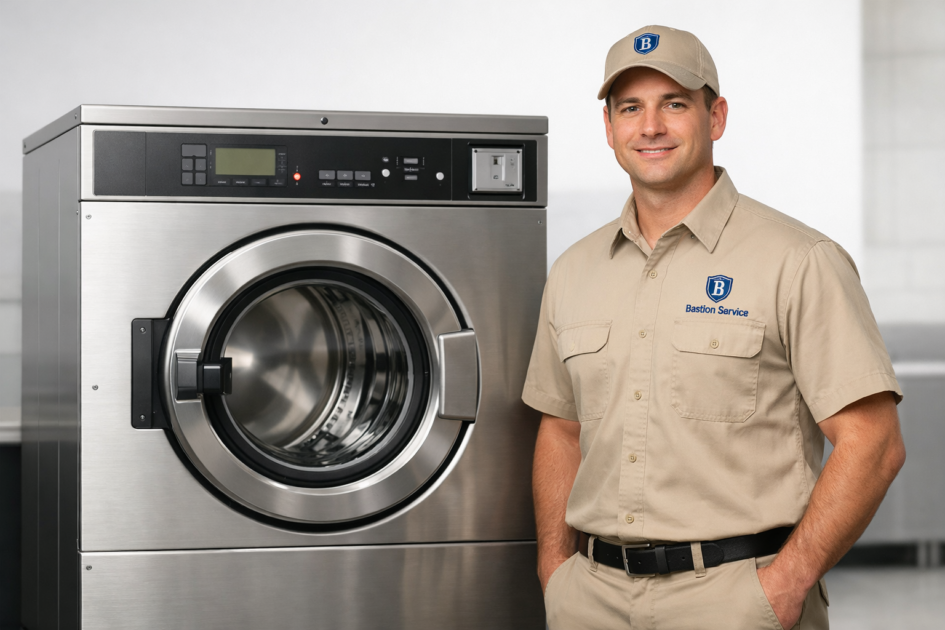
Unplanned washer and dryer issues can disrupt turnover, staff workflow, and customer service faster than many operators expect. When Speed Queen laundry equipment starts missing cycles, leaking, overheating, or creating unusual noise in Venice, the most useful next step is service that identifies the actual failure and helps you decide whether the machine can stay in rotation, needs prompt repair, or should be taken offline to avoid a larger problem.
For specific equipment paths in Venice, review Speed Queen Washer Repair in Venice, Speed Queen Dryer Repair in Venice, and Commercial Appliance Repair in Venice.
Bastion Service helps businesses in Venice troubleshoot Speed Queen laundry equipment used in laundromats, shared laundry rooms, hotels, housing properties, and other facilities that depend on steady washer and dryer performance. The goal is not just to identify a bad part, but to understand the symptom pattern, downtime risk, and the repair path that best supports daily operations.
Speed Queen laundry equipment problems that often require repair
High-use laundry equipment tends to show warning signs before full failure. A machine may still run while producing slower output, inconsistent results, extra noise, or recurring stoppages. Those symptoms often point to wear, airflow problems, drainage restrictions, control faults, or electrical issues that should be inspected before they create longer downtime.
Service is usually worth scheduling when staff are repeatedly resetting machines, rerunning loads, shifting work to other units, or noticing that one unreliable washer or dryer is affecting the entire laundry area.
Washer symptoms that should not be ignored
Speed Queen washer problems often show up as failure to start, slow or incomplete fill, draining trouble, spin failure, excessive vibration, water leaks, door or lid lock issues, loud mechanical noise, or cycles that stop before completion. While these symptoms may appear similar from the outside, the underlying cause can vary widely.
Depending on the pattern, washer issues may involve drain pumps, inlet valves, pressure or level sensing, motor and drive components, suspension parts, door lock assemblies, wiring faults, or control failures. A washer that leaves loads too wet, struggles to balance, or shuts down mid-cycle can quickly create backlog and force staff to spend time managing the machine instead of normal laundry flow.
- Leaks around the base can point to hoses, pumps, seals, or drain-related problems.
- Violent shaking during spin may suggest suspension wear, load sensing problems, or mechanical damage.
- Standing water in the tub often signals a drainage problem that should be addressed before the machine remains in regular use.
- Repeated lock or cycle errors may indicate a control, latch, or wiring issue rather than a one-time interruption.
Dryer symptoms that reduce output
Dryer problems are often felt first as lower production. A unit may still tumble but take too long to dry, produce weak or no heat, shut off early, overheat, make sharp noises, or stop turning the drum. In a business setting, those issues slow turnover, increase energy use, and create uncertainty about whether each load will finish on time.
Speed Queen dryer symptoms can be tied to heating components, thermostats, airflow restrictions, blower issues, drum support wear, belt and idler failures, moisture sensing problems, electrical supply faults, or control issues. Dryers that appear to run normally but need multiple cycles are often just as disruptive as dryers that stop completely.
- No heat or weak heat can stem from heating system failure, thermal protection, or supply issues.
- Long dry times often point to airflow restriction, heating inefficiency, or sensing problems.
- Squealing, scraping, or thumping usually suggests mechanical wear in drum support or drive parts.
- Burning smells or repeated overheating should be treated as priority service symptoms.
What common symptom groups can indicate
Noise, vibration, and mechanical stress
Grinding, squealing, banging, scraping, or heavy vibration usually means the machine is operating under mechanical stress. In washers, that can involve bearings, suspension, drive components, or basket-related wear. In dryers, it may involve rollers, belts, idlers, blower assemblies, or drum supports.
These symptoms matter because continued operation can turn a focused repair into a more expensive one. A machine that is suddenly much louder than normal is rarely improving on its own, and the best repair decision often depends on how severe the wear has become and whether the unit is still safe to run.
Cycle failures and intermittent shutdowns
Equipment that starts inconsistently, stops mid-program, or works only some of the time is often dealing with more than a minor nuisance. Intermittent faults can be caused by overheating protection, failing switches, loose connections, control problems, drain or fill interruptions, or sensor-related issues that are difficult to confirm without direct testing.
For operators, intermittent shutdowns are especially costly because they create uncertainty. Staff may not know whether a machine will finish the next load, whether it is safe to keep using, or whether the fault is likely to return during a busy period.
Performance loss without complete failure
Not every repair need begins with a machine that is fully down. Sometimes the first sign is lower cleaning performance, wetter loads after spin, slower drying, repeated cycle extensions, or a need for staff intervention to get acceptable results. Those are important service symptoms because they show that the equipment is no longer performing at the level daily operations require.
When washers and dryers remain technically functional but are no longer keeping pace, the result is often delayed turnover, uneven output, and growing strain on the rest of the laundry setup. That is often the point where repair becomes more cost-effective than continuing to work around the problem.
When continued use can make the problem worse
Some machines can remain in limited service while a repair is being scheduled, but others should be evaluated before they continue running. A washer that leaks steadily, cannot drain, slams during spin, or shows repeated control and lock faults may create property-risk and reliability concerns. A dryer with overheating symptoms, a burning odor, severe noise, or very long dry times may place additional stress on related components with each cycle.
If loads are being redistributed to compensate for one unreliable unit, or if staff are repeatedly restarting a machine to force completion, the equipment is already affecting operations beyond the original symptom. In many cases, early service prevents a smaller issue from becoming a larger outage.
How repair decisions are usually made
A useful service visit should help answer practical questions: what failed, whether the symptom is isolated or part of a broader wear pattern, whether the machine should remain in use, and what repair timing makes sense for the facility. That information matters for scheduling, staffing, load planning, and approval decisions.
Repair versus replacement may also come up when a washer or dryer has major component failure, a pattern of repeat service, or multiple age-related issues at once. The right path depends on the machine’s condition, workload, service history, and how important that specific unit is to daily throughput.
Scheduling Speed Queen laundry equipment repair in Venice
Businesses in Venice usually benefit from scheduling service once there is a consistent pattern of leaks, drainage trouble, vibration, no-heat complaints, long dry times, shutdowns, or abnormal mechanical noise. Waiting for complete failure often reduces scheduling flexibility and creates avoidable backlog in the laundry area.
If your Speed Queen washer or dryer is affecting workflow, delaying load completion, or showing signs that continued operation may cause more damage, the next step is to arrange diagnosis and review the repair options based on the actual symptom pattern. That approach makes it easier to protect uptime, plan around downtime, and restore more reliable laundry equipment performance.


