




When washer or dryer performance starts slipping, the right response is to identify the fault quickly, decide whether the unit should stay in rotation, and schedule repair around the demands of the facility. For laundromats, hotels, shared laundry rooms, and other Inglewood businesses, unresolved laundry equipment problems can slow turnover, create staff workarounds, and push extra wear onto equipment that is already under daily load.
For specific equipment paths in Inglewood, review Speed Queen Washer Repair in Inglewood, Speed Queen Dryer Repair in Inglewood, and Commercial Appliance Repair in Inglewood.
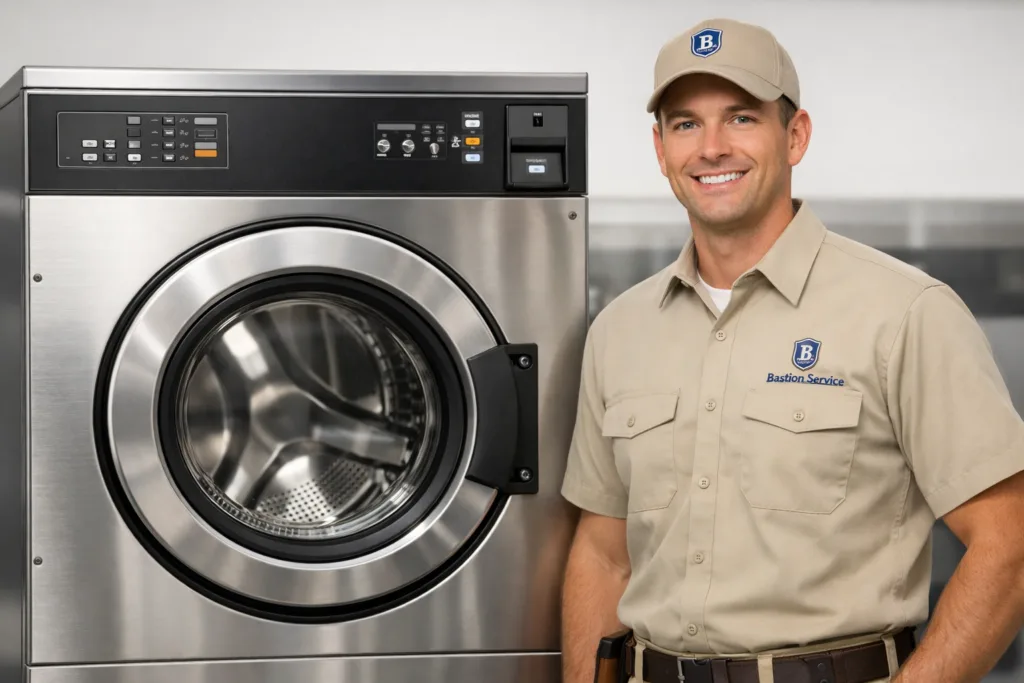
Bastion Service provides Speed Queen laundry equipment repair for washer and dryer issues that affect production, safety, and scheduling. Service typically begins with symptom review, machine testing, and a repair recommendation based on how the equipment is actually failing rather than on guesswork.
Washer and dryer symptoms that usually need service
Speed Queen laundry equipment often gives warning signs before a full stoppage. Some machines continue running with reduced performance, while others should be taken out of service right away to avoid added damage. The most important step is separating a minor operating issue from a failure that affects water handling, heating, drive components, controls, or electrical safety.
- Washer not filling, draining, spinning, or completing cycles
- Water leaking during fill, wash, drain, or spin
- Dryer running with no heat or taking too long to dry
- Drum not turning, stopping mid-cycle, or making abnormal noise
- Vibration, banging, or off-balance movement during operation
- Error conditions, intermittent shutdowns, or inconsistent cycle behavior
These symptoms may come from different causes even when they look similar from the outside. A washer that does not spin, for example, may have a drain problem, a lid or door lock issue, a drive fault, or a control problem. A dryer with long dry times may be dealing with airflow restriction, heating failure, sensor trouble, or motor-related wear.
Speed Queen washer problems that affect laundry flow
Washer issues usually show up first as incomplete loads, water left behind, longer cycle times, or machine behavior that staff no longer trust. In business settings, that quickly turns into slower room turns, delayed linen processing, or customer-facing interruptions.
Slow draining or standing water after the cycle
If water remains in the tub at the end of the cycle, the machine may have a blocked drain path, pump trouble, or a control-related problem that prevents the cycle from advancing correctly. Loads may come out too wet to move efficiently into the dryer, and repeated use in that condition can strain other components. This symptom is usually worth addressing promptly because it affects both washer output and downstream drying capacity.
No spin or weak spin performance
A washer that will not enter spin or spins poorly may be dealing with imbalance detection issues, drive component wear, lock problems, or internal mechanical faults. Even if the machine still runs part of the cycle, poor extraction increases dry time, energy use, and labor handling. In high-use laundry rooms, one weak washer can create delays across multiple machines.
Leaks during wash or drain
Water on the floor is not a symptom to ignore. Leaks can come from hoses, door or seal areas, pump connections, internal components, or wear caused by age and vibration. Beyond the machine itself, leaking water can create slip hazards, damage surrounding surfaces, and disrupt nearby equipment. Service helps determine whether the source is external and straightforward or part of a larger internal repair.
Vibration, shaking, or banging
Excess movement may point to leveling problems, suspension wear, basket issues, or recurring off-balance operation. Sometimes staff assume the load was simply uneven, but repeated vibration usually means the machine needs attention. Continued use can accelerate wear on structural and drive parts and may eventually force the unit out of service at a worse time.
Speed Queen dryer problems that reduce turnaround
Dryer trouble often starts as a productivity problem before it becomes a complete breakdown. Loads take longer, staff rerun cycles, or machines stop unexpectedly when demand is highest. Because dryers directly affect how quickly laundry can be finished and returned to service, even partial performance loss matters.
No heat or long dry times
When a dryer tumbles but does not dry effectively, the issue may involve the heating system, airflow restriction, sensors, thermostatic components, or controls. Long dry times are expensive in more than one way: they reduce machine availability, increase utility use, and make cycle completion harder to predict. A proper service visit helps confirm whether the problem is a failed part, a ventilation-related condition, or a combination of both.
Drum not turning or stopping during operation
If the motor runs but the drum does not turn, the fault may involve the belt, support parts, drive components, or internal mechanical wear. If the dryer starts and then stops, overheating protection, motor issues, or electrical faults may be involved. This type of symptom often worsens with continued operation, so early repair can prevent a smaller issue from turning into a broader failure.
Noise, burning smell, or overheating
Squealing, scraping, thumping, or a hot smell from the dryer should be treated as a warning sign. Worn rollers, bearings, idler parts, lint-related airflow problems, and heating abnormalities can all produce these symptoms. When odor or heat seems abnormal, it is usually better to stop using the unit until it has been checked.
When equipment should be removed from use
Some symptoms allow short-term scheduling flexibility, but others point to a higher risk of secondary damage or unsafe operation. A machine should be evaluated as soon as possible when it shows:
- Active water leaks
- Burning smells or signs of overheating
- Repeated mid-cycle shutdowns
- Severe vibration or impact movement
- Drum movement failure
- Electrical tripping or inconsistent power behavior
Intermittent symptoms also deserve attention. A washer or dryer that fails only occasionally is still affecting reliability, and those unstable faults often become more expensive if staff keep trying to work around them.
What a repair visit helps determine
For business operators, the key question is not just what the symptom means but what action makes sense next. A repair visit helps confirm the failed system, identify related wear, and decide whether the equipment can remain in service, should be limited, or needs immediate repair. That is especially important for older units where one visible symptom may not be the only issue present.
In many cases, targeted repairs restore normal operation without a long interruption. In others, the inspection may show that multiple worn systems are contributing to repeat failures. That information helps operators make a practical decision based on downtime risk, machine condition, and the cost of continuing to patch around recurring problems.
Repair planning for Inglewood businesses using Speed Queen laundry equipment
Businesses in Inglewood often need repair scheduling that fits around active laundry demand rather than ideal timing. Whether the equipment supports tenant laundry, guest turnover, or daily linen processing, the goal is to restore stable washer and dryer performance with as little operational disruption as possible. If a Speed Queen unit is leaking, not draining, not heating, vibrating excessively, or stopping before cycles finish, the best next step is to arrange service before the issue affects more of the workflow.
Prompt diagnosis, parts planning, and repair scheduling can help prevent one failing machine from creating a wider capacity problem across the laundry room. When symptoms are already affecting throughput, a service call gives the business a defined path forward instead of continued trial-and-error operation.


