
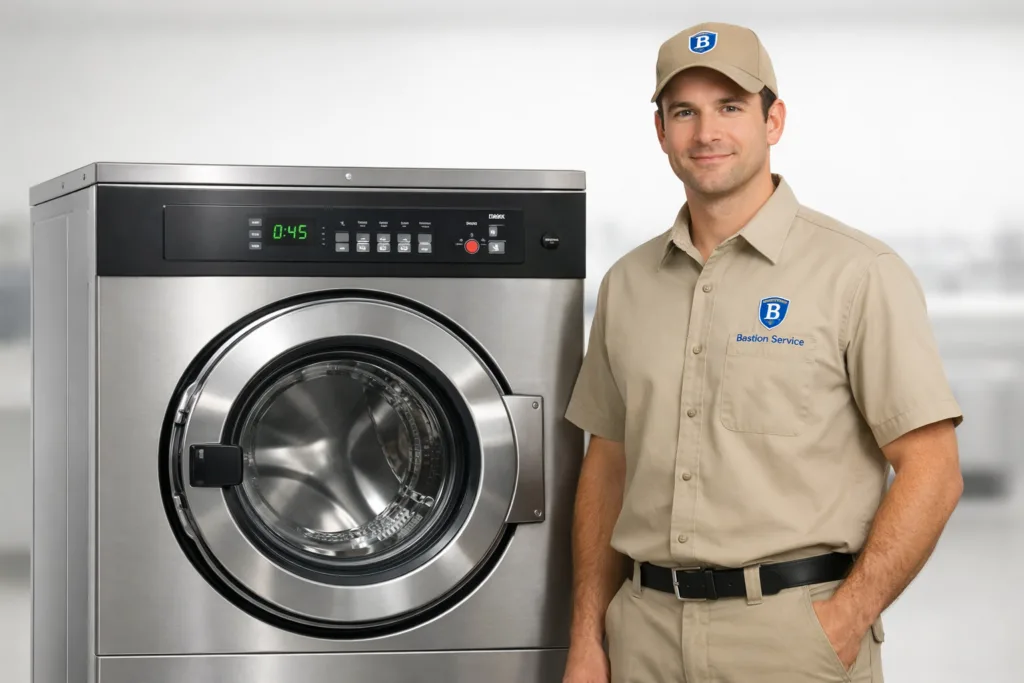




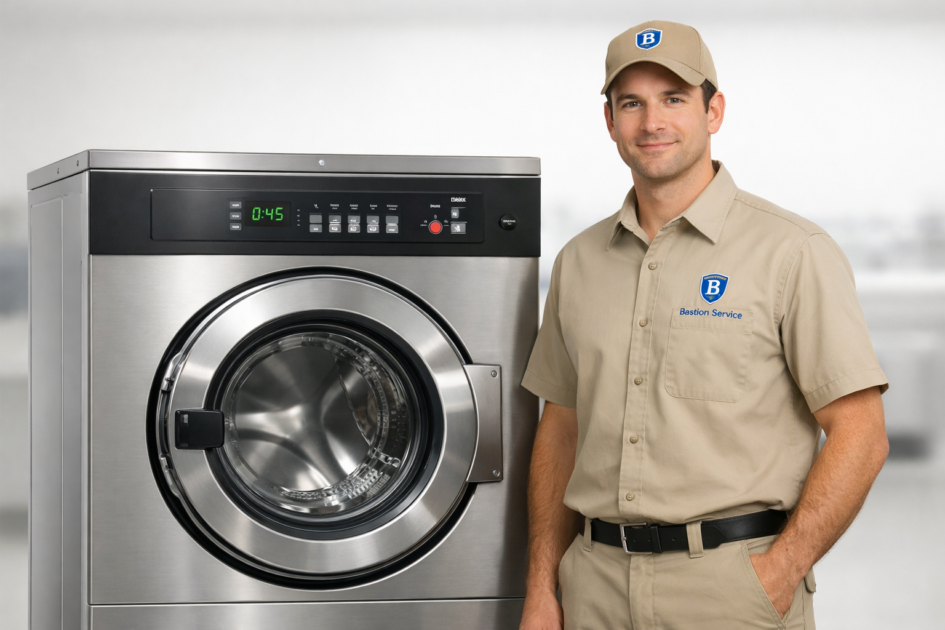
Equipment downtime quickly turns into staffing delays, missed turnaround targets, and frustrated users when washers or dryers stop performing as expected. For businesses in Manhattan Beach that rely on Speed Queen laundry equipment every day, service is most effective when the visit is focused on the exact symptom pattern, the effect on daily operations, and the next repair step needed to restore reliable use.
For specific equipment paths in Manhattan Beach, review Speed Queen Washer Repair in Manhattan Beach, Speed Queen Dryer Repair in Manhattan Beach, and Commercial Appliance Repair in Manhattan Beach.
Bastion Service works with Manhattan Beach businesses that need Speed Queen washer and dryer troubleshooting tied to real operating decisions such as whether a unit should be taken offline, whether the problem is likely to worsen under continued use, and how repair scheduling can be handled with the least disruption possible.
Speed Queen laundry equipment problems that commonly require service
Washer and dryer issues often start as a single complaint, but they rarely stay isolated. A washer that drains poorly can back up the day’s load schedule, while a dryer with weak heat can create a bottleneck that affects every cycle after it. Early repair attention helps reduce avoidable downtime and can prevent added wear on related parts.
Common symptoms that lead businesses to schedule service include:
- Washers that will not start, fill, agitate, spin, or drain
- Dryers that run without heat, overheat, or take too long to dry
- Cycles stopping midway or failing to complete normally
- Error codes, control issues, or inconsistent machine response
- Water leaks, standing water, or poor drainage after washing
- Excessive shaking, banging, grinding, squealing, or scraping noises
- Door, latch, timer, or sensor problems that interrupt operation
These signs can point to anything from airflow or drainage restrictions to worn mechanical parts, electrical faults, failed controls, or heating-system problems. The value of diagnosis is in narrowing the issue to the failed system so the repair decision is based on what the machine is actually doing, not guesswork.
Washer symptoms that affect uptime and workflow
Washer not draining, not spinning, or leaving clothes too wet
When a washer leaves water behind or fails to extract properly, the problem may involve the drain pump, belt, motor operation, switch response, control function, or a restriction in the drainage path. In a business setting, this usually leads to repeated loads, delayed dryer use, and unnecessary staff time spent checking incomplete cycles. If the symptom is recurring, service is usually the better option than continued testing.
Leaks, overflow, or water around the machine
Water where it should not be can come from hoses, valves, seals, drain issues, or internal failures. Even a small leak matters because it affects floor safety, cleanup time, and confidence in continued machine use. A repair visit helps determine whether the source is isolated and manageable or whether the washer should remain out of service until corrective work is completed.
Vibration, banging, or unusual wash noise
Heavy shaking or impact noise may indicate suspension wear, bearing trouble, mounting issues, or other mechanical problems that worsen under repeated use. This type of complaint is important because it often starts before a more serious breakdown. If the machine sounds noticeably different from normal operation, that change is often enough reason to schedule service before damage spreads to additional components.
Cycle failures or inconsistent operation
If a Speed Queen washer starts one load correctly and fails on the next, the issue may involve controls, sensors, switches, or intermittent electrical faults. Inconsistent behavior is especially disruptive for shared laundry rooms and busy facilities because staff cannot confidently assign loads to the machine. Troubleshooting helps identify whether the problem is isolated to one system or part of a broader reliability decline.
Dryer symptoms that slow production
No heat or long dry times
A dryer that tumbles without drying properly reduces output on every load. Possible causes include restricted airflow, heating-component failure, thermostat problems, ignition issues, sensor faults, or control-related errors depending on the machine setup. Long dry times also increase wear because the unit runs longer than intended, so a symptom that seems manageable at first can turn into a bigger service problem if ignored.
Overheating or shutting down mid-cycle
Dryers that run too hot or stop during operation should be checked promptly. Overheating may be related to ventilation restrictions, thermostat failure, sensor problems, or electrical issues affecting normal temperature control. From a business perspective, the key question is not only what failed, but whether the dryer can be safely returned to use after repair or needs to remain offline until the full problem is corrected.
Squealing, scraping, or drum movement problems
Noise from the drum area often points to wear in rollers, belts, idlers, bearings, or support components. These symptoms may begin intermittently, then become constant as parts degrade further. Addressing the issue early can help avoid a full mechanical failure that puts the machine out of service at the worst time.
Dryer runs but performance keeps getting weaker
Some machines continue operating while gradually producing less heat, less airflow, or less consistent cycle completion. That kind of decline often causes managers to postpone service because the dryer is still usable, but the hidden cost shows up in reruns, delayed turnover, and staff workarounds. If performance has clearly changed, repair evaluation is usually justified even before a complete shutdown occurs.
What symptom patterns usually mean for repair planning
Not every issue needs the same response. Some symptoms suggest a limited repair involving a specific wearable part or control-related failure. Others point to a machine that has multiple problems developing at once. The service decision usually depends on how the equipment is behaving right now and how much risk continued use creates.
Scheduling tends to make the most sense when:
- The machine has stopped working entirely
- Leaks or drainage problems are affecting the surrounding area
- Dry times are getting longer and slowing output
- Staff are rerunning loads to get acceptable results
- Error codes or shutdowns are becoming more frequent
- Noise or vibration has changed sharply from normal operation
- Management needs a repair-versus-replacement recommendation
In many cases, the practical question is whether the equipment can stay in rotation temporarily or whether continued operation is likely to create a more expensive failure. A service assessment helps answer that question with less uncertainty.
Repair versus replacement considerations for aging Speed Queen equipment
Older laundry equipment is not automatically a replacement case. Many washer and dryer issues are still worth repairing when the rest of the machine is in solid condition and the fault is confined to a specific system. At the same time, repeat breakdowns, broad performance decline, and multiple failing components may point toward replacement planning instead of another short-term fix.
For businesses, the most useful evaluation usually looks at the immediate fault, the condition of the unit overall, how critical that machine is to daily throughput, and the likelihood of additional repairs in the near future. That approach gives managers better information for authorizing repair, shifting loads temporarily, or planning equipment changes without waiting for another surprise outage.
Service support for businesses in Manhattan Beach
Speed Queen washer and dryer problems are easiest to manage when they are treated as operating issues, not just isolated symptoms. A focused repair visit can identify the failed system, clarify whether the machine should remain in use, and set expectations for scheduling, parts, and downtime. If your laundry equipment is disrupting workflow in Manhattan Beach, the next step is to arrange service so the problem can be confirmed and a repair plan can move forward.


