
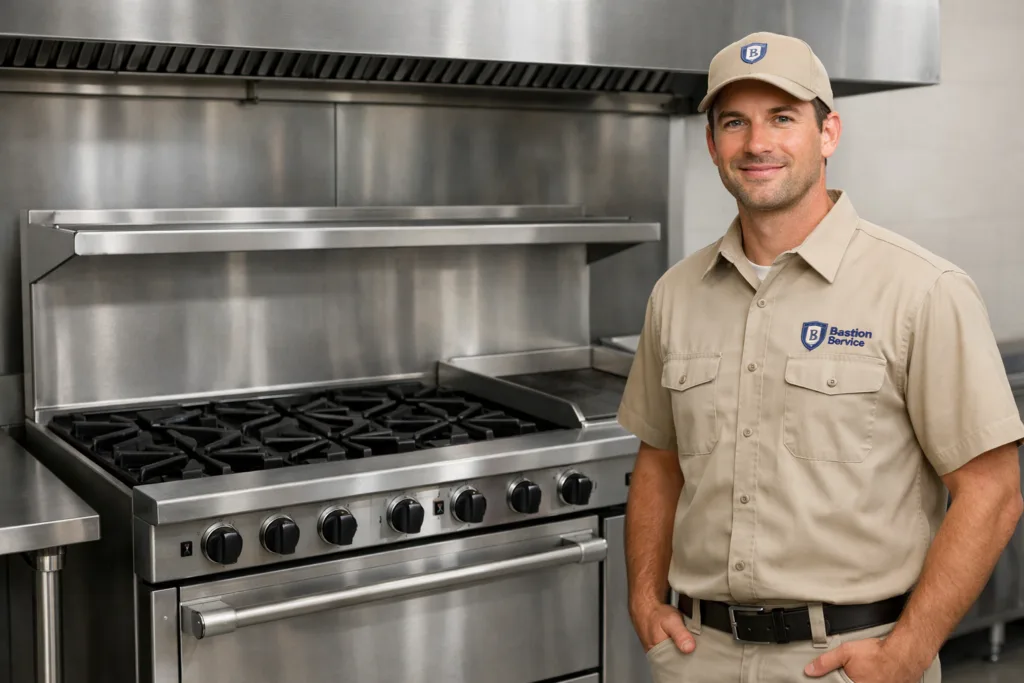




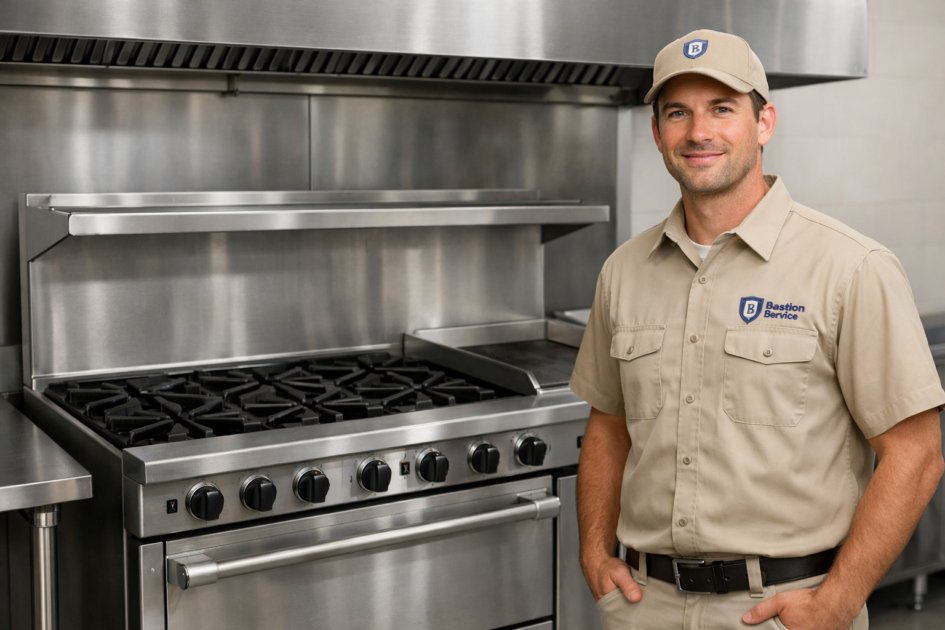
When a Southbend oven or range starts missing temperature targets, failing to ignite, or dropping out during service, output can slow down quickly. For businesses in Westwood, the most useful next step is service that identifies the actual fault, explains the repair path, and helps you decide whether the equipment should stay in use, be limited, or be taken offline until work is completed.
For specific equipment paths in Westwood, review Southbend Oven Repair in Westwood, Southbend Range Repair in Westwood, and Commercial Appliance Repair in Westwood.
Bastion Service provides Southbend cooking equipment repair support in Westwood for businesses that need fast answers about performance problems, shutdowns, and repair timing. Whether the issue affects one oven, one range, or a key station in the kitchen, the goal is to reduce avoidable downtime and restore predictable operation.
Southbend cooking equipment problems that disrupt kitchen workflow
Many Southbend problems begin with inconsistent performance rather than a complete failure. An oven may preheat slowly, cook unevenly, or drift away from the set temperature. A range may develop weak flame, delayed ignition, or burners that stop holding steady heat. These symptoms usually point to a specific fault in ignition, heat regulation, burner operation, controls, or related components.
For Westwood businesses, those issues affect more than the equipment itself. They can change ticket times, create uneven product quality, force staff to work around one unreliable station, and increase pressure during busy periods. Repair decisions are easier when the symptom pattern is evaluated early instead of waiting for a total shutdown.
Oven heating and temperature control issues
Not reaching the selected temperature
If a Southbend oven runs cool or takes too long to get to operating temperature, the problem may involve sensing components, thermostatic control issues, ignition-related heating loss, or burner performance problems. The practical concern is consistency: if the cavity is not reaching the intended temperature, cook times stretch and results become less reliable from batch to batch.
Temperature swings during operation
An oven that overshoots, drops below target, or cycles erratically can interrupt production even when it still appears to be working. Kitchens often notice this as uneven browning, undercooked items, or the need to rotate pans more often than usual. These symptoms often require hands-on testing because the source may be a control fault, sensor problem, or unstable heating condition rather than one obvious failed part.
Slow recovery between loads
Slow recovery becomes especially noticeable during rush periods, when the oven cannot keep up after doors open and close repeatedly. If temperatures take too long to rebound, throughput suffers and staff may start adjusting workflow to compensate. That usually signals a heating or control problem that should be diagnosed before the unit falls further behind during normal use.
Range burner and ignition problems
Burners not lighting reliably
On a Southbend range, inconsistent ignition can turn a routine cooking task into a daily delay. Burners may fail to light on the first attempt, light only intermittently, or require repeated tries before staying on. This can point to ignition component wear, burner assembly issues, contamination, or a control-related fault affecting startup.
Weak or uneven flame
If one burner runs weaker than the others, produces uneven heat, or struggles to maintain a stable flame, pans may heat inconsistently and timing across the line can suffer. In practice, staff often work around the problem by avoiding that burner or changing station assignments, but the underlying issue usually does not improve on its own.
Burners going out during use
A burner that drops out after lighting or loses stability during operation should be inspected promptly. This kind of symptom can interrupt service without warning and may indicate a larger regulation or control problem. From a repair standpoint, intermittent flame loss is important because it can be harder to diagnose after the fact if the equipment is only failing under normal kitchen load.
Intermittent shutdowns and control faults
Some of the most disruptive Southbend cooking equipment calls involve units that work part of the time and then stop unexpectedly. An oven may begin heating normally and then fail to maintain operation. A range may respond to controls inconsistently, cut out under use, or behave differently from one shift to the next.
Intermittent faults matter because they create uncertainty. Businesses in Westwood often need to know not just what failed, but whether the unit can remain in limited operation while repair is scheduled. A proper diagnosis helps separate a contained component issue from a broader problem that could lead to more downtime or a less predictable repair outcome.
Signs the equipment should be evaluated before continued use
Not every issue means the unit must be shut down immediately, but some symptoms deserve prompt service attention:
- Temperature that drifts far from the selected setting
- Repeated ignition failure or delayed startup
- Burners that will not stay lit or produce unstable flame
- Slow preheat or noticeably poor heat recovery
- Controls that do not respond normally
- Unexpected shutdowns during cooking
- Performance changes that are becoming more frequent
Continued operation under those conditions can increase wear on related components, create more inconsistent food output, and turn a smaller repair into a larger one. If staff is already adjusting workflow around the problem, that is usually a strong sign the equipment needs service rather than more workaround time.
What diagnosis helps determine
Service is not only about replacing a part. A thorough evaluation helps determine whether the issue is isolated, whether additional wear is present, and how the repair should be prioritized around kitchen operations. That matters for businesses trying to balance uptime with safe, reliable equipment use.
During diagnosis, the focus is typically on questions such as:
- Is the problem limited to one burner, one control, or one heating function?
- Is the fault constant, or does it appear only during longer cooking periods?
- Can the equipment continue operating temporarily without increasing risk?
- Is the repair likely to restore stable performance, or is there evidence of broader wear?
- How should the work be scheduled to limit disruption to service?
Repair or replacement: how businesses usually weigh the decision
For many Southbend ovens and ranges, repair makes sense when the fault is contained and the rest of the equipment remains in solid operating condition. In other situations, the decision becomes less straightforward, especially if the unit has a pattern of recurring control problems, repeated ignition failures, or multiple recent service events.
The most useful comparison is rarely based on one symptom alone. Businesses usually look at the current failure, the condition of major components, expected reliability after repair, and the cost of another interruption if the unit continues to struggle. A service assessment helps put that decision in operational terms rather than guesswork.
Scheduling service in Westwood
If your Southbend cooking equipment is heating poorly, showing ignition problems, cycling unpredictably, or causing production delays, scheduling repair is the practical next step. Early service is often the difference between a contained fix and a longer disruption that affects prep, line performance, and daily output.
For Westwood businesses, the value of repair service is not just getting the unit running again. It is understanding the symptom, confirming the repair path, and making a sensible plan for continued operation or temporary downtime based on how the equipment is actually performing.


