





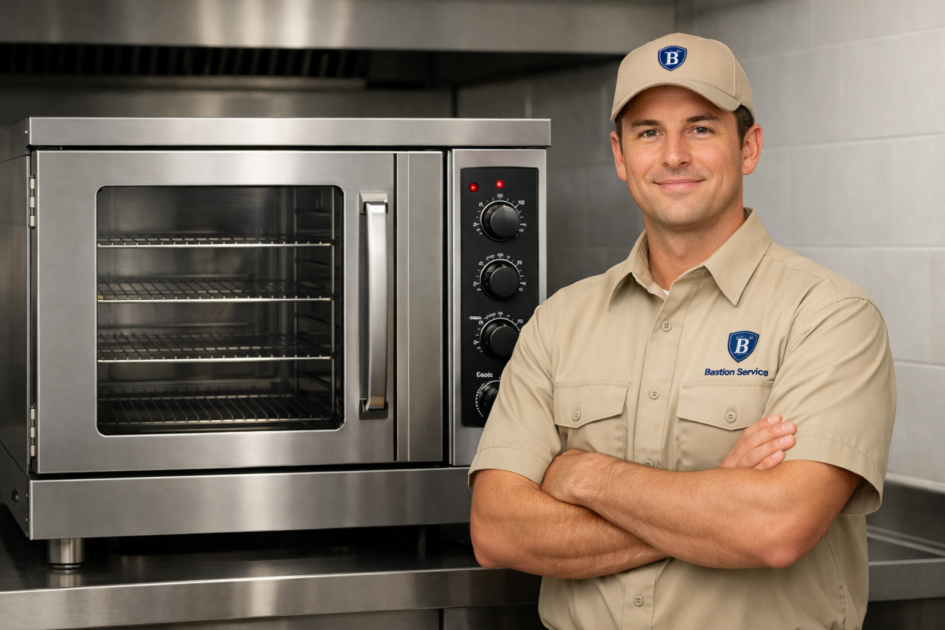
Southbend oven problems can disrupt prep schedules, slow ticket flow, and create inconsistent food quality when the unit is expected to perform through a full shift. In Hawthorne, service is most useful when it connects the symptom pattern to likely failure points, checks whether the oven can stay in rotation safely, and helps the business schedule repair before a heat or ignition issue turns into a longer downtime event. Bastion Service works with businesses in Hawthorne that need their Southbend oven evaluated based on how it is actually failing, not on guesswork.
Related commercial service paths in Hawthorne include Southbend Commercial Repair in Hawthorne, Commercial Oven Repair in Hawthorne, and Southbend Range Repair in Hawthorne.
What uneven heat or slow temperature recovery usually means
When a Southbend oven does not heat evenly or struggles to reach the selected temperature, the problem is often deeper than simple calibration. Uneven baking, hot spots, long preheat times, or weak recovery after the door opens can point to issues in the heating system, temperature sensing, airflow, or control response. In day-to-day kitchen use, those failures show up as delayed production, pan rotation becoming necessary, and staff compensating manually to get acceptable results.
Common causes can include:
- Worn or failing igniters
- Temperature sensor drift or thermostat faults
- Weak heating elements on electric configurations
- Gas valve or burner performance problems
- Convection fan or airflow issues
- Door gasket leaks that bleed heat
- Control board or relay failures under load
Because several different faults can create the same cooking complaint, symptom-based testing matters. An oven that appears to run normally while empty may still fail once product is loaded and temperature demand increases.
Why a Southbend oven may not heat evenly or reach set temperature
If the oven is running but the cavity temperature does not match the setting, the issue may involve poor sensor feedback, weak heat output, or a control problem that causes improper cycling. Some units overshoot and then fall too low. Others never get fully up to temperature in the first place. In both cases, the result is unstable cooking performance and slower production.
This symptom becomes especially important when staff start extending cook times, shifting pans between racks, or avoiding certain parts of the cavity. Those adjustments may keep service moving temporarily, but they usually indicate the oven is no longer operating within a reliable range.
Signs the problem is more than minor calibration
- Products finish differently on the same rack
- Top and bottom browning are inconsistent
- Preheat takes much longer than it used to
- The oven drops sharply after loading and recovers slowly
- Actual results do not match the displayed temperature
- Staff have changed normal cook routines to work around the unit
Ignition faults, burner issues, and startup failures
A Southbend oven that clicks without lighting, lights late, shuts down after ignition, or starts only intermittently should be checked promptly. These symptoms can involve igniters, flame sensing, burner contamination, gas flow within the appliance, or control sequencing problems. Intermittent startup issues are easy to underestimate because the oven may still operate part of the time, but repeated failed ignition can quickly affect reliability during busy periods.
Delayed ignition or unstable burner behavior can also lead to erratic heat output. That means the complaint may begin as a startup issue and later show up as uneven baking or poor temperature hold during production. Looking at both symptoms together often gives a more accurate repair direction than treating them as separate problems.
Temperature swings during active use
An oven that cycles too high, too low, or unpredictably during service can create waste and timing problems even if it technically still heats. Temperature swings often come from failing sensors, thermostatic control issues, relays that break down once hot, airflow restrictions, or component wear that only appears after the oven has been running for a while.
In a busy kitchen, this usually shows up as batches that are inconsistent from one cycle to the next. The first load may be acceptable, but later loads drift off as the oven struggles to maintain stable heat. That pattern is a strong sign that the issue should be evaluated under real operating conditions rather than judged only by whether the unit powers on.
Door, gasket, and hinge problems that affect performance
Heat loss is not always caused by a burner or heating element problem. A worn door gasket, sagging hinge, loose handle assembly, or poor door alignment can let heat escape and make the oven work harder to maintain temperature. The business may notice longer cook times, more aggressive cycling, or weak recovery after opening the door.
These issues are often treated as minor wear, but they can reduce consistency and increase strain on other components. If the door does not seal correctly, the oven may never perform the way it should even after other parts are replaced.
When to schedule service instead of waiting
Scheduling service early usually makes sense once the oven becomes unreliable, not only after it stops working completely. A Southbend oven that still runs but has obvious temperature, ignition, or shutdown problems can create hidden costs through product waste, slower throughput, and staff time spent monitoring the unit.
It is usually time to book service when:
- Preheat times are noticeably slower than normal
- The oven no longer holds a stable cooking temperature
- Different racks produce different results
- Ignition is inconsistent or startup has changed
- The oven shuts off during use
- Door closure or gasket sealing has deteriorated
- Employees have developed work-arounds just to keep output usable
For businesses in Hawthorne, early service can help prevent a manageable repair from becoming a scheduling problem that affects the full kitchen workflow.
When continued operation can make the repair bigger
Some faults remain relatively stable for a short time, while others tend to escalate with continued use. Repeated ignition attempts, overheating, electrical interruptions, poor door sealing, or unstable burner operation can place added stress on controls, heating components, and associated parts. If the oven is already producing unreliable results, continuing to push it through service may increase both labor disruption and repair scope.
If there is a strong or persistent gas smell, stop using the oven immediately. Address the immediate safety concern first, then arrange repair after the area and gas condition have been handled appropriately.
Repair or replace: how the decision is usually made
The right decision depends on the actual condition of the oven, not just the fact that it is having trouble. A focused repair often makes sense when the failure is isolated and the rest of the unit remains structurally sound. Replacement becomes more likely when the oven has multiple active faults, recurring control problems, major wear, or repeated downtime that no longer supports daily operations.
For a Hawthorne business, the most useful evaluation considers several factors together:
- Whether the problem is limited to one system or spread across several
- The condition of doors, liners, hinges, and other high-wear parts
- Recent service history and repeat failures
- How critical that oven is to normal production
- Whether the expected repair restores stable performance or only delays another outage
How to prepare for a Southbend oven service visit
A few details from the kitchen can make troubleshooting faster and more accurate. Before service, it helps to note whether the issue happens during preheat, after the oven is hot, only under load, or only at certain settings. Staff observations about shutdown timing, ignition behavior, heat recovery, and whether the display matches actual cooking performance can all help narrow down the fault.
Useful information includes:
- Whether the unit is gas or electric
- If the problem is constant or intermittent
- How long the symptom has been getting worse
- Whether other staff members noticed the same pattern
- If pans or racks cook unevenly in the same spots each time
- Any unusual sounds, smells, delays, or error behavior
Service decisions should match the symptom pattern
Southbend oven repair in Hawthorne is most effective when the service plan reflects what the unit is actually doing in operation: not heating, heating unevenly, drifting off temperature, failing to ignite, or shutting down unexpectedly. The goal is not just to restore power or flame for the moment, but to identify the underlying cause, determine whether the oven can return to regular use with confidence, and schedule the repair path that best protects daily output. When a Southbend oven starts affecting consistency or uptime, the next practical step is to have the symptom pattern evaluated before the problem spreads to a larger interruption.


