
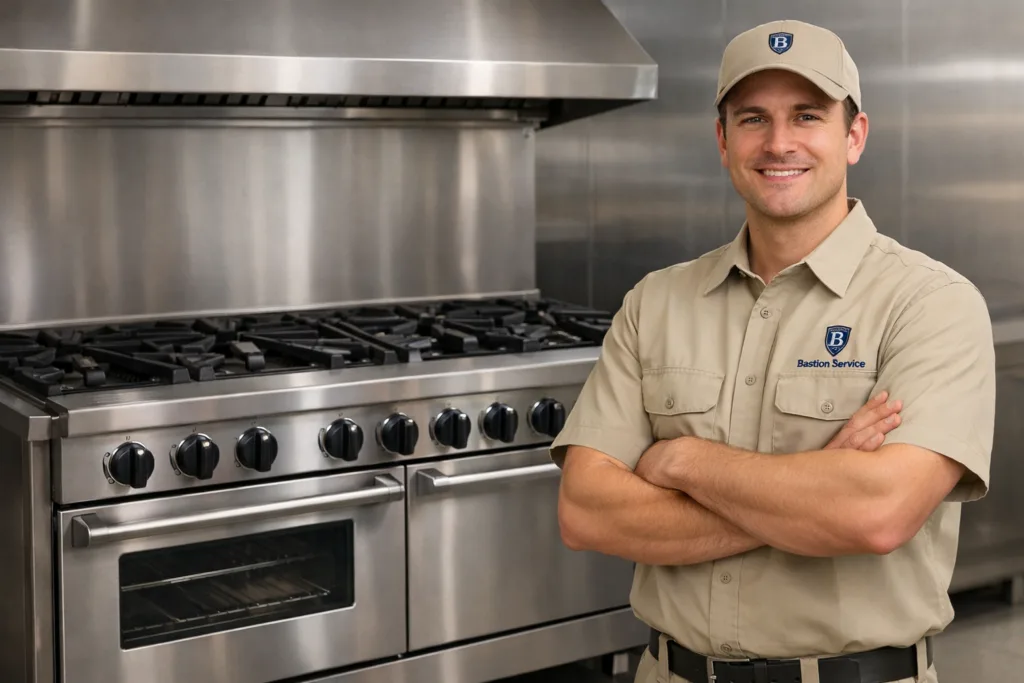




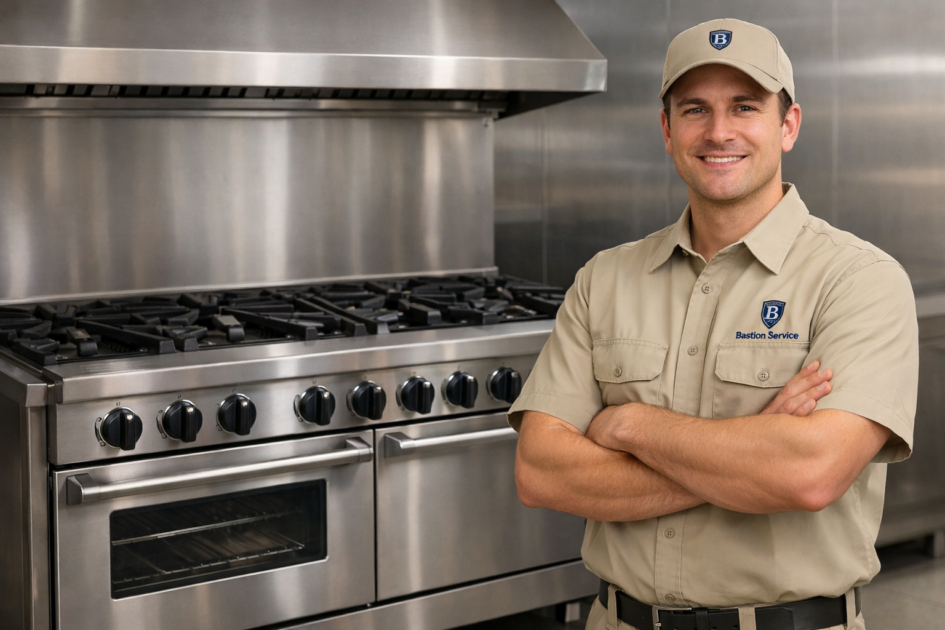
Southbend ranges that start missing ignition, drifting off temperature, or losing burner performance can slow prep, disrupt service, and make output less consistent from one shift to the next. For businesses in Rancho Palos Verdes, the best next step is to have the symptom pattern narrowed down to the actual failing system before repair decisions are made. Bastion Service handles Southbend range issues with a service-first approach focused on fault isolation, repair planning, parts needs, and scheduling that makes sense for active kitchen operations.
Related commercial service paths in Rancho Palos Verdes include Southbend Repair in Rancho Palos Verdes, Southbend Oven Repair in Rancho Palos Verdes, and Vulcan Range Repair in Rancho Palos Verdes.
Common Southbend Range Problems We Diagnose
Burners not lighting or taking too long to ignite
If a burner clicks repeatedly, lights late, or fails to ignite at all, the issue may involve the igniter, pilot components, burner ports, gas flow, valves, or related wiring and controls. What looks like a simple ignition complaint can also be tied to contamination from daily use or wear in high-heat components. When one or more burners become unreliable, staff often start shifting pans around the range, which slows production and creates inconsistency during busy periods.
Oven not heating properly
A Southbend range oven that runs cool, overheats, or struggles to recover after the door opens can affect cook times and finished product quality. Temperature complaints may come from a faulty thermostat, sensor issue, igniter problem, gas regulation issue, or control failure. Because several different faults can create similar symptoms, testing is important before replacing temperature-related parts.
Flame is weak, uneven, or unstable
Low flame, uneven flame spread, or burners that drop out under load often point to burner blockage, gas delivery restrictions, valve trouble, or wear in components that no longer regulate heat correctly. In a working kitchen, these problems usually show up first as slower boil times, poor pan response, or uneven results across stations.
Range clicks constantly or starts intermittently
Repeated clicking, inconsistent startup, or a unit that works one shift and fails the next can indicate ignition system faults, moisture or debris around ignition components, switch problems, or electrical issues affecting the start sequence. Intermittent problems are especially important to address early because they tend to become harder to predict and more disruptive during active service.
Controls are not responding normally
If knobs feel loose, settings do not match actual heat output, or the oven does not respond consistently to control changes, the problem may be mechanical, electrical, or related to internal regulation parts. Control issues often overlap with heating complaints, which is why symptom-by-symptom diagnosis matters.
Why a Symptom Match Is Not Enough
One visible issue does not always point to one failed part. A burner that will not stay lit may involve flame sensing, gas flow, ignition, or valve performance. An oven that seems inaccurate may be dealing with a control problem rather than a calibration issue. A range that appears to have multiple small problems may actually have one underlying fault affecting several functions.
For Rancho Palos Verdes businesses, accurate diagnosis helps with more than the repair itself. It also clarifies whether the issue is isolated to one section, whether parts ordering is likely, and whether the unit can be safely used in a limited way while service is being completed.
Signs It Is Time to Schedule Service
Range service should be scheduled when normal operation starts depending on workarounds. That includes:
- Burners that need repeated attempts to light
- Ovens that no longer hold a steady cooking temperature
- Sections of the range heating differently from the rest
- Clicking, delayed ignition, or startup failures
- Flame changes that affect speed or consistency
- Controls that stop responding as expected
- Performance drops that slow kitchen workflow
If staff are rotating stations, adjusting cook times constantly, or avoiding one part of the range, the equipment is already affecting daily operations enough to justify repair scheduling.
Why Intermittent Problems Deserve Attention
Intermittent faults are often dismissed because the range starts working again for a while. In practice, that usually means the failure is developing rather than resolved. Ignition issues, unstable heating, and sporadic control behavior can become full shutdowns with little warning. Catching those problems earlier can reduce surprise downtime and help prevent added strain on related components.
When Continued Use Can Make Repairs More Complicated
Trying to push through service with a range that is not lighting cleanly or heating correctly can lead to bigger problems. Staff may compensate by turning settings higher, relighting burners repeatedly, or overusing the sections that still seem dependable. That can increase wear, hide the original fault, and lead to a broader repair than the one that would have been needed earlier.
If there is a persistent gas odor or any concern about safe operation, stop using the unit and address the safety issue first before arranging appliance repair.
Repair or Replace: How Businesses Usually Make the Call
Repair is often the better option when the problem is confined to a specific system and the rest of the range is still supporting kitchen demand well. Replacement becomes more likely when failures are recurring across multiple systems, the unit has extensive wear, or the equipment no longer fits the workload of the operation.
The right decision depends on the condition of the range, the impact of downtime, the scope of the fault, and whether the repair returns the unit to stable performance. A proper diagnosis gives businesses in Rancho Palos Verdes a realistic basis for that decision instead of guessing from symptoms alone.
What to Have Ready Before Service
To speed up the repair process, it helps to note a few details before the appointment:
- Which burners or oven sections are affected
- Whether the problem is constant or intermittent
- Any clicking, delayed ignition, or flame irregularities
- Whether the oven runs hot, cold, or inconsistently
- When the issue is most noticeable during the day
- Any recent shutdowns, relighting attempts, or performance changes
These observations can help narrow the fault faster and support a more efficient repair visit.
Southbend Range Service for Businesses in Rancho Palos Verdes
When a Southbend range starts affecting output, timing, or safe operation, the most useful next step is service centered on the actual problem rather than trial-and-error part replacement. For businesses in Rancho Palos Verdes, that means scheduling repair when ignition, burner performance, oven heating, or controls begin interfering with normal kitchen work, so the issue can be diagnosed correctly and the unit can be returned to reliable use with the least practical disruption.


