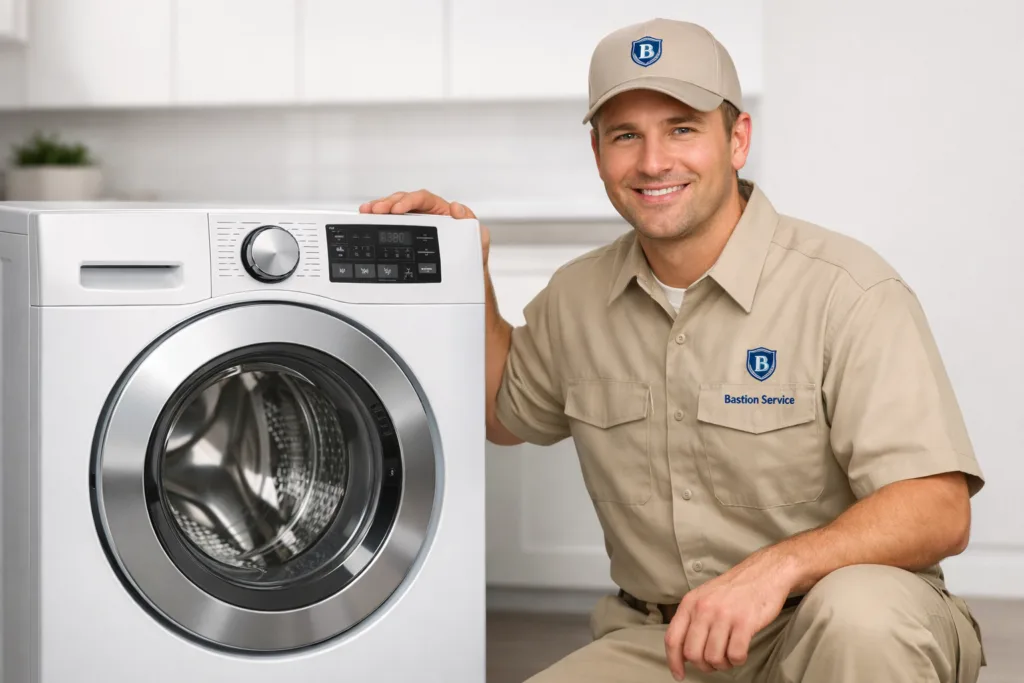
Washer problems rarely stay small for long. When a Samsung unit starts leaving clothes wet, stopping before rinse, or making harsh noise during spin, the most important step is identifying which system is actually failing. Similar symptoms can come from very different issues, and the right repair path depends on what the machine is doing before, during, and after the cycle stops.
Start with the exact symptom pattern
A useful diagnosis looks at the whole sequence, not just the final complaint. A washer that fills, agitates, and then refuses to drain points in a different direction than one that drains but never reaches full spin speed. In many homes in Sawtelle, owners first notice only one problem, but the full pattern usually reveals whether the fault is tied to drainage, balance, suspension, water intake, door locking, controls, or the drive system.
Washer will not drain
If water remains in the tub at the end of the load, the drain system is the first area to evaluate. Common causes include a blocked filter area, restricted drain hose, pump failure, or a control issue that prevents the washer from advancing. Some Samsung washers may hum as they try to pump out water, while others simply pause and display an error. If the machine repeatedly ends with standing water, forcing more cycles through it can add strain to the pump and leave laundry with heavy moisture that leads to odor and poor wash results.
Washer drains but does not spin correctly
When the machine removes water but clothes still come out soaked, the problem may involve load detection, suspension wear, door-lock faults, or a motor and drive-related issue. Front-load and top-load models can both struggle to reach proper spin speed when the washer senses an unsafe balance condition. Repeated failed spin cycles are more than an inconvenience because they often point to mechanical wear or a control response to another fault happening in the background.
Leaks during fill, wash, or drain
Leaks should be taken seriously because the source is not always obvious from where the water appears on the floor. On some Samsung front-load washers, a damaged door boot can send water forward during operation. In other cases, loose inlet connections, over-sudsing, drain hose issues, internal tub-to-pump problems, or worn seals can be responsible. Water appearing only during drain is different from a leak that starts as soon as the machine fills, and that timing helps narrow the cause.
If leaking is ongoing, it is best to stop using the appliance until the source is confirmed. Even a slow leak can affect flooring, baseboards, and nearby cabinetry.
Loud noise, banging, or walking across the floor
Not every noisy cycle means a major breakdown, but repeat vibration and harsh impact sounds should not be ignored. An off-balance comforter load may cause a one-time thump, while recurring shaking across normal loads can point to worn suspension parts, leveling problems, shipping bolts left in place, or internal drum support issues. Grinding or scraping sounds are more concerning because they may indicate heavier mechanical wear.
If a washer regularly slams the cabinet during spin, continued use can worsen the damage. What begins as a suspension or balance issue can eventually contribute to more expensive internal wear.
Not filling, filling slowly, or stopping mid-cycle
Fill problems can be caused by restricted water supply, faulty inlet valves, pressure sensing issues, drain behavior that confuses the cycle, or a control problem. A washer that pauses mid-cycle may also be responding to a door-lock fault or an inability to complete the previous step. Samsung error codes can help point service in the right direction, but they do not always identify the failed part by themselves. The same code may appear because of wiring problems, a related component failure, or a symptom created by another malfunction.
Signs the washer should be checked sooner rather than later
Some issues can wait a short time for service, but others should move to the top of the list. A repeated cycle interruption is usually not something that fixes itself, and continuing to run load after load often turns a contained repair into a larger one.
- Water is leaking onto the floor or under the machine
- The drum will not spin and the motor hums or struggles
- The washer stops with water inside after multiple attempts
- There is a burning smell, sharp electrical odor, or repeated tripping
- The machine makes grinding, scraping, or metal-on-metal noise
- Error codes return even after restarting the cycle
These symptoms usually mean the washer needs more than a reset or a lighter load.
Common Samsung washer issues homeowners notice first
Many residential calls begin with a performance complaint rather than a clearly broken part. Clothes may come out dirtier than expected, detergent may not rinse out well, or cycles may take much longer than normal. Those symptoms can tie back to poor draining, low water fill, sensor problems, or control behavior that changes how the cycle runs.
Households in Sawtelle also often notice intermittent behavior at first. The washer may complete one load and fail on the next, or it may work normally on small loads but stop during heavier items. Intermittent operation can be harder to interpret without testing because it may involve wiring, locks, control boards, or a mechanical part that fails only under strain.
Repair or replacement depends on the type of failure
Not every washer problem points toward replacement. Many issues involving drain pumps, door-lock assemblies, water inlet components, hoses, and some control-related faults can be reasonable to repair when the rest of the appliance is in solid condition. If the drum, tub, and main drive system are otherwise healthy, a targeted repair often makes sense.
Replacement becomes more likely when the machine has major tub or bearing damage, multiple worn systems at once, or a pattern of repeated breakdowns over a short period. Age matters, but condition matters more. A newer washer with a single isolated failure may be a strong repair candidate, while an older unit with severe noise, leaks, and control problems at the same time may not be.
What a focused service visit should clarify
A worthwhile service visit should answer a few basic questions clearly: what failed, whether the washer can be used safely before repair, what parts are likely involved, and whether the repair is sensible for the machine’s overall condition. That matters because symptom overlap is common with Samsung washers, especially when drain, spin, and control complaints appear together.
For homeowners in Sawtelle, the goal is usually simple: get back to a normal laundry routine without spending money on guesswork. If your washer is leaking, refusing to drain, failing to spin, or stopping mid-cycle, a symptom-based inspection is the fastest way to determine the right next step.