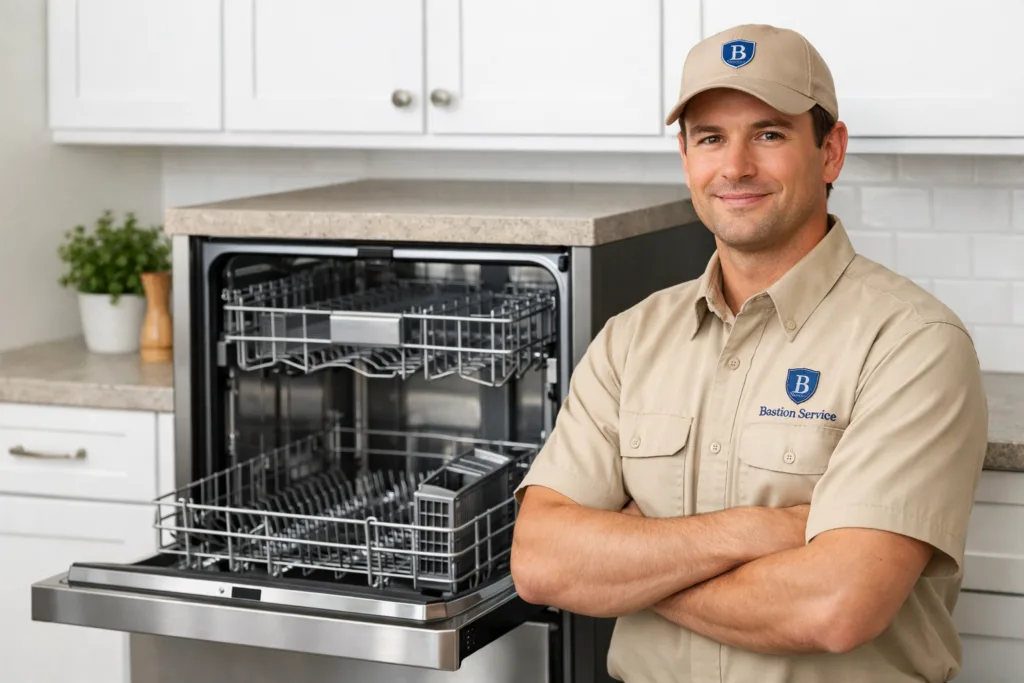
Dishwasher problems usually follow a pattern. The most useful way to approach a Samsung unit is to match the symptom with the stage of the cycle where the failure happens. That helps separate a simple blockage from a pump problem, a seal issue, or an electrical fault.
Common Samsung dishwasher problems in Sawtelle homes
Most service calls fall into a few symptom groups. If you know what the machine is doing—and what it is failing to do—it becomes much easier to judge whether the issue is minor or something that should be addressed right away.
Standing water after the cycle
If the tub still has water at the end of a wash, the drain system is the first place to look. In a Samsung dishwasher, that can mean a blocked filter area, debris near the pump, a restricted drain hose, or a drain pump that runs weakly or not at all. Sometimes the dishwasher appears to finish normally but skips or fails during the final drain stage.
If standing water keeps returning, avoid repeated use. Ongoing drain problems can leave odor, residue, and extra moisture inside the machine, and they may also point to a failing component rather than a one-time clog.
Dishes coming out dirty, gritty, or cloudy
Poor wash performance is not always a detergent issue. It can come from blocked spray arms, low water fill, circulation problems, dispenser faults, or water that is not reaching the proper temperature. If glasses look cloudy, plates still feel greasy, or food particles remain after a full cycle, the wash system may not be moving water with enough pressure.
This kind of symptom matters because a dishwasher can still sound normal while cleaning very poorly. If the unit runs but results keep declining, the cause is usually more specific than “old dishwasher behavior.”
Leaks at the door or underneath the appliance
Leaks are one of the most important issues to take seriously. Water on the floor may come from a worn door gasket, a lower door seal problem, overfilling, a cracked internal hose, or a sump-related leak underneath the unit. Even a small leak can become a bigger household problem if it reaches flooring or cabinetry.
If you see repeated dripping, pooling, or moisture around the front corners, stop using the dishwasher until the source is identified.
Not starting, not responding, or stopping mid-cycle
When a Samsung dishwasher will not begin a cycle, powers on inconsistently, or shuts off partway through, the issue may involve the door latch, user interface, wiring, power supply, or main control. These symptoms can look random from the outside, but they often follow a traceable electrical or control-related pattern.
A machine that stops mid-cycle may also leave dishes wet, detergent undissolved, or water trapped inside, which helps narrow down where the interruption is happening.
Unusual sounds during wash or drain
Grinding, buzzing, rattling, or louder-than-normal draining noises can point to debris in the pump area, spray arm interference, a worn circulation motor, or drain pump trouble. A short sound at startup is different from a loud noise that repeats every cycle.
If noise appears along with poor cleaning or incomplete draining, those symptoms often connect to the same failing part.
How to tell which stage of the cycle is failing
Homeowners can often describe the problem more clearly by noticing when the dishwasher stops behaving normally:
- At the start: no response, delayed start, humming without filling, or latch-related errors
- During fill: weak fill, unusual valve sounds, or immediate stoppage
- During wash: poor spray action, detergent not dissolving, or dirty dishes after a full run
- During drain: standing water, slow draining, or repeated drain noise
- At the end: wet interior, incomplete cycle, error display, or dirty rinse results
This kind of symptom tracking helps identify whether the problem is mechanical, electrical, or related to water movement through the dishwasher.
Why Samsung dishwasher diagnosis matters
Many different failures can produce the same visible symptom. A no-drain complaint might come from a simple obstruction, but it could also involve the pump or the control side of the drain sequence. Poor cleaning might be caused by blocked spray arms, weak circulation, low fill, or heating-related issues. Because of that overlap, replacing parts based on guesswork often leads to extra cost without solving the real problem.
A proper diagnosis should confirm the failed component, check for related wear, and show whether the repair is likely to restore normal daily use.
When to stop using the dishwasher
Some issues are inconvenient but manageable for a short time. Others should be treated as stop-use conditions. It is smart to stop running the dishwasher if you notice:
- Water leaking onto the floor
- A burning smell or signs of overheating
- Repeated power loss or tripped breakers
- Standing water after every cycle
- Loud grinding or harsh mechanical noise
- A door that will not latch or seal properly
Continued use in these situations can turn a repairable dishwasher problem into a larger kitchen issue.
Repair or replace?
For many households in Sawtelle, the decision comes down to the condition of the appliance as a whole. Repair often makes sense when the problem is limited to one system and the dishwasher is otherwise in solid shape. That is especially true when racks, door structure, tub, and basic operation have been reliable.
Replacement becomes more likely when there are multiple failures at once, recurring leaks, major electronic faults combined with mechanical wear, or signs that the machine has become unreliable across several cycles and functions.
The best repair decisions are based on the actual fault, the overall condition of the dishwasher, and whether the fix is likely to hold up in normal household use.
What homeowners can check before service
Without taking the appliance apart, there are a few useful observations that can help narrow the problem:
- Whether water remains in the tub at the end of the cycle
- Whether the detergent dispenser opens and empties
- Whether the spray arms seem blocked or unable to turn freely
- Whether the leak is coming from the door area or from underneath
- Whether the problem happens on every cycle or only sometimes
- Whether the unit is making a new sound it did not make before
These details can make the symptom pattern much clearer and help determine the most sensible repair path.
A focused approach for Samsung dishwasher repair in Sawtelle
When a dishwasher starts leaving residue, holding water, leaking, or failing to finish a cycle, the goal is to identify the exact source of the failure rather than treat every symptom as the same problem. That keeps the repair process more efficient and helps homeowners in Sawtelle make a better decision about whether to repair the unit now or start planning for replacement.
For Samsung dishwasher repair in Sawtelle, the most useful service outcome is simple: find the cause, explain the repair clearly, and restore reliable kitchen use if the appliance is a good candidate for repair.