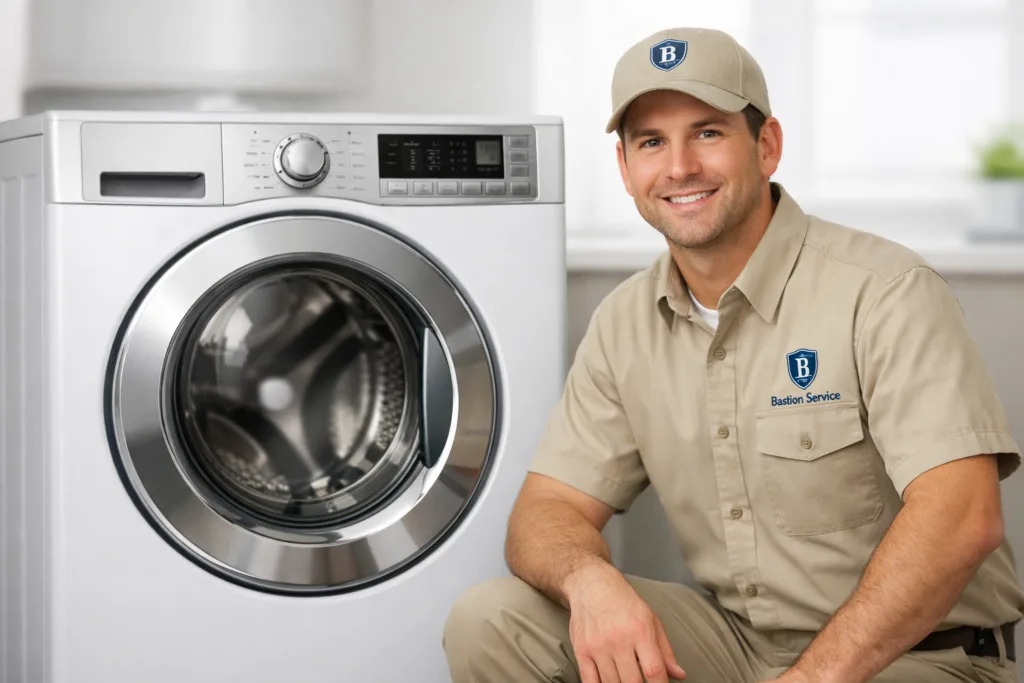
Electrolux washers can develop symptoms that look similar on the surface but come from very different failures underneath. A tub full of water, a locked door, poor spin speed, or a cycle that stops early can involve the pump system, latch assembly, pressure sensing, suspension, water inlet components, or electronic controls. For households in Sawtelle, the best repair outcomes usually come from matching the symptom pattern to the actual cause before any parts are replaced.
Common Electrolux washer issues and what they often mean
Modern washers rely on a sequence of checks during fill, wash, drain, and spin. When one part of that sequence fails, the machine may show a completely different symptom than homeowners expect. That is why it helps to look at exactly when the problem happens, how often it happens, and whether it is getting worse over time.
Washer not draining or clothes still soaking wet
If the washer finishes with standing water in the tub or laundry that is much wetter than normal, the problem may be related to a blocked drain path, a weakening pump, a drain hose issue, or a door lock fault that prevents full spin. In some cases, the washer drains slowly enough to confuse the control and interrupt the cycle.
Signs this problem is becoming more serious include:
- Water left in the tub after the cycle ends
- Repeated attempts to restart or re-spin the load
- Buzzing or humming during drain
- Musty odor from damp clothes staying in the machine
Repeated use with a poor-drain condition can overwork the pump and leave ongoing moisture in fabrics and inside the washer.
Leaks during fill, wash, or drain
Leaks are not all the same. Some appear only when the machine fills, while others happen only during agitation or while the pump is pushing water out. On an Electrolux washer, the source may involve inlet hoses, internal hose connections, the pump area, the dispenser route, or the door boot and seal surfaces.
If water is reaching the floor, it is usually best to stop using the machine until the source is identified. Even a small recurring leak can damage nearby flooring, trim, or walls over time.
Washer will not start or stops mid-cycle
When a washer powers on but refuses to begin, the cause may be as simple as a latch that is not securing properly or as involved as a control or user interface problem. If it starts and then pauses partway through, that can point to sensor feedback issues, filling problems, drain delays, or an interrupted lock signal.
Useful details to notice include whether:
- The display lights up normally
- The door clicks but does not lock
- The unit fills and then immediately stops
- The cycle fails at the same point every time
Door stays locked
A locked door after a cycle can be tied to retained water, latch failure, control communication trouble, or a safety sequence that did not complete. If the washer still contains water, opening forcefully is not the answer. The machine may be protecting against a spill, and the real issue may be elsewhere in the drain or control system.
Shaking, banging, or walking across the floor
Some vibration comes from an uneven load, but repeated heavy movement usually deserves more attention. Worn suspension components, installation problems, leveling issues, or spin-related mechanical faults can all make the washer unstable. If the cabinet is slamming, the machine is moving, or the noise is getting sharper, continued use can increase wear on internal parts and surrounding surfaces.
Error codes or intermittent cycle failures
Error codes can help narrow the problem, but they rarely tell the whole story by themselves. A code may point to a drain delay, lock problem, water level issue, or communication fault without identifying which specific part is responsible. Intermittent issues are especially important because they often appear only under certain conditions, such as large loads, bulky items, cold-water cycles, or high-speed spin.
Symptoms that should not be ignored
Some washer problems are mostly an inconvenience. Others can turn into larger repair issues if the machine keeps running in that condition. It is wise to pause use and have the washer checked if you notice any of the following:
- Water leaking onto the floor
- Burning smell or electrical odor
- Loud grinding, scraping, or metal-on-metal noise
- Repeated failed drains
- Severe shaking during spin
- Power interruptions or breaker trips
Trying multiple extra cycles to “push through” a problem can strain pumps, motors, control components, and suspension parts, while also increasing the risk of water damage inside the home.
How Electrolux washer repairs are usually evaluated
Repair decisions are often based on three things: the exact failed component, the overall condition of the machine, and whether the problem appears isolated or part of a wider pattern. A single issue such as a pump, hose, inlet valve, latch, or drain obstruction is often more straightforward than a washer with several overlapping failures.
In many cases, homeowners in Sawtelle are trying to answer practical questions, such as:
- Is this likely a one-part repair or a larger reliability issue?
- Will the washer return to normal weekly use after repair?
- Has the same symptom already come back more than once?
- Is there visible wear or multiple systems acting up at the same time?
Those details matter because a machine with one clear fault is very different from one showing repeated drain, lock, and control-related problems together.
What to note before service
A few observations can make troubleshooting faster and more accurate. Before scheduling service, it helps to note:
- Whether the washer fails during fill, wash, drain, or spin
- If the issue happens on every load or only sometimes
- Any error code shown on the display
- Whether the machine is noisy, leaking, or leaving clothes unusually wet
- If the problem started suddenly or worsened gradually
Even simple details like “it only leaks while draining” or “it stops right before spin” can help separate one likely cause from another.
When repair often makes sense
Repair is often a reasonable path when the washer is otherwise in good condition and the fault is limited to a repairable component. That is especially true when the symptom is consistent, the machine has been performing well otherwise, and there is no sign of broader mechanical decline.
By contrast, if the washer has multiple recurring issues, frequent electronic faults, or several worn systems at once, the discussion may shift from fixing a single problem to considering long-term value. The goal is not just to get one cycle running again, but to restore reliable household laundry use.
Electrolux washer repair for households in Sawtelle
Most homeowners want the same result: a washer that fills properly, cleans effectively, drains completely, spins out moisture, and finishes cycles without leaks or surprises. When an Electrolux unit starts missing one of those basic functions, symptom-based troubleshooting is the fastest way to determine whether the issue is minor, urgent, or a sign of bigger wear inside the machine.
If your washer is leaking, refusing to spin, trapping clothes behind a locked door, or stopping partway through the cycle, the next step is to have the symptom traced to the failed system rather than guessing at parts. That approach helps reduce repeat problems and gives you a realistic repair path based on how the machine is actually behaving.