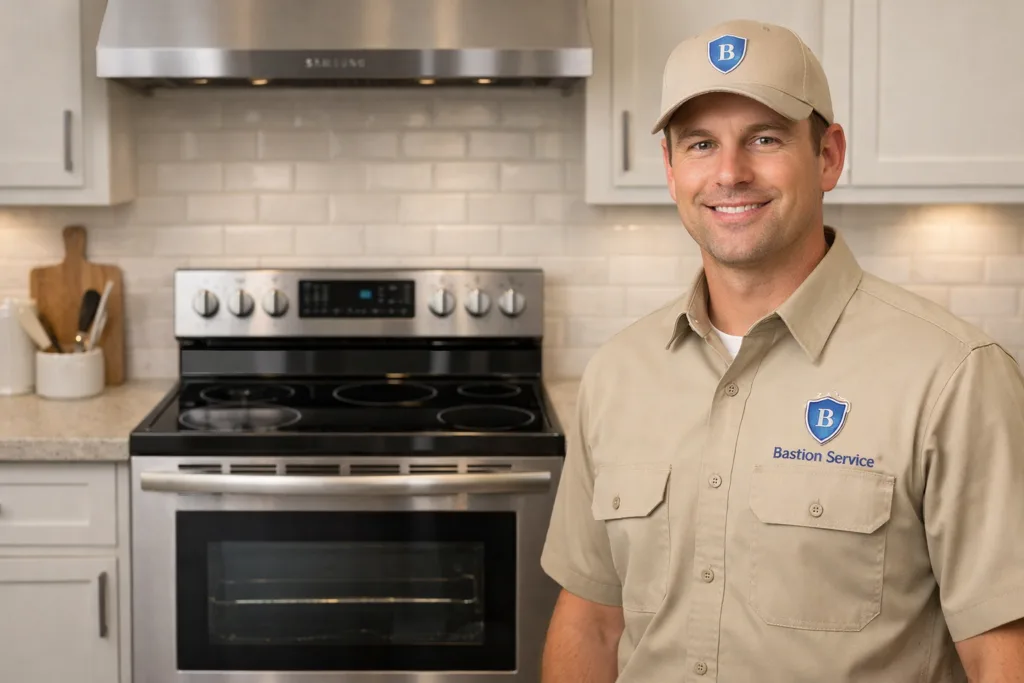
Range problems are easier to solve when you start with the exact symptom instead of assuming the whole appliance is failing. A Samsung range can have one issue at the cooktop, a different issue in the oven cavity, and a separate problem in the control system, so the best repair path depends on what the appliance is actually doing in your Westwood kitchen.
Start with the symptom you see most often
Many range complaints sound similar at first, but they point to different components once the pattern is clear. A burner that clicks but does not light is not the same problem as an oven that takes too long to preheat, and both are different from a display that shuts off during use.
Useful clues include whether the issue happens every time, only on one burner, only during baking, after self-cleaning, or only once the appliance has been running for a while. Those details help narrow down whether the likely cause is an igniter, element, sensor, switch, relay, wiring connection, or electronic control fault.
Surface burner problems on gas and electric models
If a surface burner will not heat or ignite, the failed part depends on the style of Samsung range you have.
- Electric burners: Common causes include a failed surface element, damaged receptacle, faulty infinite switch, or overheated wiring connection.
- Gas burners: Repeated clicking, delayed ignition, weak flame, or no ignition can come from a dirty burner head, blocked ports, moisture around the igniter, a bad spark electrode, or a problem in the spark module.
One useful distinction is whether the problem affects one burner or all of them. A single burner issue often points to a localized part failure. If multiple burners act up at once, diagnosis may shift toward power supply, gas flow, or shared ignition components.
If you smell gas strongly or continuously, stop using the appliance and address that safety issue first. A repair visit should come after the immediate gas concern has been handled.
Oven heating issues usually show up in a few recognizable ways
Samsung range oven problems often fall into one of these symptom groups:
- The oven does not heat at all
- The oven heats very slowly
- The oven reaches temperature but will not maintain it
- The oven overheats and burns food
- The oven bakes unevenly from front to back or top to bottom
On electric models, no-heat or partial-heat complaints may involve the bake element, broil element, sensor, relay, or main control. On gas models, a weak or failed igniter is one of the most common causes of slow preheating or no oven heat. In either style, temperature swings can also come from a worn door gasket, faulty sensor readings, or control problems that affect how the heating cycle is regulated.
Signs the oven issue is getting worse
Some faults start small before they become a full no-heat problem. Watch for:
- Preheat times getting longer over several weeks
- Food finishing unevenly even when recipes have not changed
- The broil function working better than bake, or the reverse
- The oven reaching the set temperature on the display but not cooking normally
- Temperature results changing from one use to the next
These patterns often mean the range still turns on, but one part is no longer performing correctly. That is often the stage when repair is more straightforward.
Clicking, sparking, and ignition trouble should not be ignored
Homeowners often describe Samsung gas range issues as “it keeps clicking” or “it lights, but not right away.” That distinction matters. Constant clicking can be caused by moisture, debris, a misaligned burner cap, or a failing ignition component. Slow lighting may point to blocked burner ports or a weakening igniter system.
If the burner eventually lights but does so with a small delay, the appliance may still be usable in the moment, but the fault should be checked before the ignition problem worsens. Delayed ignition is not just inconvenient; it can also affect normal and safe burner operation.
Display and control problems can interrupt the whole range
When the display goes blank, flashes error codes, resets itself, or stops responding to touch input, the failure is not always the control board alone. The issue may involve incoming power, wiring, thermal stress, keypad faults, or a board that is starting to fail intermittently.
Control-related problems often show up as:
- Clock flickering or losing time
- Buttons responding inconsistently
- Cooking cycles canceling mid-use
- Error codes returning after reset
- Oven functions working only sometimes
Intermittent control behavior is worth addressing early. What begins as an occasional reset can turn into a range that will not start a bake cycle at all.
When repair is usually worth it
In many Westwood homes, repair makes sense when the problem is limited to one or two identifiable components and the rest of the appliance is in solid condition. That often includes issues involving igniters, heating elements, sensors, burner switches, spark parts, and some control-related failures.
Repair becomes less attractive when the range has multiple major faults at once, severe internal damage, or a cost profile that no longer matches the appliance’s age and condition. The key is not guessing from the outside. A proper diagnosis shows whether the problem is contained or part of a larger decline.
Good candidates for repair
- One burner not heating or igniting
- Oven temperature off but range otherwise in good shape
- Slow preheat tied to a specific failed heating component
- Recurring error code linked to a known part failure
- Control issue without widespread damage to the appliance
What to check before scheduling service
A few simple observations can make the next step easier:
- Note whether the issue affects the cooktop, oven, or both
- Check if the problem happens every time or only occasionally
- Write down any error code exactly as shown
- Notice whether one burner is affected or several
- Pay attention to sounds such as repeated clicking or relay chatter
- Stop using the range if you notice a strong gas odor, sparking, or breaker trips
These details help separate a one-part failure from a broader electrical, ignition, or control issue.
What homeowners in Westwood usually want to know first
Most people are not looking for a broad explanation of every possible appliance fault. They want to know why dinner prep is being disrupted, whether the range can still be used safely, and whether the likely repair is reasonable. That is where symptom-based diagnosis matters most.
If your Samsung range has stopped heating correctly, a burner will not cooperate, or the controls have become unreliable, the smartest next step is a clear diagnosis and a repair plan built around the actual failure rather than trial and error.