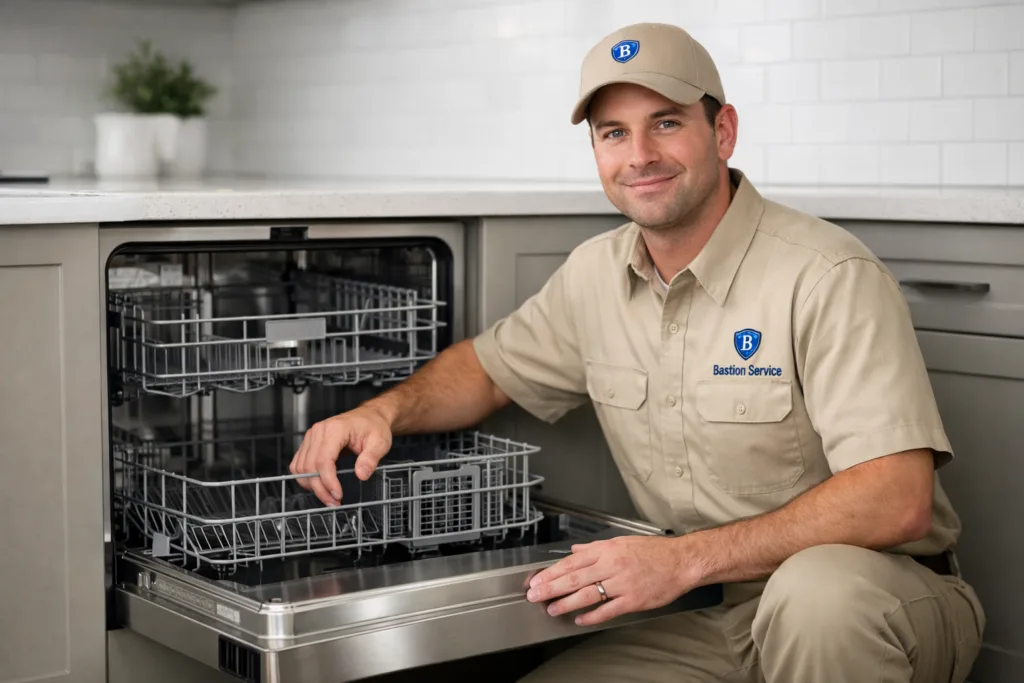
Bosch dishwashers usually show a pattern before they fail completely. Maybe the cycle finishes but dishes still feel greasy, maybe clean water never seems to circulate with normal force, or maybe the machine pauses with water left in the sump. Looking at that pattern is often the fastest way to separate a simple maintenance issue from a failing component in your Sawtelle home.
How Bosch dishwasher problems are usually diagnosed
One symptom can come from several different causes. Poor wash results, for example, might be tied to weak circulation, restricted spray arms, low water fill, heater problems, or a control issue that interrupts the cycle. A drain complaint could involve the filter system, drain pump, hose routing, or a blockage that slows water removal enough to affect the next stage of operation.
That is why symptom-based service tends to work better than replacing parts based on a guess. The goal is to confirm which system is failing first, then determine whether the repair is straightforward or whether multiple issues are showing up at once.
Common Bosch dishwasher symptoms and what they can mean
Water left in the bottom after the cycle
Standing water is one of the most common complaints. In many cases, the problem is not the same from one home to the next. A Bosch dishwasher may hold water because of:
- a blocked filter or debris around the sump
- a restriction in the drain hose
- a clogged air gap, if the installation uses one
- a weak or jammed drain pump
- a control or sensor issue that prevents the drain stage from completing
If the tub repeatedly stays wet between cycles, residue and odor usually build up quickly. Continued use can also put extra strain on the drain system.
Dishes come out dirty, chalky, or gritty
When a Bosch dishwasher runs a full cycle but cleaning performance drops, the wash system should be checked before assuming detergent is the problem. Weak spray pressure, partial spray arm blockage, circulation pump wear, low rinse temperature, and improper water movement can all leave soil behind.
A few useful clues:
- Top rack cleans better than bottom rack: possible circulation or lower spray issue
- Food particles remain on dishes: possible wash pump weakness or blocked spray path
- White film or cloudy glassware: possible heating or rinse-related performance problem
- Dishes feel cool and still wet at the end: possible heater, thermostat, or control problem
Leaking near the door or under the unit
Even a minor dishwasher leak deserves attention. Water near the front edge can come from a worn door gasket, a lower spray arm that is cracked or spraying out of pattern, overfilling, or detergent oversudsing. Water under the machine can also point to an internal hose issue, a pump seal problem, or a slow drain condition that causes water to go where it should not.
In Sawtelle homes, catching a leak early matters because cabinet bases, flooring edges, and nearby trim can be damaged long before the dishwasher stops running entirely.
The dishwasher will not start
If the unit has power but does not begin a cycle, the issue may involve the latch, door switch, control panel, user interface, or a condition the machine interprets as unsafe for operation. Sometimes the dishwasher appears dead when the real problem is a failed input or a control fault rather than a complete power loss.
When this happens intermittently, the timing matters. A unit that starts after several tries suggests a different repair path than one that never responds at all.
The cycle starts, then stops or runs too long
Bosch dishwashers can stall mid-cycle if they cannot complete a heating step, detect expected water movement, or finish draining normally. A cycle that drags far beyond its usual runtime may be trying repeatedly to satisfy a temperature or sensor requirement.
This symptom is often misunderstood because the machine still appears to be working. In reality, long or interrupted cycles can be an early sign of a component that is weakening rather than a one-time glitch.
Grinding, humming, or unusual pump noise
Bosch units are generally quiet, so a new mechanical sound stands out. Noise during drain may point to debris in the pump area or pump wear. Noise during wash can suggest circulation trouble, internal obstruction, or spray arm contact. A steady hum without proper operation may mean a motor is trying to run but cannot move water correctly.
If the sound is new and repeatable, it is better not to keep forcing extra cycles. Mechanical wear rarely improves with more use.
Signs the issue may be getting worse
Some dishwasher problems begin as annoyances and then become more expensive if ignored. It is smart to stop normal use and have the machine checked when you notice:
- water still present after more than one cycle
- recurring leaks at the door or under the toe kick
- the dishwasher tripping power
- error displays paired with poor cleaning or drain failure
- cycles that cancel, freeze, or take far longer than normal
- a sharp change in sound from the wash or drain system
Those symptoms usually indicate a real fault rather than a temporary interruption.
What homeowners can check before scheduling repair
There are a few basic checks that can help rule out simple causes without taking the machine apart:
- make sure the filter area is clean and seated correctly
- check for visible debris in the bottom of the tub
- confirm the spray arms can turn freely
- look for obvious kinks in the accessible drain hose path
- note whether the unit fills, washes, heats, and drains, or fails at one specific stage
If the same symptom returns after these basic checks, the problem is more likely tied to a pump, heater, sensor, latch, or control-related fault.
Repair or replace a Bosch dishwasher?
Many Bosch dishwasher problems are worth repairing when the tub, racks, door structure, and major systems are otherwise in solid condition. A single drain issue, wash pump problem, latch failure, or heating fault can often make sense to fix if the rest of the appliance has been performing well.
Replacement becomes more likely when the dishwasher has multiple active problems at the same time, has ongoing leak damage around the installation area, or shows broader wear that makes another major repair hard to justify. Age matters, but condition matters just as much.
For Sawtelle homeowners, the best decision usually comes down to three things:
- the overall condition of the dishwasher
- whether the failure is isolated or part of a bigger pattern
- whether the repair restores normal function without stacking more likely repairs behind it
What to expect from a focused service visit
A useful service call should do more than identify a bad symptom. It should narrow the issue to the system involved, explain whether the problem is mechanical, electrical, or related to water movement, and outline what repair would actually solve it. That makes it easier to decide whether to move forward now or consider replacement.
If your Bosch dishwasher in Sawtelle is leaving dishes dirty, failing to drain, leaking, running cold, or stopping mid-cycle, the most helpful next step is a direct assessment of the exact failure pattern instead of changing parts one by one.