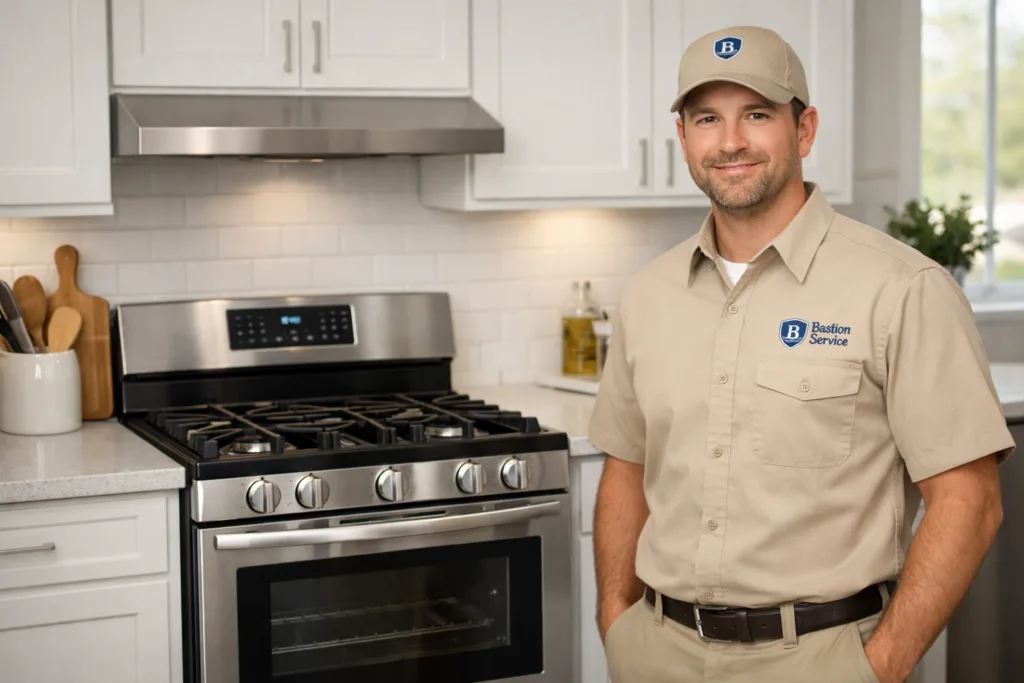
Range problems often look similar at first, but the cause can be very different depending on whether the issue starts at the surface burners, the oven cavity, the controls, or the power and ignition system. A burner that clicks without lighting, an oven that bakes unevenly, or a unit that works only part of the time usually needs testing before any reliable repair decision can be made.
What common range symptoms usually mean
A residential range combines top-burner cooking and oven heating in one appliance, so a single complaint can involve several systems. Surface burner trouble may come from blocked burner ports, worn ignition parts, damaged switches, loose wiring, or control faults. Oven complaints are often tied to a weak igniter, a failing bake or broil element, a drifting temperature sensor, a door seal problem, or an electronic control issue.
Some symptoms overlap. For example, slow preheating may point to an oven heating problem, but it can also show up when a control is not sending power correctly. Intermittent operation is another example: the range may appear normal for one meal and fail the next once a relay, connection, or sensor begins to break down under heat.
Surface burner and ignition problems
Burners that do not light
If one burner will not ignite but the others work normally, the fault is often localized to that burner assembly, igniter path, or switch. Repeated clicking can be caused by moisture, food buildup, misalignment, or a component that is no longer sparking correctly. If the trouble is limited to the top cooking surface rather than the full appliance, Cooktop Repair in Playa Vista may be the better service path.
Weak heat or uneven flame
Burners that light but produce weak, uneven, or unstable heat can make everyday cooking frustrating. A dirty burner cap, restricted gas flow, damaged burner head, or failing control can all affect performance. On electric models, a surface element that cycles poorly or does not reach full temperature may have a failing switch or element connection.
Clicking that does not stop
Constant clicking after ignition is not something to ignore. In some cases it follows a spill or cleaning moisture, but it can also point to an ignition switch issue that keeps trying to spark. Continued use may wear down components faster and can make the problem harder to isolate later.
Oven heating and baking issues
Slow preheating
An oven that takes far too long to preheat often has a weak igniter, a failing element, or a control problem that is preventing full heat output. The oven may still get warm enough to seem usable, but cooking times stretch out and results become inconsistent. When the symptom is centered in the oven cavity rather than the burners, Oven Repair in Playa Vista may be more relevant.
Uneven baking or inaccurate temperature
Cookies that brown on one side, casseroles that stay cold in the center, or food that burns before the timer ends usually suggest a temperature regulation problem. A worn sensor, weak heating component, poor door seal, or control board fault can all create noticeable swings between the set temperature and actual oven temperature.
Broil works but bake does not
This is a useful clue because it often narrows the problem to the bake side of the heating system rather than the entire appliance. On some models, one heating function can continue working while another fails, which is why direct testing is more helpful than assuming the whole range is at the end of its life.
When the whole range seems affected
If burner heat and oven temperature problems are happening at the same time, the issue may involve shared controls, incoming power, wiring, or a larger internal fault. In that situation, Stove Repair in Playa Vista can also help homeowners compare symptoms that affect both stovetop cooking and oven performance.
A range that trips a breaker, shuts off unpredictably, displays control errors, or heats only on certain settings should be checked before regular use continues. Intermittent faults tend to worsen with time, and continued cooking can increase damage to terminals, relays, sensors, and surrounding components.
When to stop using the appliance
Stop using the range if it is overheating, sparking, tripping electrical protection, failing to regulate temperature, or showing delayed ignition on a gas model. If there is a strong or persistent gas smell, leave the area if needed and contact the gas utility or emergency service before arranging appliance repair. Safety comes first, and gas odor concerns should not be treated as a routine scheduling issue.
Even without a gas smell, ongoing ignition trouble deserves attention. Burners that light unpredictably or require repeated attempts can become less reliable over time, and oven heating problems can lead to undercooked meals, scorched food, and extra strain on components that are already failing.
Repair or replace?
Repair is often worthwhile when the fault is isolated and the rest of the appliance is still in solid condition. Replacement becomes a stronger option when there are multiple failures, repeated control issues, severe internal wear, or a repair estimate that no longer makes sense for the appliance’s remaining life. The best decision usually comes from the actual condition of the unit, not age alone.
For homeowners in Playa Vista, the practical question is whether safe and consistent operation can be restored without chasing one problem after another. A good diagnosis should explain what failed, whether additional wear is present, and whether the range is a sensible appliance to keep.
How range issues overlap with other cooking appliances
Some cooking problems sound like range trouble when they are really more specific to a separate appliance type. If the concern is focused on a built-in oven compartment with no surface burners involved, Wall Oven Repair in Playa Vista may be the more appropriate direction for that layout and symptom set.
What homeowners should expect from service
Helpful service should confirm the symptom, test the likely failure points, and explain the result in plain language. That includes whether the problem is isolated, whether continued use could cause added damage, and what repair would actually accomplish. When that process is done well, it gives Playa Vista homeowners a realistic next step instead of more guesswork.